- غير مصنف
Comprehensive Guide to Selecting Abaya Fabrics: The Subtle Art of Luxury
Comprehensive Guide to Selecting Abaya Fabrics: The Subtle Art of Luxury
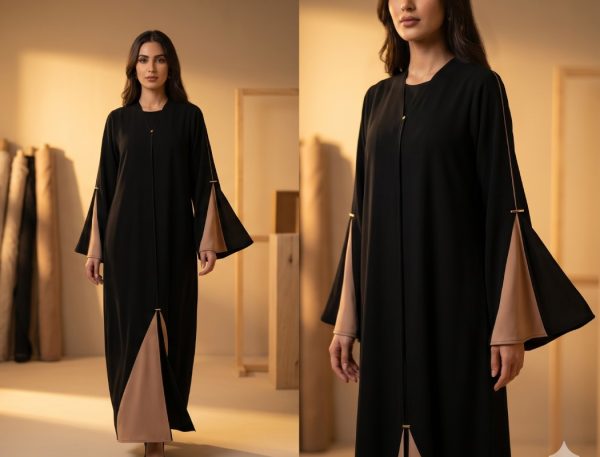
In the realm of modest high fashion, the Abaya is far more than a simple garment; it is a manifestation of dignity, character, and the wearer’s aesthetic discernment. But what exactly distinguishes a “luxury” Abaya that commands attention from an ordinary one? The answer lies within the soul of the garment: the fabric. The boundary between a standard piece and a sartorial masterpiece is defined by two critical factors—Drape and Texture.
This guide provides a professional analysis of the finest fabrics for Abayas, empowering you to make an informed investment for both your gala events and your daily wardrobe.
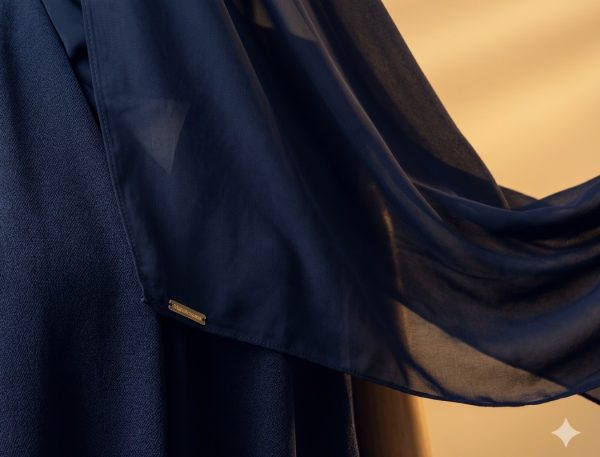
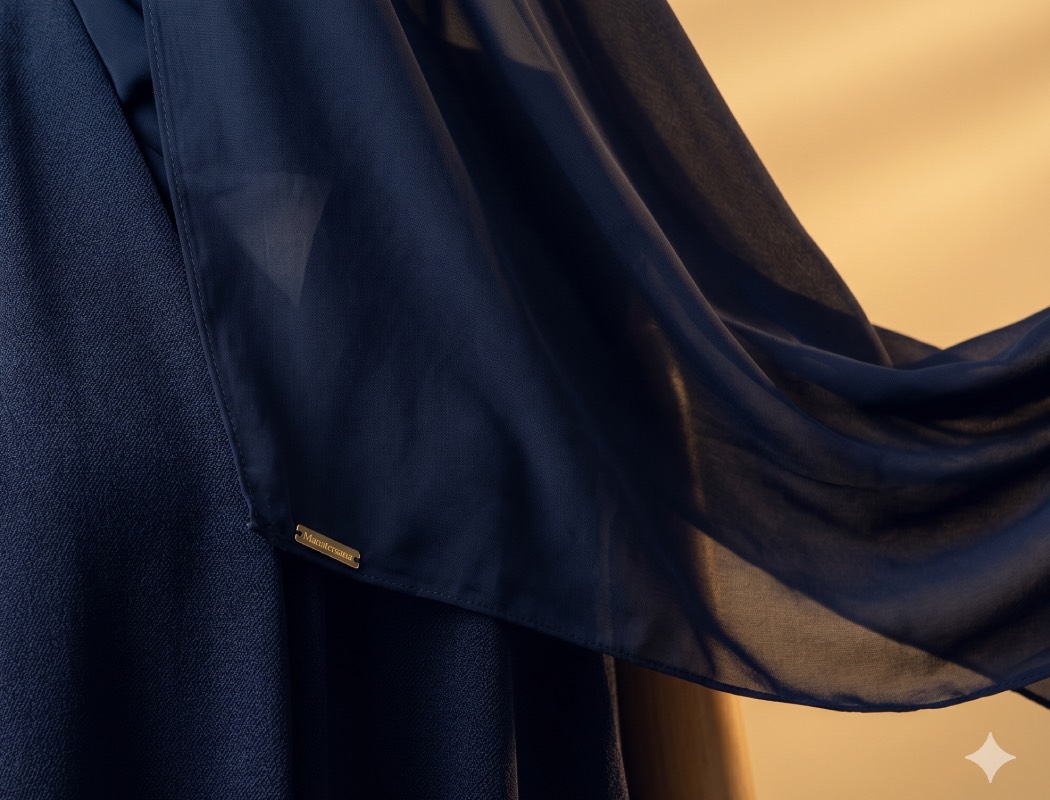
Image 2: A macro shot showcasing the dense, exquisite weave of authentic Japanese Crepe in deep midnight navy. Semi-matte light reflects off the surface, highlighting the fabric’s premium density and superior weight as it drapes over a minimalist wooden mannequin.
Why Fabric is the Soul of the Abaya
When you don a luxury Abaya, the first thing you perceive is how the material interacts with your movement. High-quality fabrics possess an “engineered drape”—they are neither so light that they lose their silhouette in a breeze, nor so rigid that they create awkward lines. Simultaneously, the “texture” determines how light is absorbed or reflected, giving the color a sense of three-dimensional depth.
1. Japanese Crepe: The Sovereign of Luxury Abayas
When discussing the Luxury Crepe Abaya, Japan remains the undisputed global leader. Japanese crepes (produced by prestigious houses like Elegance or Mitsubishi) are celebrated for their incredibly high thread count and unparalleled softness.
- Characteristics: This fabric features a sophisticated semi-matte finish that gives colors like black or deep navy an extraordinary depth. Its high resistance to wrinkling and exceptional color fastness—even after multiple washes—sets it apart.
- Best For: Both formal “Gala” Abayas and professional corporate wear that requires a sharp, structured hang.
- Durability: Due to the superior quality of the yarn, this fabric resists “pilling” and maintains its rich luster for years, avoiding the faded look common in lower-grade synthetics.
2. Silk Chiffon: The Ethereal Manifestation of Grace
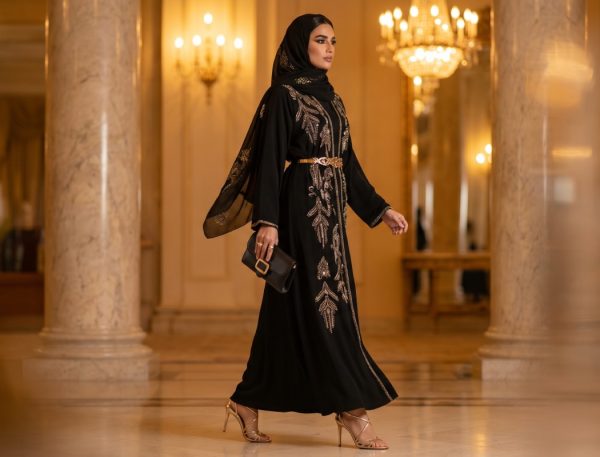
For evening Abayas destined for grand ballrooms or exclusive soirées, nothing rivals the fluidity of Silk Chiffon.
- Characteristics: The drape of this fabric is exceptionally fluid, mimicking the movement of water. Because it is a natural fiber, silk has a subtle, aristocratic glow that becomes magical under candlelight or ambient event lighting.
- Styling Tip: To maintain modesty while achieving a voluminous, airy look, silk chiffon is often used in double layers or as a translucent outer “cloak” over a base of crepe or satin.
3. Premium Linens and Specialized Cottons: For the Modern Everyday
For daily wear, particularly in warmer climates, the best Abaya fabric is one that prioritizes breathability. “Crystal Cottons” and “Silk Linens” are the pinnacle of casual luxury.
- Characteristics: These fabrics offer a minimalist, semi-structured aesthetic. Unlike standard linen, which wrinkles instantly, premium silk-blended linens utilize high-quality synthetic reinforcements to ensure the garment holds its shape throughout a busy day.
- Best For: Casual outings, the workplace, and high-temperature summer seasons.
4. The Art of Maintenance: Doubling the Life of Your Abaya
Purchasing a luxury Abaya is a long-term investment in your wardrobe. To preserve the fabric’s longevity and protect its delicate fibers, adherence to professional care standards is essential:
Washing Protocols
- Hand Washing: It is highly recommended to wash luxury Abayas (especially Japanese Crepe and Silk) by hand in cold water (maximum 30°C).
- The Right Detergent: Use specialized silk washes or even baby shampoo. Harsh detergents with high enzyme counts will gradually thin the fibers and turn deep blacks into a dull, ashy grey.
- Machine Care: If a machine is unavoidable, place the Abaya in a mesh laundry bag and select the “Delicates” or “Hand Wash” cycle.
Drying and Pressing
- Avoid Direct Sunlight: Never dry your Abaya under direct UV rays, as this causes rapid color oxidation. Lay it flat in a shaded, well-ventilated area.
- The Power of Steam: The gold standard for removing wrinkles is a professional garment steamer. If using a traditional iron, always place a cotton pressing cloth between the iron and the Abaya to prevent “shining” or scorching the delicate weave.
Conclusion
Selecting the right fabric is the line between a mundane appearance and a magnificent presence. If you seek durability and a pristine silhouette, Japanese Crepe is your ultimate choice. If you desire ethereal lightness, turn to Silk Chiffon. For modern, breathable comfort, explore Premium Linens.
Remember, the value of an Abaya is not just in its price tag, but in how meticulously you care for its delicate textures. With the right selection and principled maintenance, your Abaya will remain as radiant and dignified as the day it was first crafted.
- By amir soudi
Related Posts