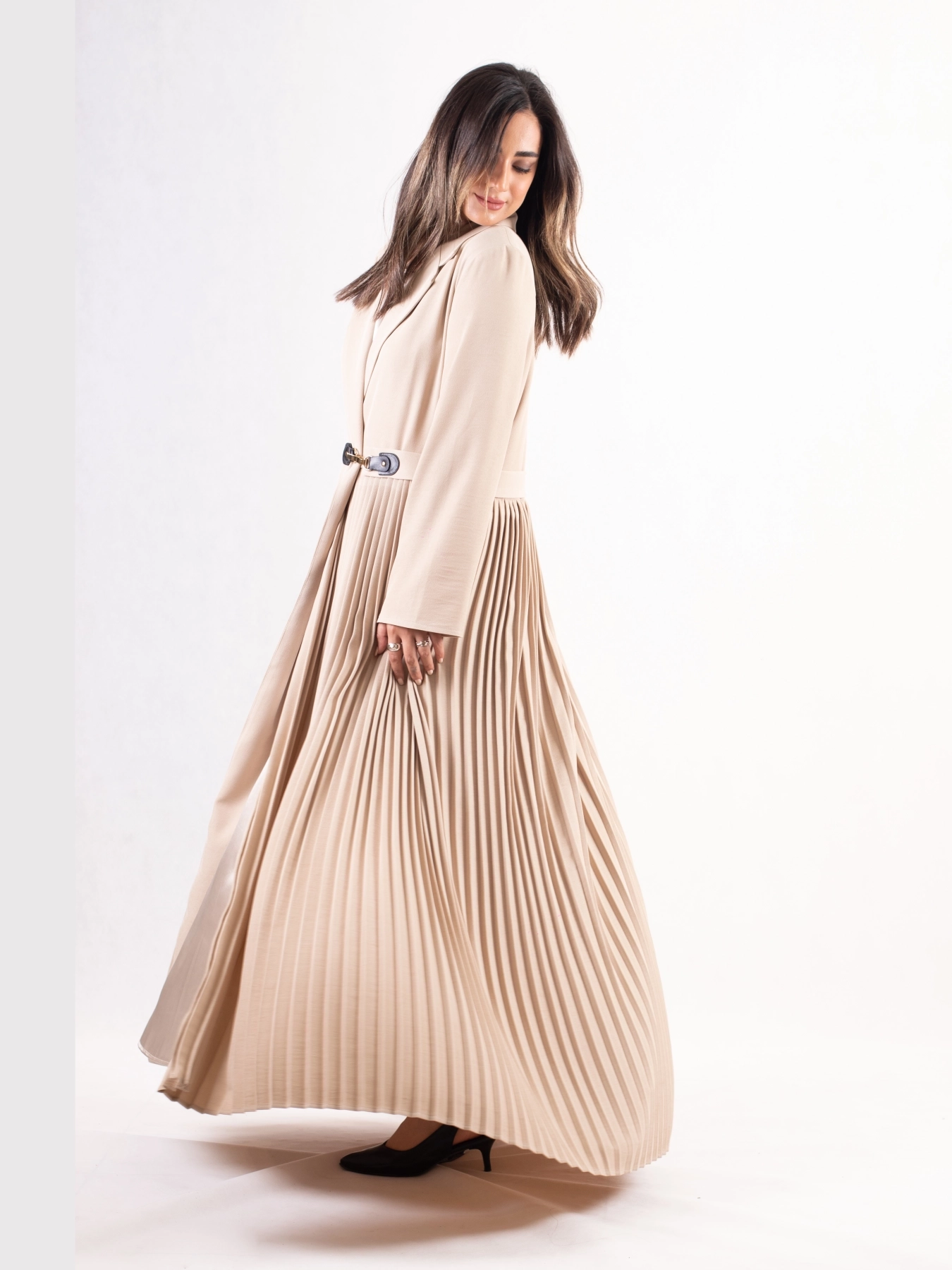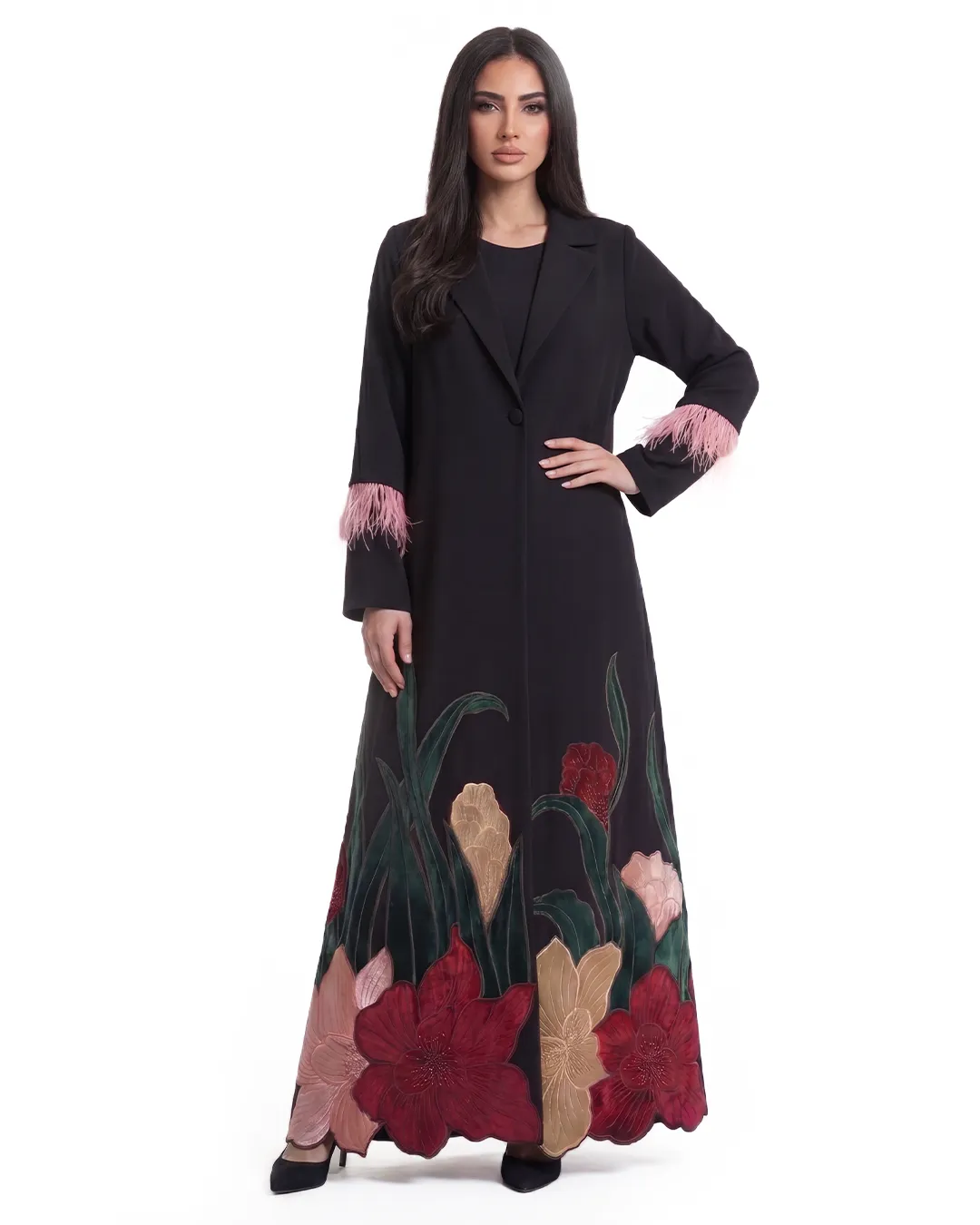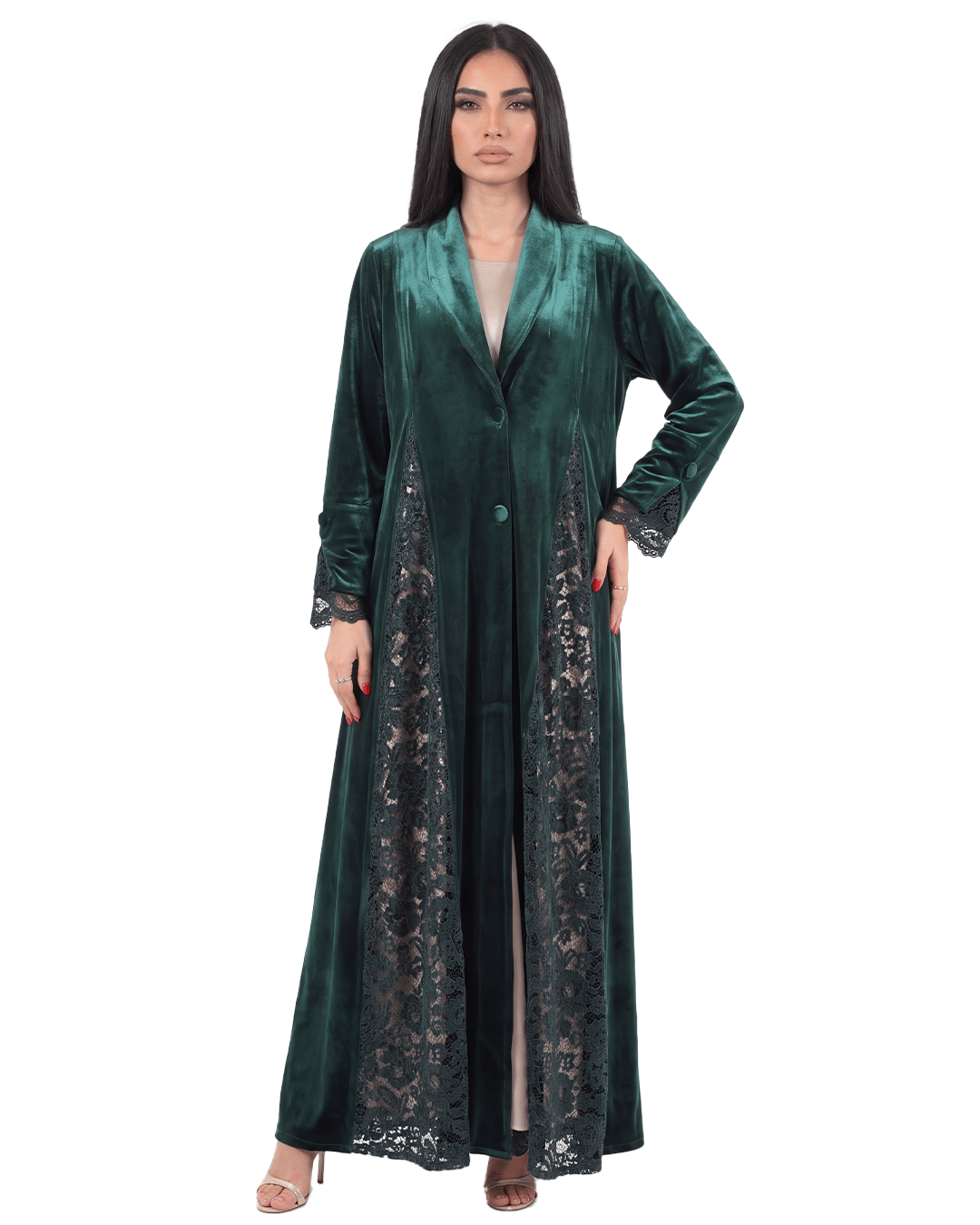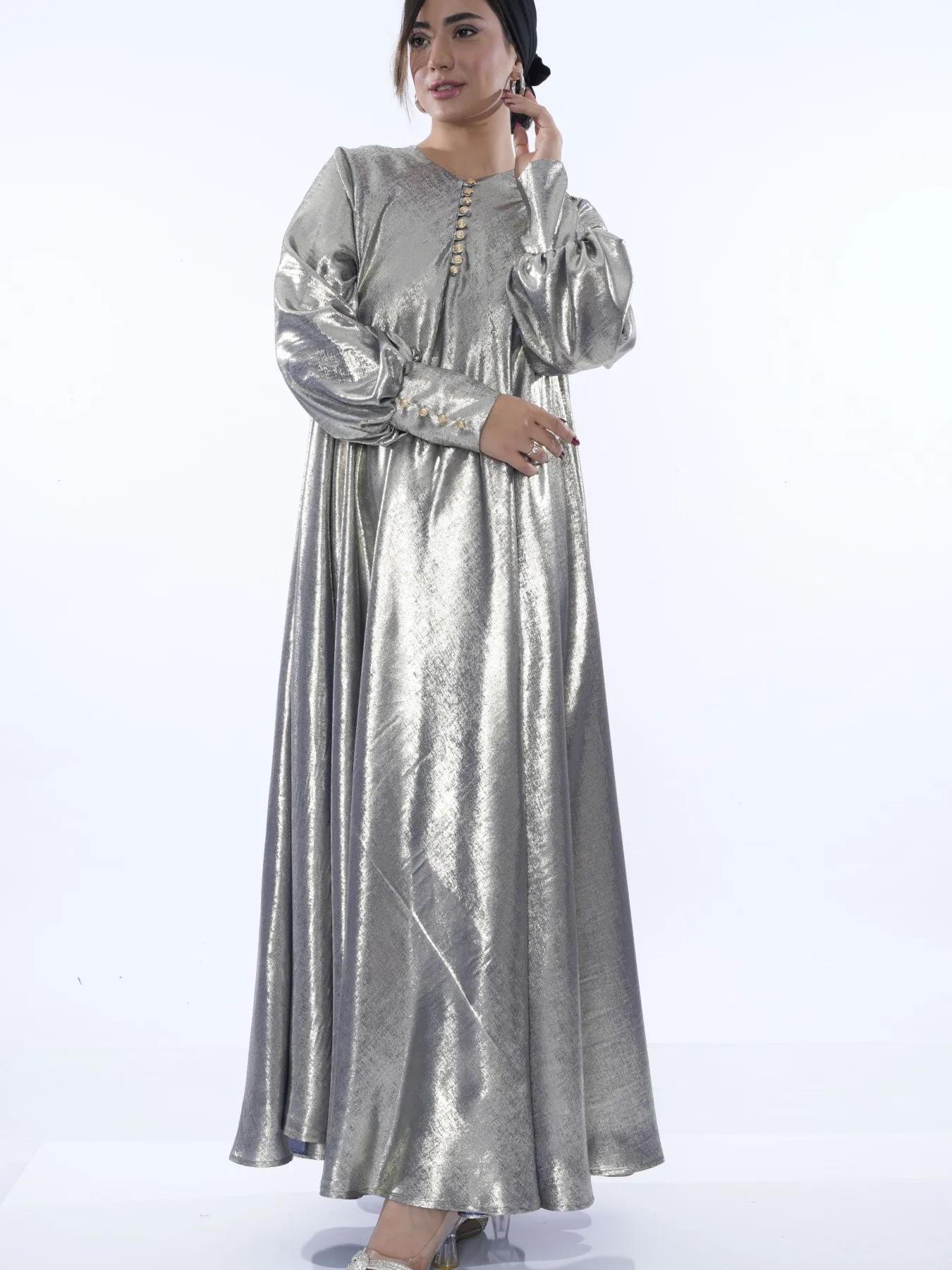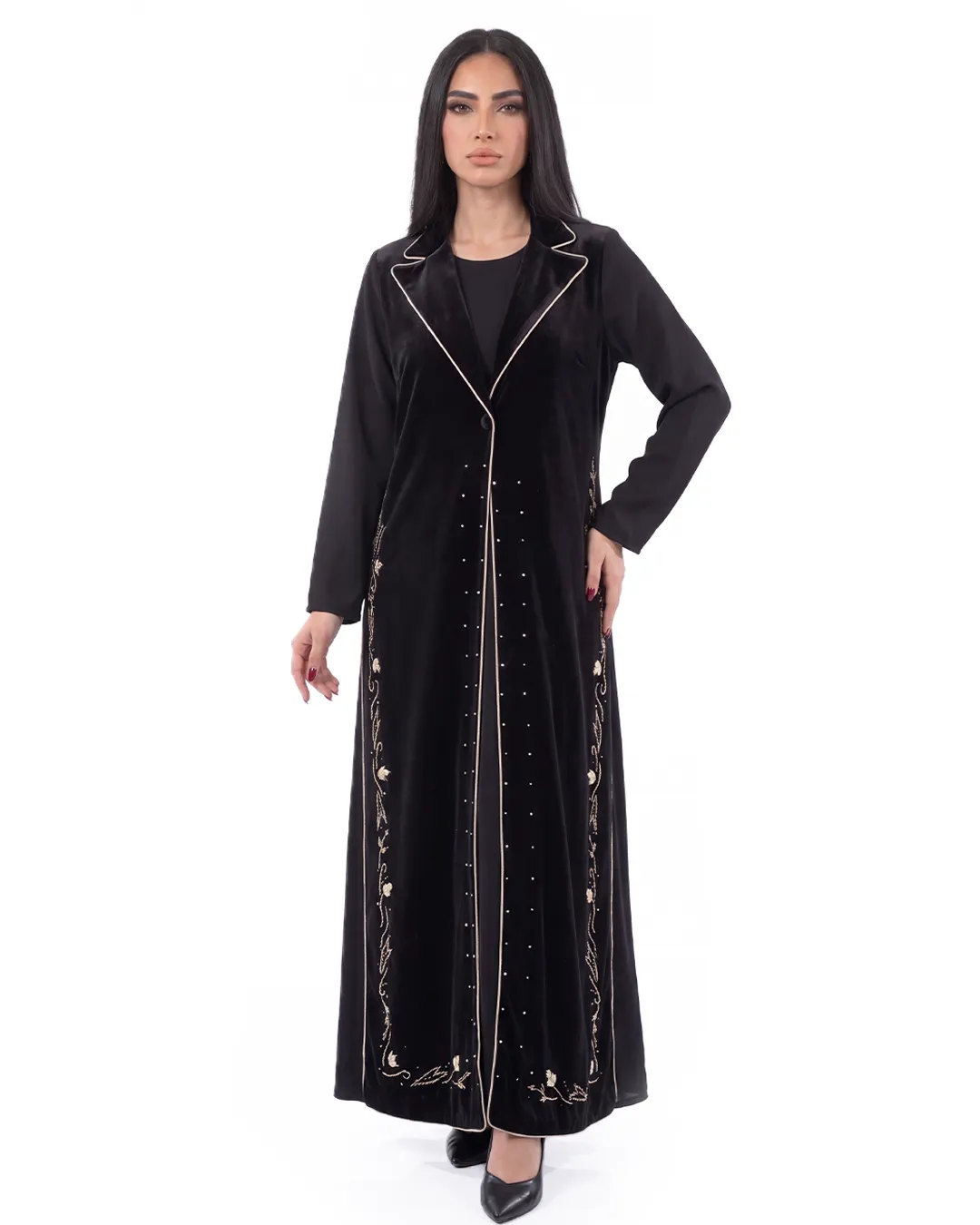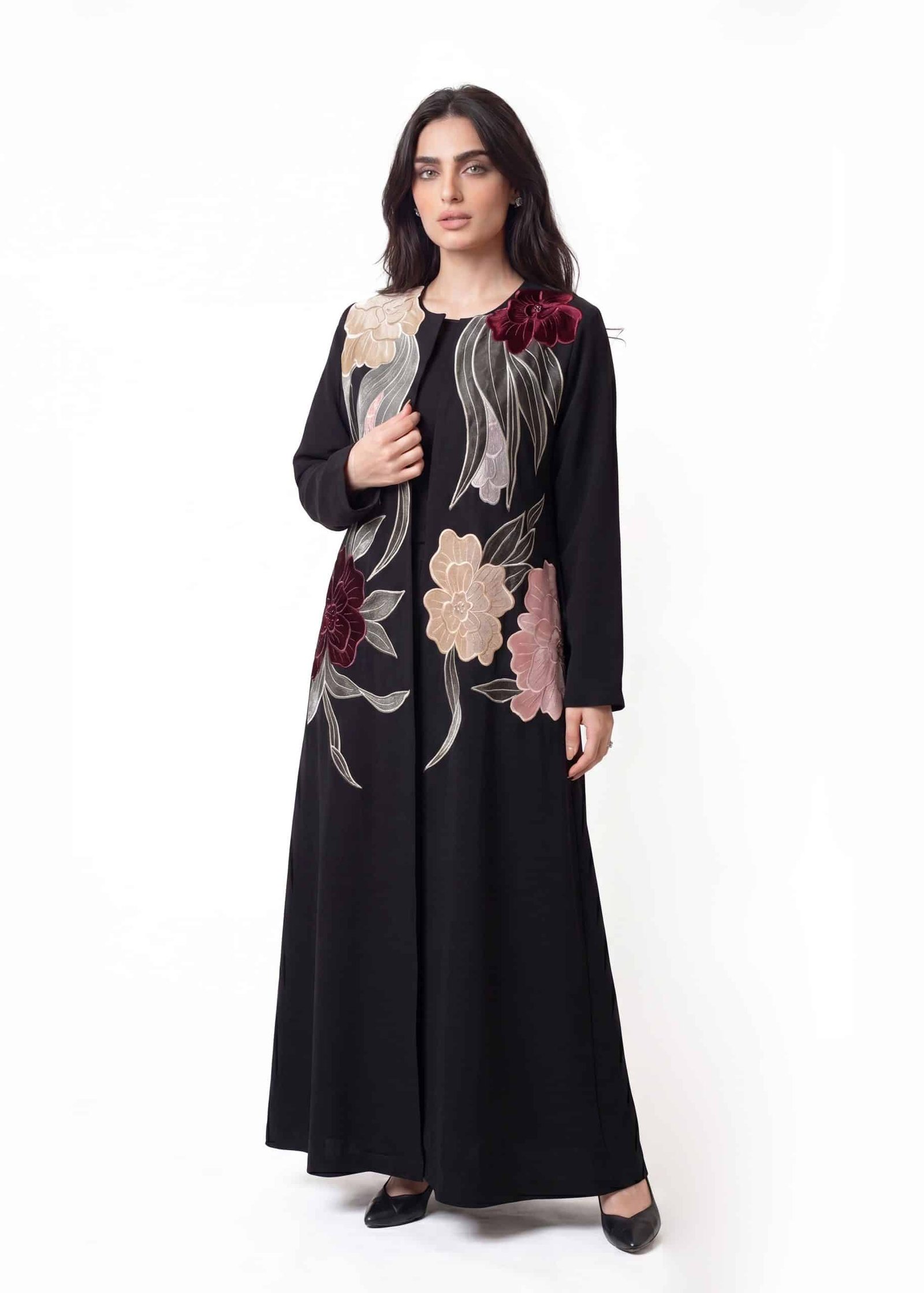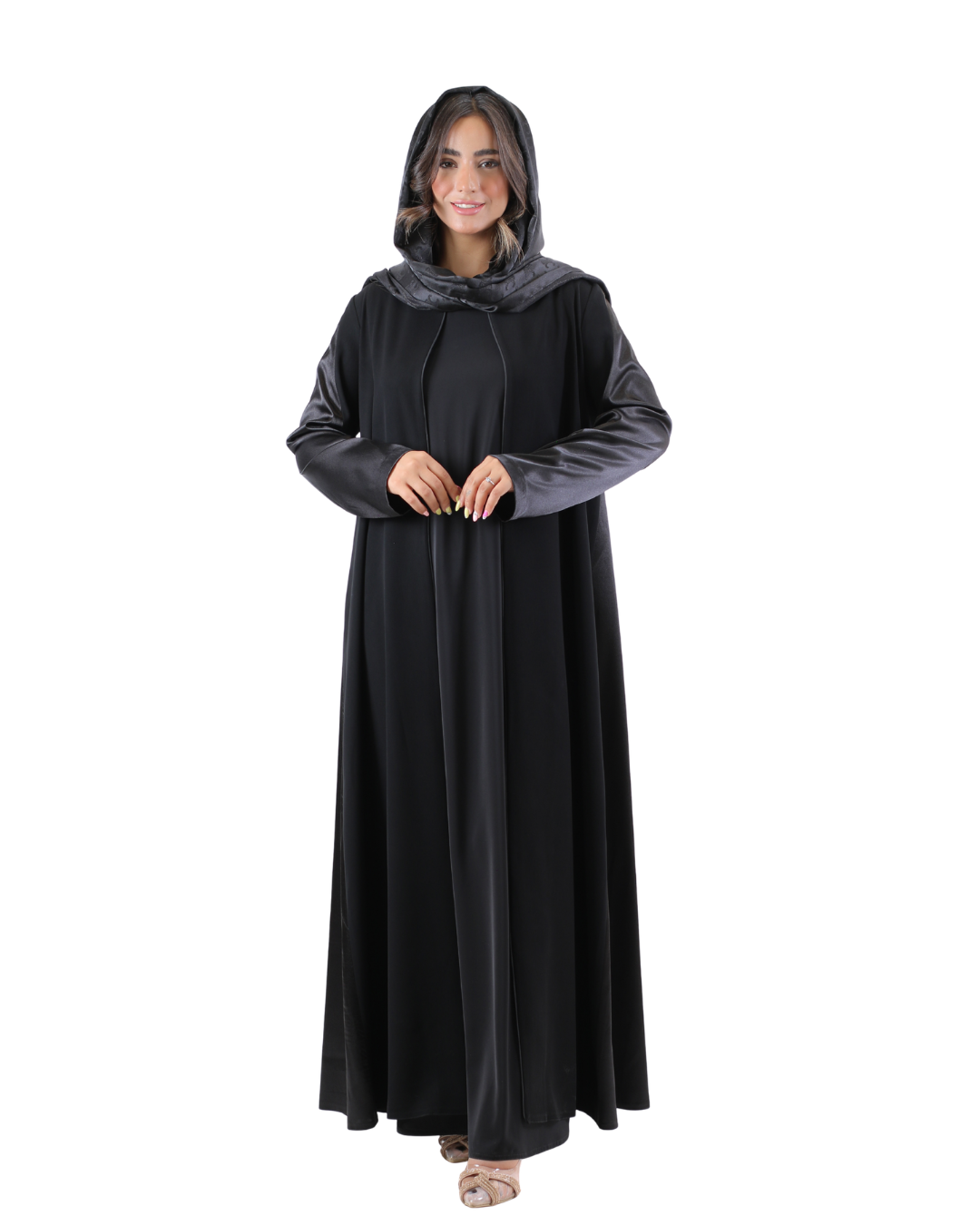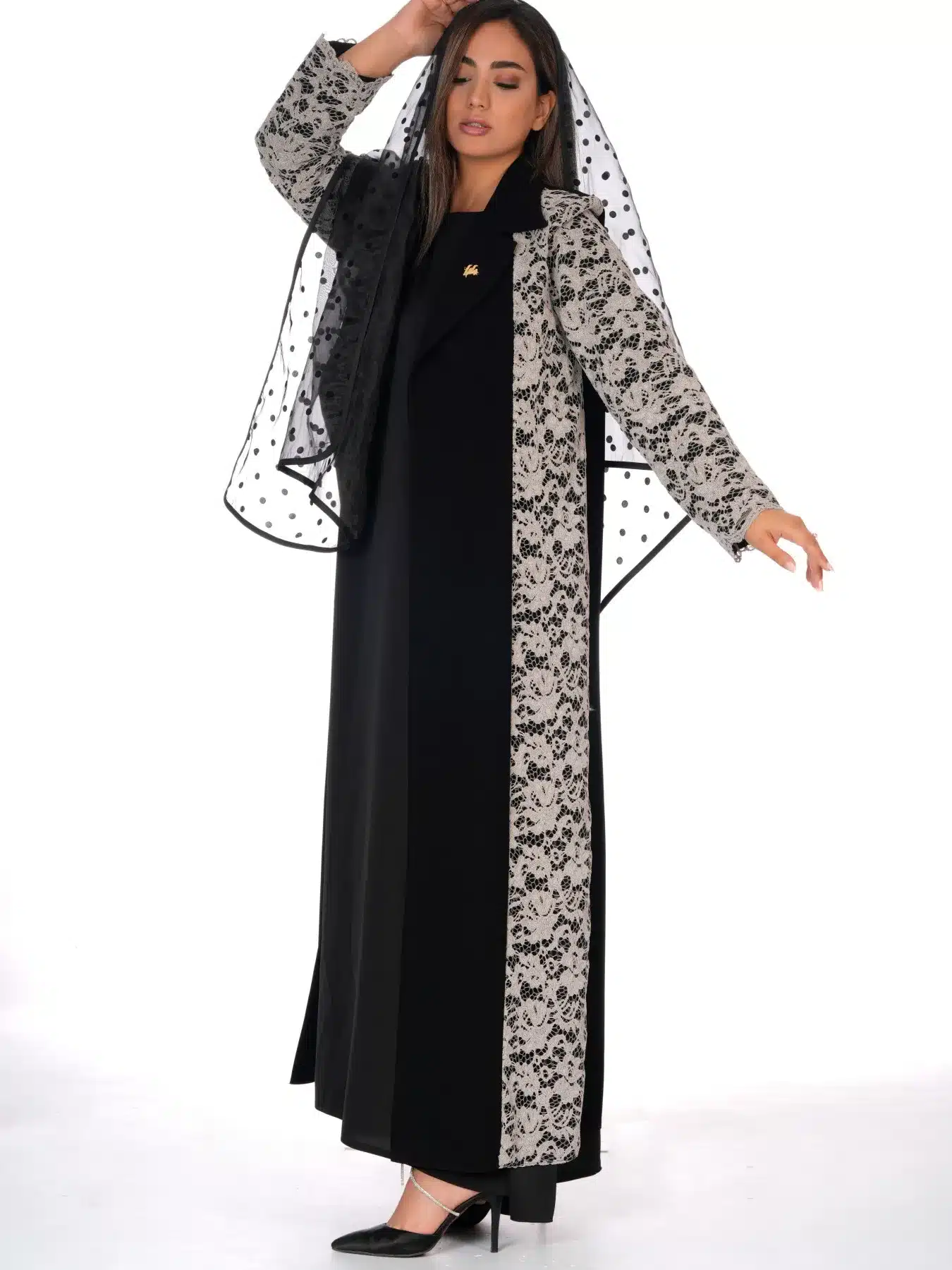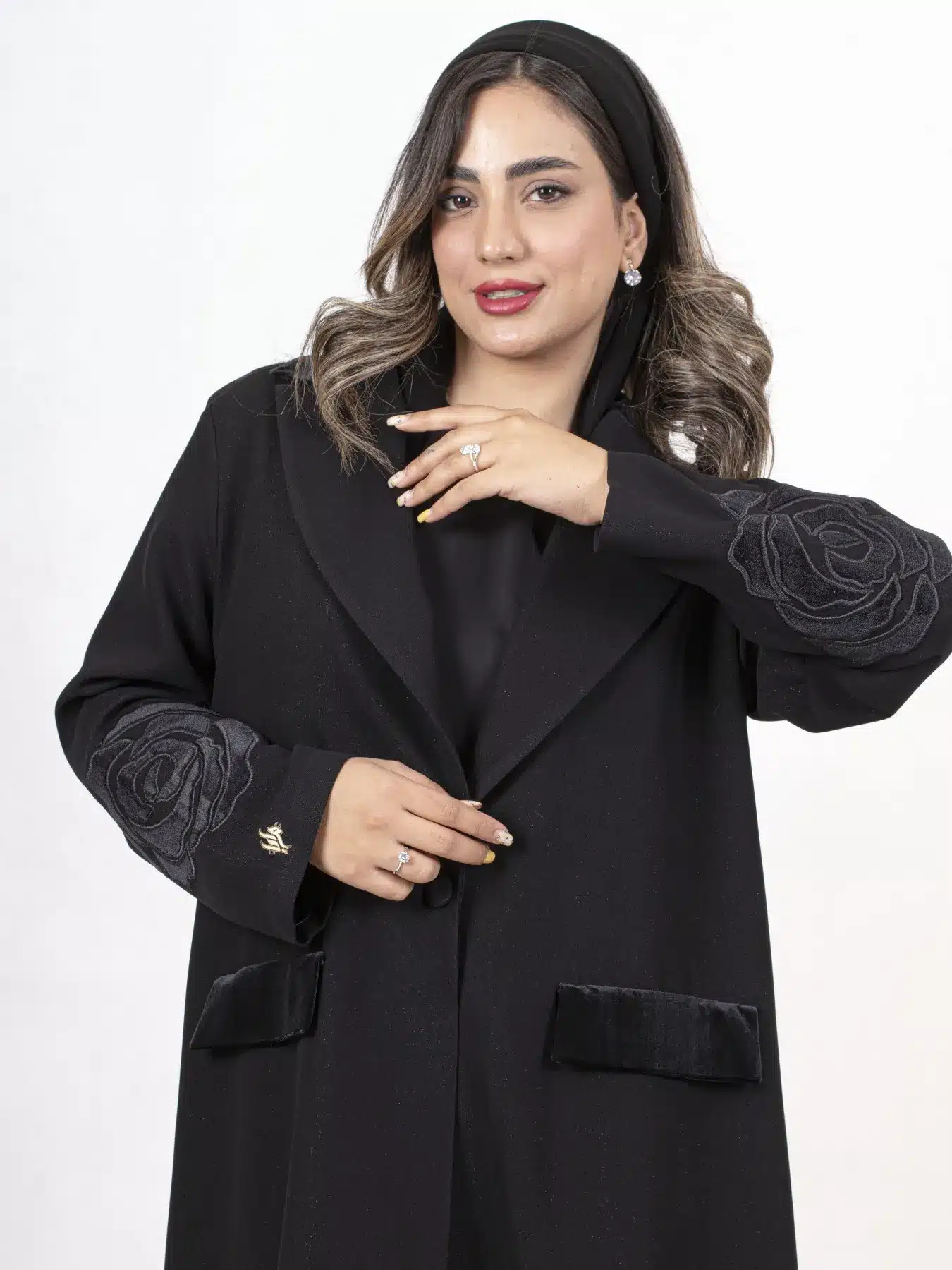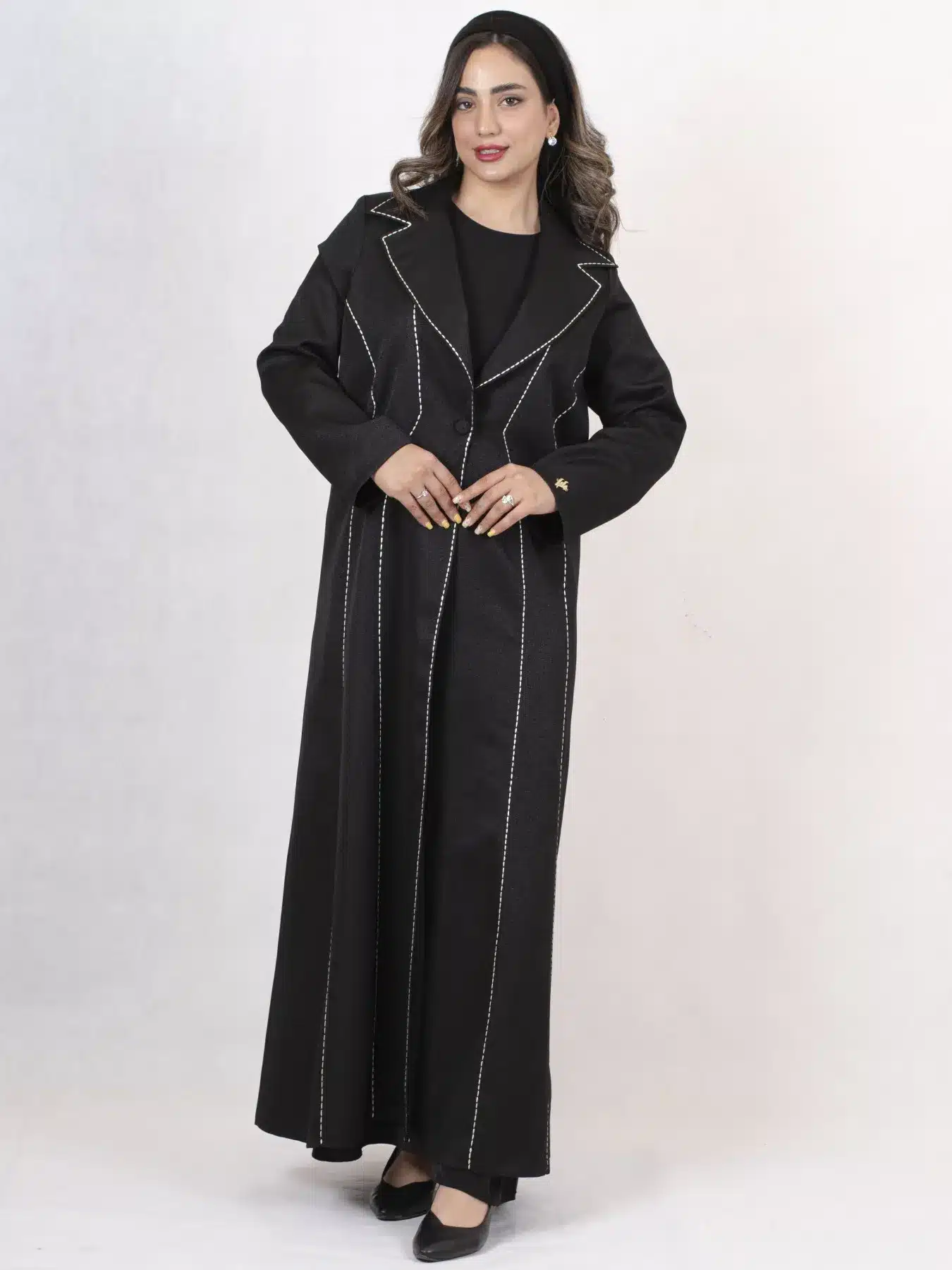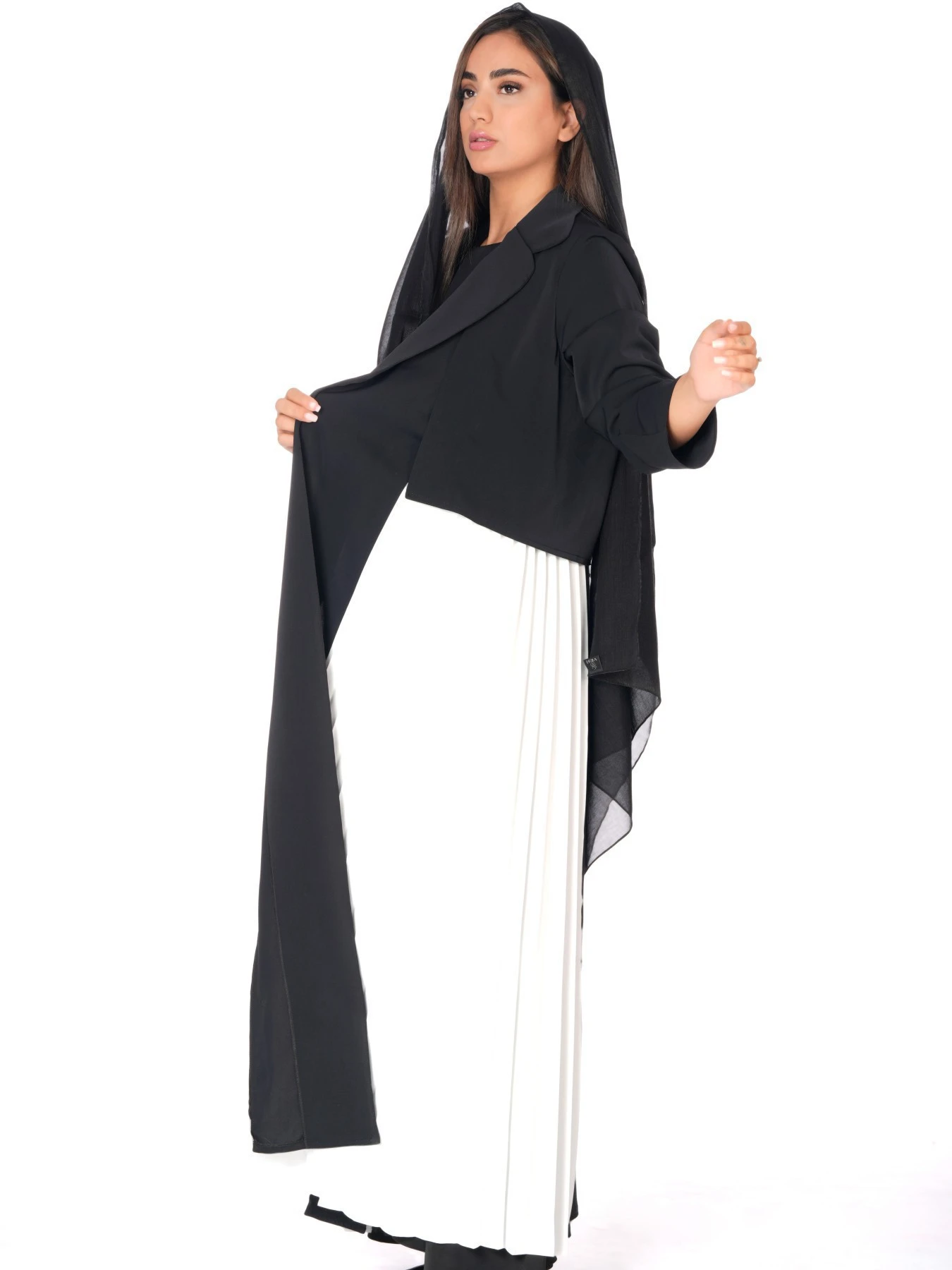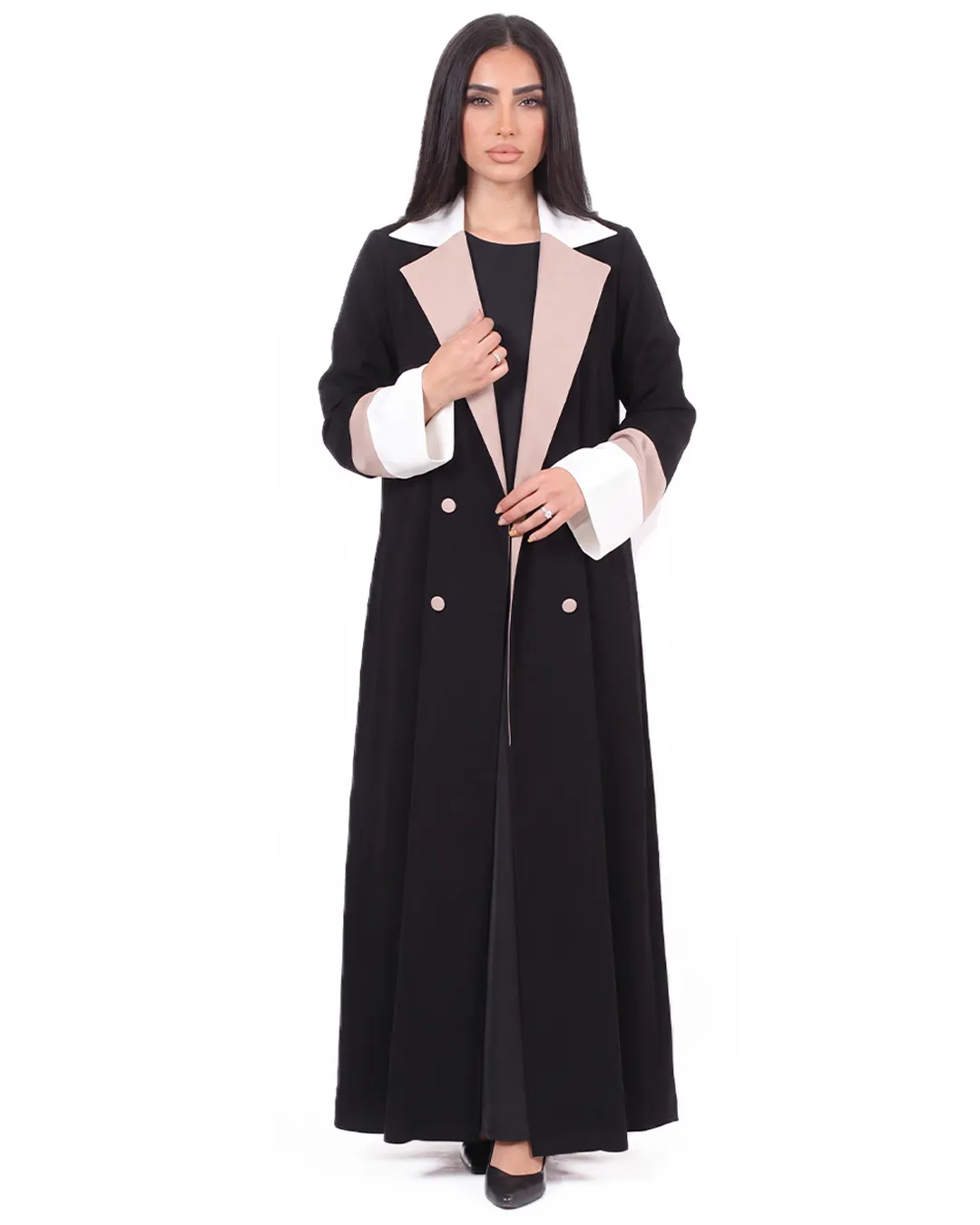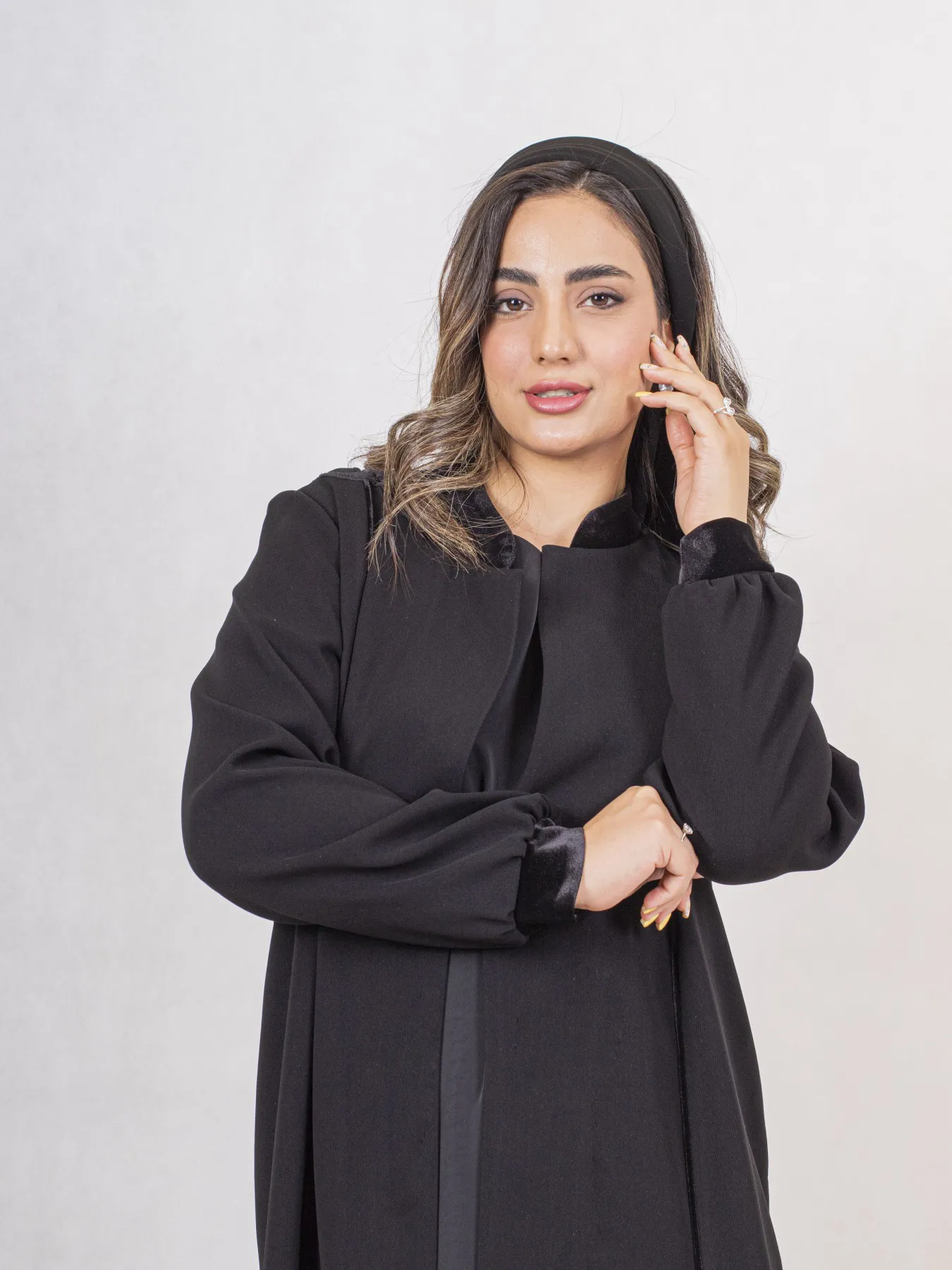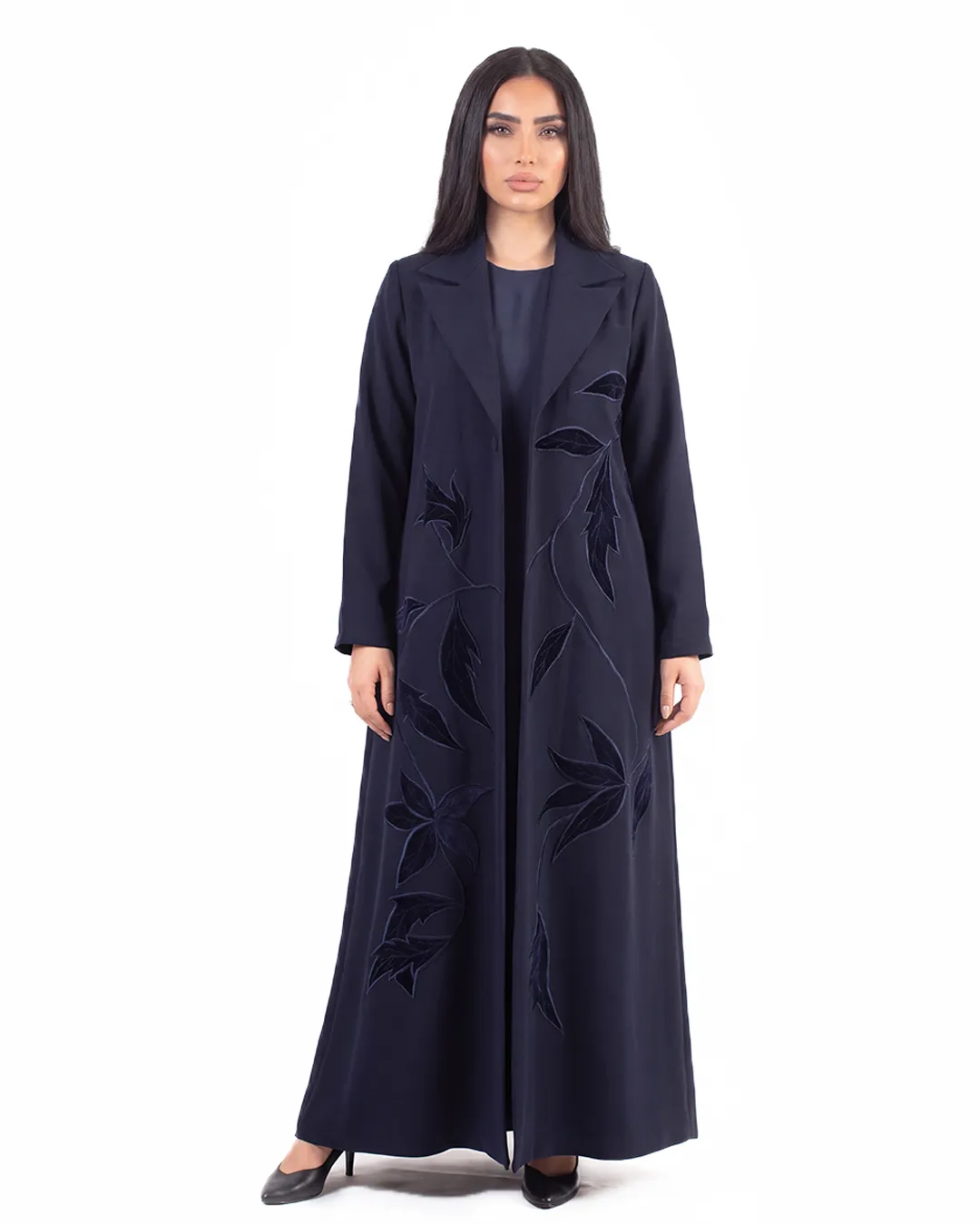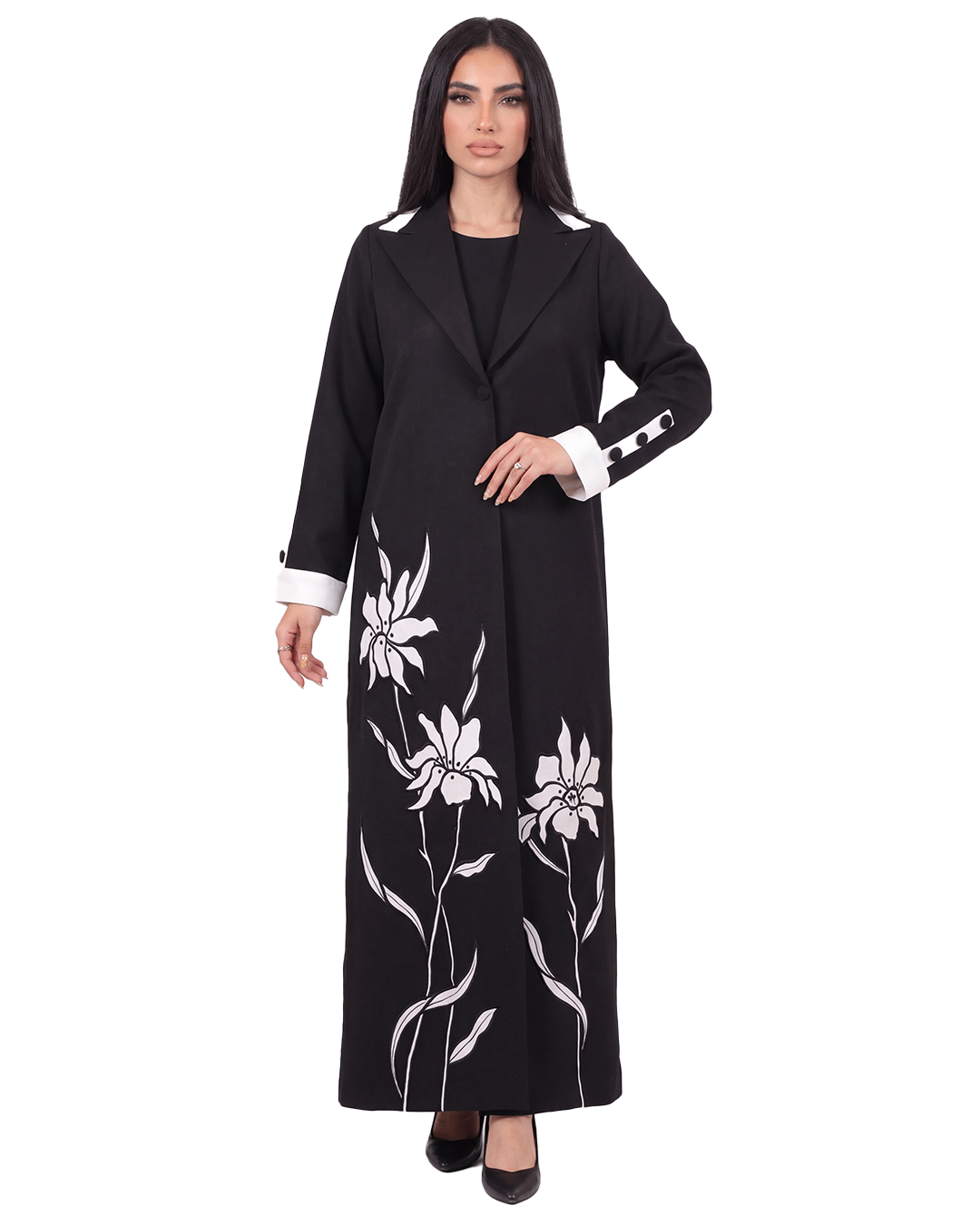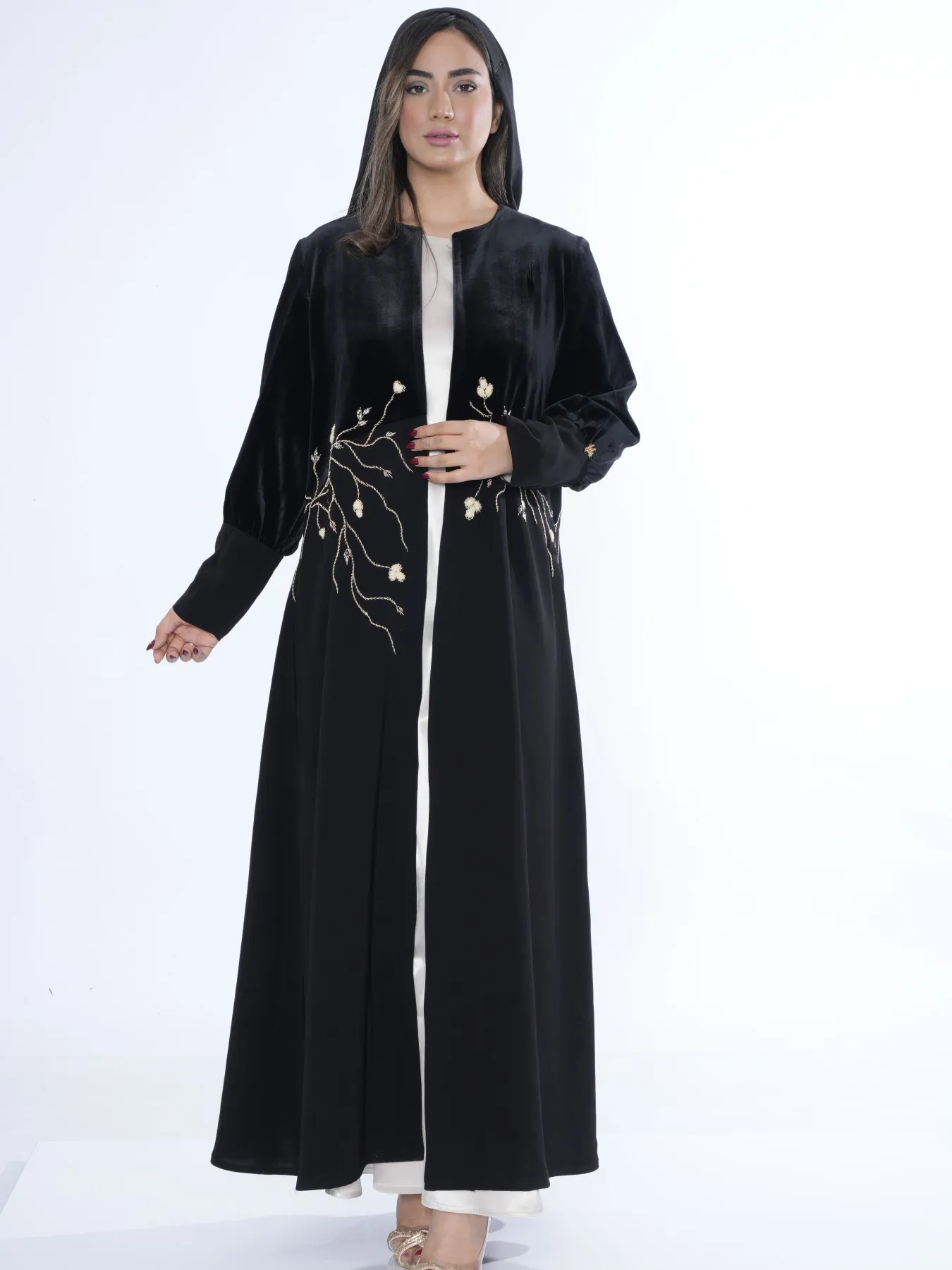
An abaya is a long, loose outer garment associated with dress traditions in the Arab world and worn by some Muslim women over other clothing. In simple terms, what is abaya can be answered as a full-length garment designed to provide body coverage while allowing for different fabrics, cuts, colors, and styling choices.
What Is an Abaya?
An abaya is a long outer garment that typically covers most of the body and is worn over other clothing. Modern versions range from simple everyday designs to tailored and embellished styles.
Abaya meaning + word origin (Arabic)
The word abaya comes from the Arabic ʿabāya. English dictionaries describe it as a long garment worn over other clothes by some Muslim women.
The term refers to the garment itself rather than one specific design. Historical examples show that abayas have been made from different materials and decorated in different ways, depending on the region, period, and occasion.
What people mean by “abaya dress” vs “abaya”
The phrases abaya, abaya dress, and what is a abaya dress are often used interchangeably in English fashion searches. “Abaya” is the name of the garment, while “abaya dress” is commonly used to make the term easier to understand for people unfamiliar with the Arabic word.
Although an abaya can resemble a long dress, it is generally understood as an outer garment worn over other clothing.
What Does an Abaya Look Like (Fit, Length, Coverage)?
A typical abaya is long, loose, and designed to provide broad body coverage. Its length, sleeve shape, front opening, neckline, and overall volume vary by style and region.
The “outer garment” concept (worn over clothes)
One of the simplest ways to understand what is the abaya is to think of it as an outer layer. In many Gulf contexts, the abaya is worn over everyday clothing when going outside, although practices vary between communities and individuals.
This also explains why open abayas have become popular in contemporary fashion. They can function more like a long coat, with the clothing underneath becoming part of the overall look.
What is typically covered vs left uncovered (hands/face/feet)
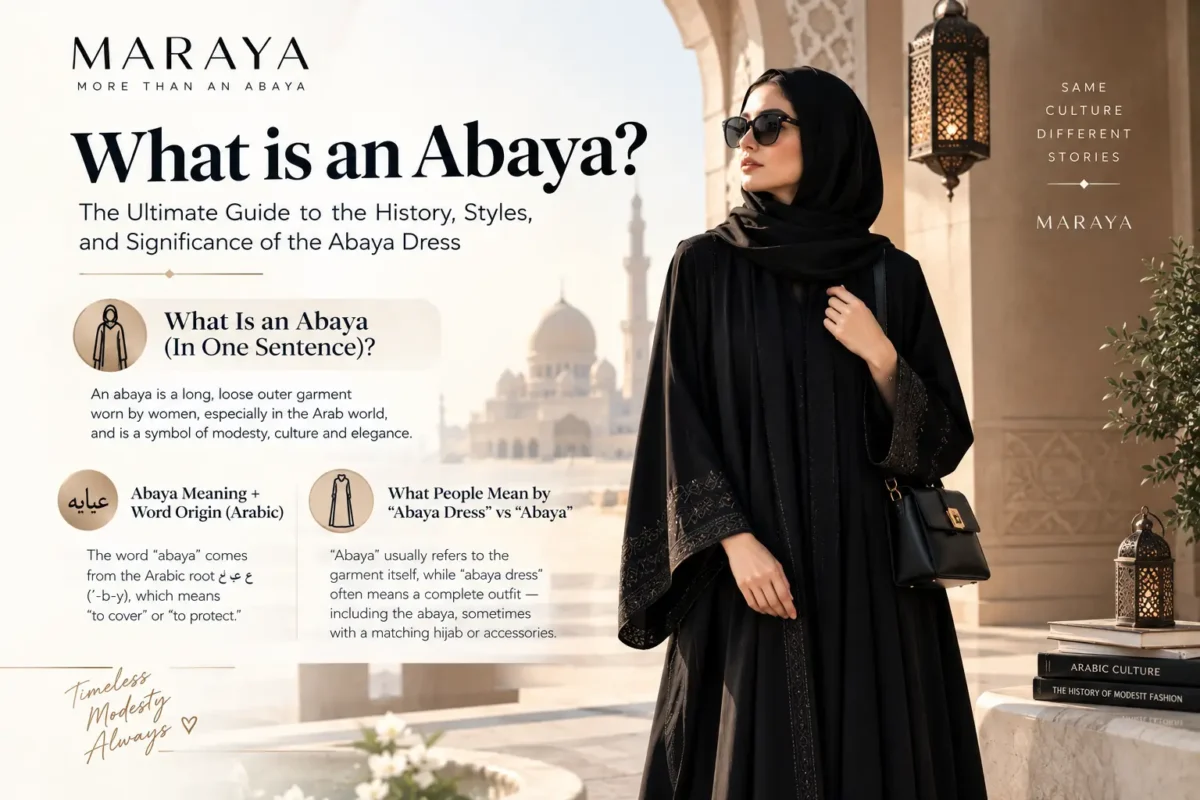
An abaya commonly covers the torso, arms, and legs while leaving the head, face, hands, and feet outside the garment. Exact coverage depends on the design and the other garments worn with it.
An abaya should not be confused with a head or face covering. A woman may wear an abaya with a hijab or niqab, but these are separate garments.
Why abayas are usually loose (modesty + comfort)
The loose silhouette is one of the defining features of the abaya. It provides broad coverage without closely following the body and can also make movement and layering easier.
Where Are Abayas Worn (And Why)?
Abayas are strongly associated with the Arabian Peninsula, particularly the Gulf, but their use extends to other regions and modern fashion markets.
Gulf / UAE context (national dress reference)
In the United Arab Emirates, the abaya has an important place in traditional women’s dress. The UAE government describes the traditional women’s outfit as including a long black loose cloak called an abaya, commonly worn with a headscarf known as a sheila.
Today, UAE abayas can range from simple black designs to highly tailored and decorative garments. Their cultural meaning remains important, while contemporary fashion has expanded the available styles.
North Africa / Horn of Africa usage
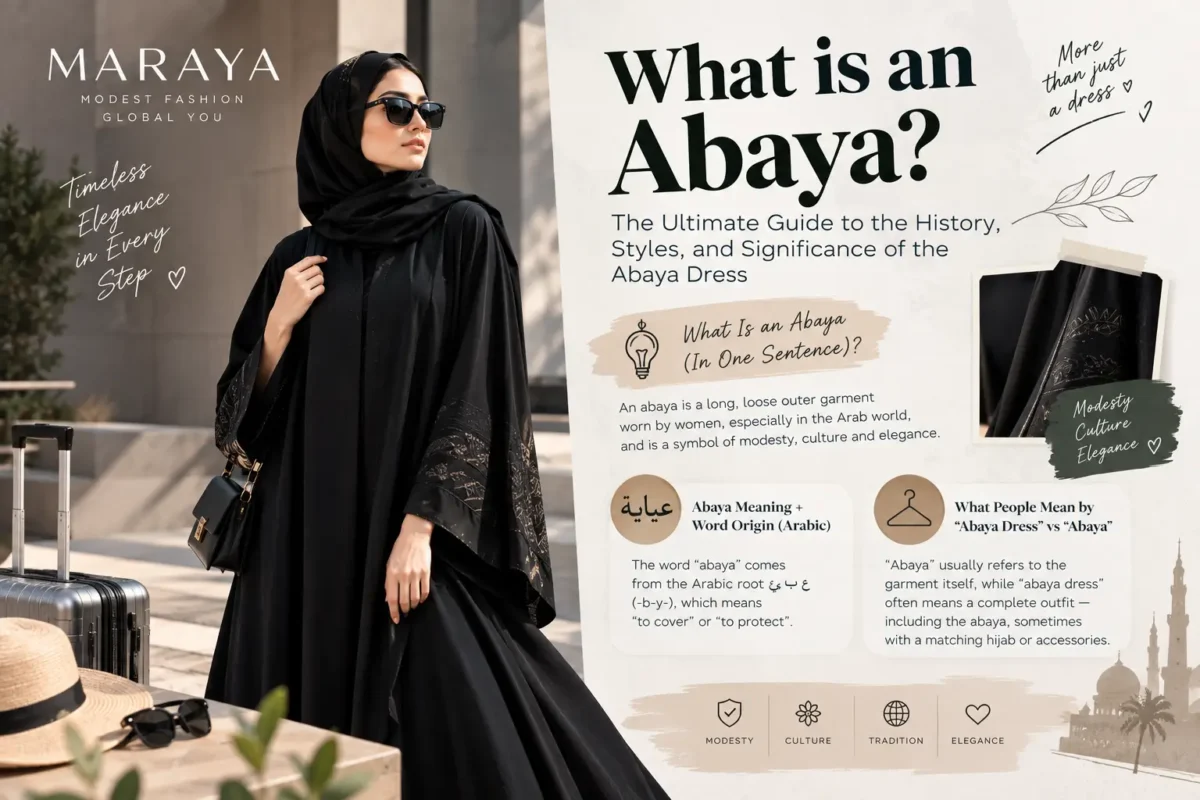
Abaya use varies outside the Gulf, and regional dress traditions should not be treated as identical. In parts of North Africa and the Horn of Africa, the term abaya can refer to long outer garments that differ in shape, color, and styling from Gulf versions.
This regional variation is important when discussing the garment because the word can describe related designs rather than one universal form.
Global modest fashion adoption (modern styling & variation)
The abaya has also become part of global modest fashion. Contemporary designs may use different colors, embroidery, tailoring, and layering techniques while retaining the basic long outer-garment concept.
This is why a modern abaya can look very different from the traditional black cloak many people associate with the term.
Abaya vs Hijab vs Niqab vs Burqa vs Jilbab: What’s the Difference?
These terms are often grouped together, but they describe different garments or forms of dress.
| Garment or term | Main purpose or area covered |
|---|---|
| Abaya | Long outer garment covering most of the body |
| Hijab | Head covering; also used more broadly in discussions of modesty |
| Niqab | Face covering that leaves the eyes visible |
| Burqa | Full-body covering that includes the face |
| Jilbab | Long outer garment; meaning varies by region and context |
Abaya vs hijab (body garment vs headscarf)
An abaya is primarily a body garment, while a hijab commonly refers to a head covering. The two can be worn together because they serve different functions.
Abaya vs niqab/burqa’a (face covering vs body garment)
A niqab is specifically a face covering, while a burqa covers the body and includes a face covering. An abaya is an outer body garment and does not itself cover the face.
Abaya vs jilbab (regional terminology and design differences)
Jilbab is another term for a long outer garment, but its meaning and design vary according to context. It can therefore overlap with some abaya styles without being universally identical to them.
Open vs Closed Abayas: What Do These Terms Mean?
The terms open abaya and closed abaya mainly describe the front construction of the garment.
Open abaya (front-open; styling over outfits)
An open abaya has a front opening and is worn over another outfit. It can be left loose or secured with a belt and is especially useful for layering.
Modern open abayas demonstrate how this traditional outer-garment concept has developed into a flexible contemporary style.
Closed abaya (one-piece; easy full coverage)
A closed abaya has a more continuous front and is generally worn as one outer garment. It offers a straightforward appearance without requiring a visible inner layer.
For repeated daily use, a simple everyday abaya can be a practical choice because of its uncomplicated silhouette and easy styling.
Why many modern abayas are worn open like a coat
Open styling has become common because it allows the abaya to work as a long outer layer. This makes it easier to combine different inner outfits, accessories, and footwear while keeping the abaya as the main outer piece.
Common Types of Abayas (With Simple Descriptions)
There is no single universal classification of abaya styles. The most useful way to understand them is by looking at their silhouette, construction, and level of decoration.
Dubai embellished abayas (threadwork, lace, sequins, etc.)
Embellished abayas may feature embroidery, lace, beads, sequins, or decorative borders. These details are often used for formal events, celebrations, and evening wear.
Decoration is not limited to modern fashion. Historical examples also show abayas made with elaborate materials and embroidery.
Kimono abayas (layering + wide sleeves)
Kimono abayas use wide sleeves and a flowing silhouette inspired by kimono-style construction. Their generous shape makes them suitable for layering and creates a relaxed, fluid appearance.
Butterfly/farasha/poncho styles (flowy coverage)
Butterfly, farasha, and poncho-inspired abayas emphasize volume and flowing fabric. Their broad silhouettes create generous coverage without closely following the body.
What Are Abayas Made Of (Fabrics and How They Change the Look)?
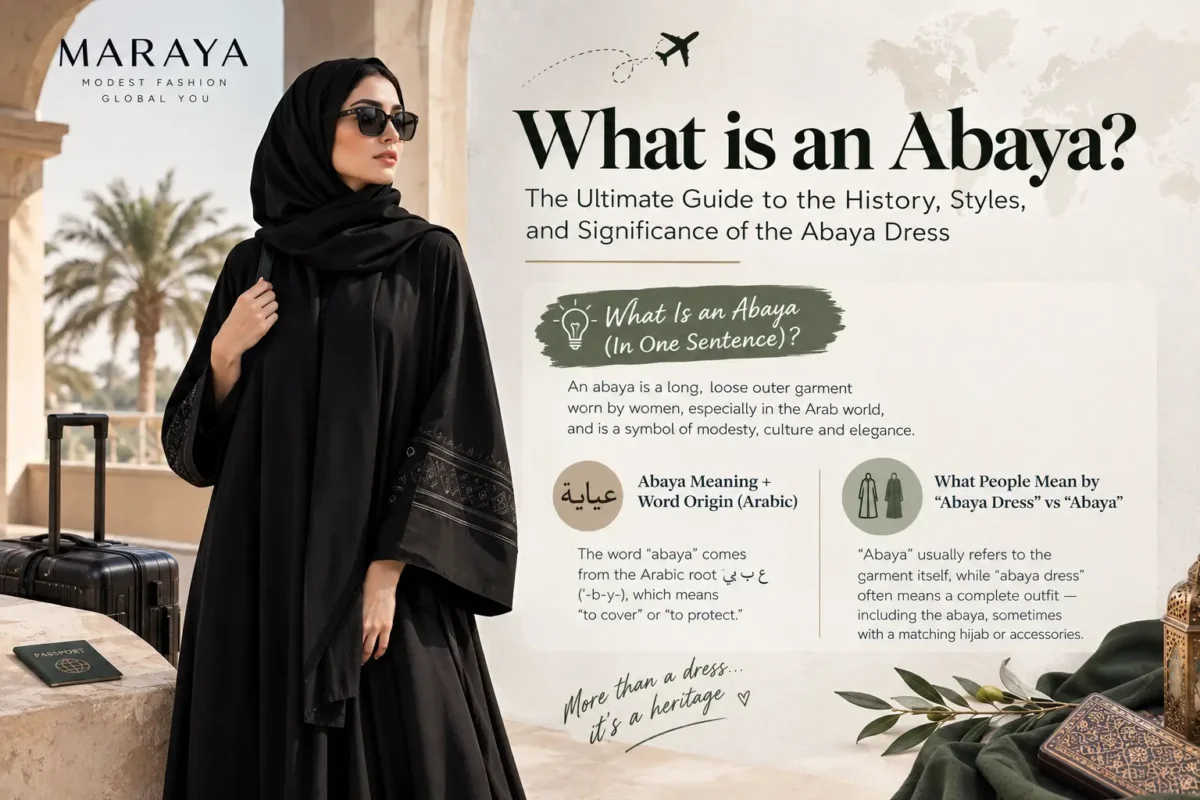
Fabric affects an abaya’s drape, weight, movement, opacity, and overall appearance. It can also influence whether a design feels more suitable for everyday wear or special occasions.
Everyday fabrics (nida/crepe) vs occasion fabrics (satin/velvet)
Everyday abayas often use fabrics such as Nida or crepe because they can create a smooth drape without excessive weight. Occasion designs may use satin, velvet, or other richer materials to create more shine or structure.
The right fabric depends on how the garment will be worn. A material that works well for an evening event may require more care than one intended for frequent everyday use.
Why fabric choice matters (drape, weight, occasion suitability)
Two abayas with a similar cut can look completely different when made from different fabrics. Fluid materials create softer movement, while structured fabrics can produce a sharper silhouette.
For a more timeless wardrobe approach, classic abayas can be a useful reference for understanding how cut and fabric work together.
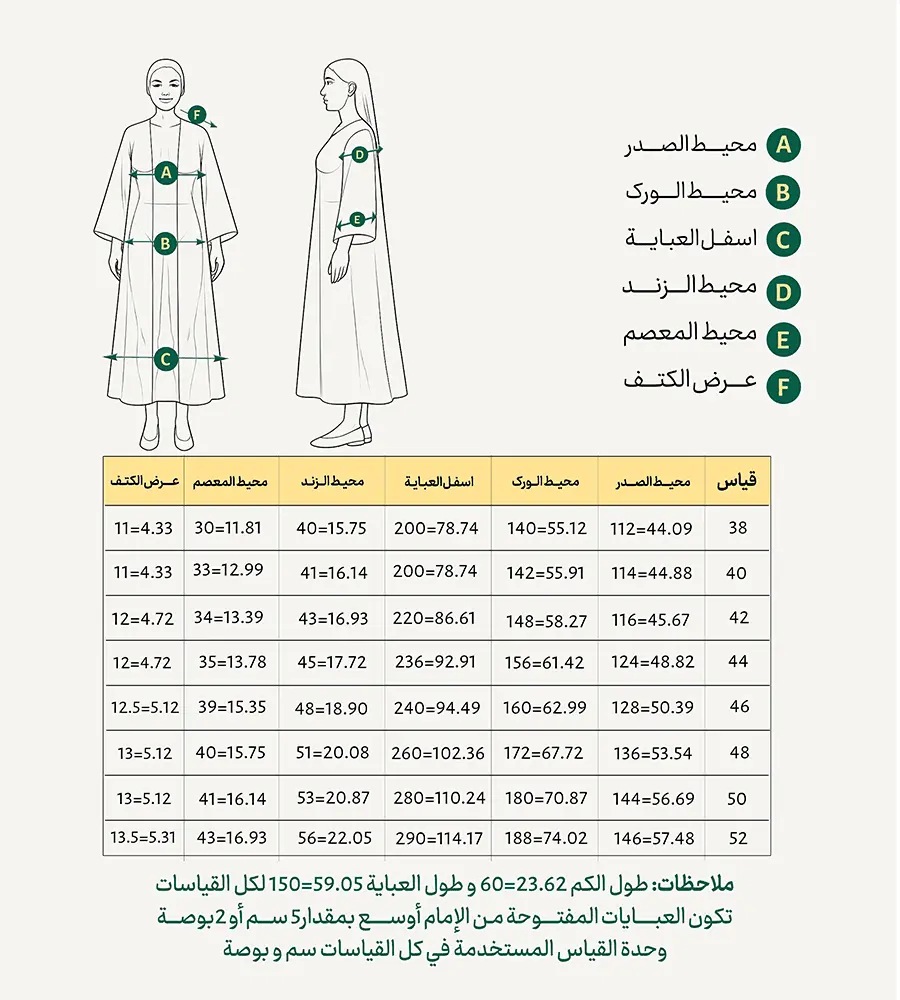
How Abaya Sizing Works (Why Many Brands Use Length in Inches)
Abaya sizing can be confusing because many brands use numbers such as 50, 52, 54, 56, or 58 rather than standard clothing sizes.
What “size 50/52/54…” often means
In many sizing systems, these numbers refer mainly to garment length rather than overall body size. However, sizing is not standardized, so the meaning can vary between brands.
This is why checking the brand’s own measurement chart is more reliable than choosing a size number based on your usual clothing size.
Size-chart checks that prevent returns (length + sleeves + shoulders)
Before ordering, compare the listed length with your height and preferred hem position. Sleeve length and shoulder measurements also matter, especially in structured designs.
For open abayas, consider how the garment falls over the clothes you normally wear. For closed styles, check both length and room around the shoulders and arms.
How to Wear an Abaya (Simple Styling Basics for Beginners)
For beginners, the easiest approach is to treat the abaya as part of the entire outfit.
Wearing a closed abaya (one-piece simplicity)
A closed abaya can be paired with simple shoes and a coordinated hijab or scarf. Neutral designs are easy to accessorize, while embellished styles can serve as the main statement of the outfit.
Wearing an open abaya (underlayer basics)
An open abaya is worn over an inner layer such as a long dress, coordinated top and trousers, or another clean base.
The inner outfit should complement the outer layer in color, length, and fabric weight. This keeps the overall silhouette balanced and makes layering look intentional.
Final Thoughts on What Is Abaya
Understanding what is abaya starts with a simple definition: it is a long outer garment associated with Arab dress and worn by some Muslim women over other clothing.
From this basic form, the abaya has developed into many styles, including open, closed, embellished, kimono, and flowing designs. Regional traditions and modern fashion have also influenced how the garment looks and is worn today.
For more practical information about abaya styles, fabrics, modest fashion, and wardrobe ideas, explore Maraya Mag.
Frequently Asked Questions About Abayas
What is abaya?
An abaya is a long, loose outer garment traditionally associated with Arab dress and worn by some Muslim women over other clothing.
What is the abaya used for?
The abaya can provide body coverage and also has cultural and fashion significance. Its everyday use varies between communities, countries, and individuals.
What is abaya dress?
“Abaya dress” is a common English phrase used to describe an abaya. Although it can look like a long dress, an abaya is generally understood as an outer garment.
What abaya should a beginner choose?
A simple, comfortable design with an easy-to-style silhouette is a practical starting point. An everyday abaya is often easier to work into different outfits than a heavily embellished style.
Is an abaya the same as a hijab?
No. An abaya is a long body garment, while a hijab commonly refers to a head covering. They can be worn together.
Is an abaya the same as a niqab or burqa?
No. A niqab is primarily a face covering, while a burqa includes full-body and face coverage. An abaya is a long outer garment and does not itself cover the face.