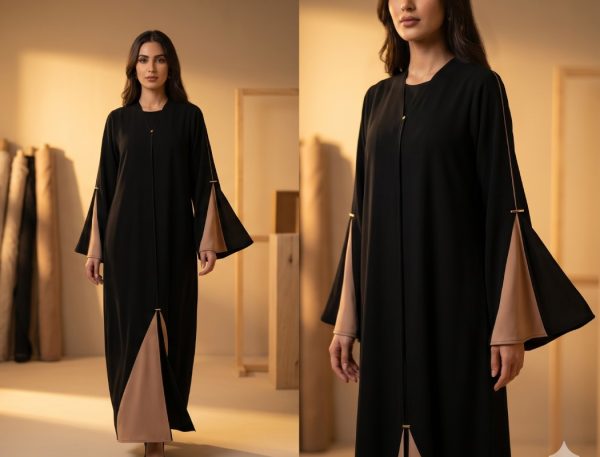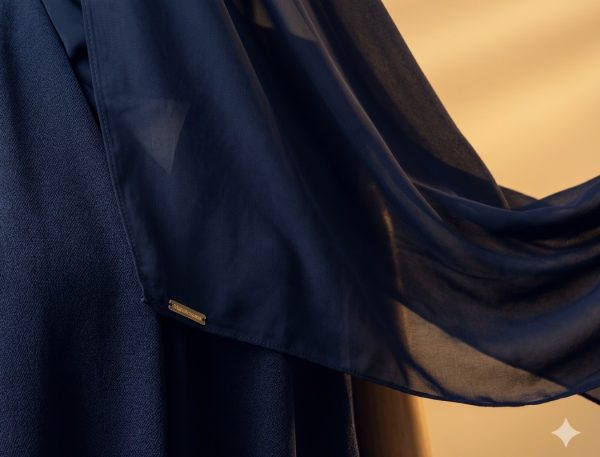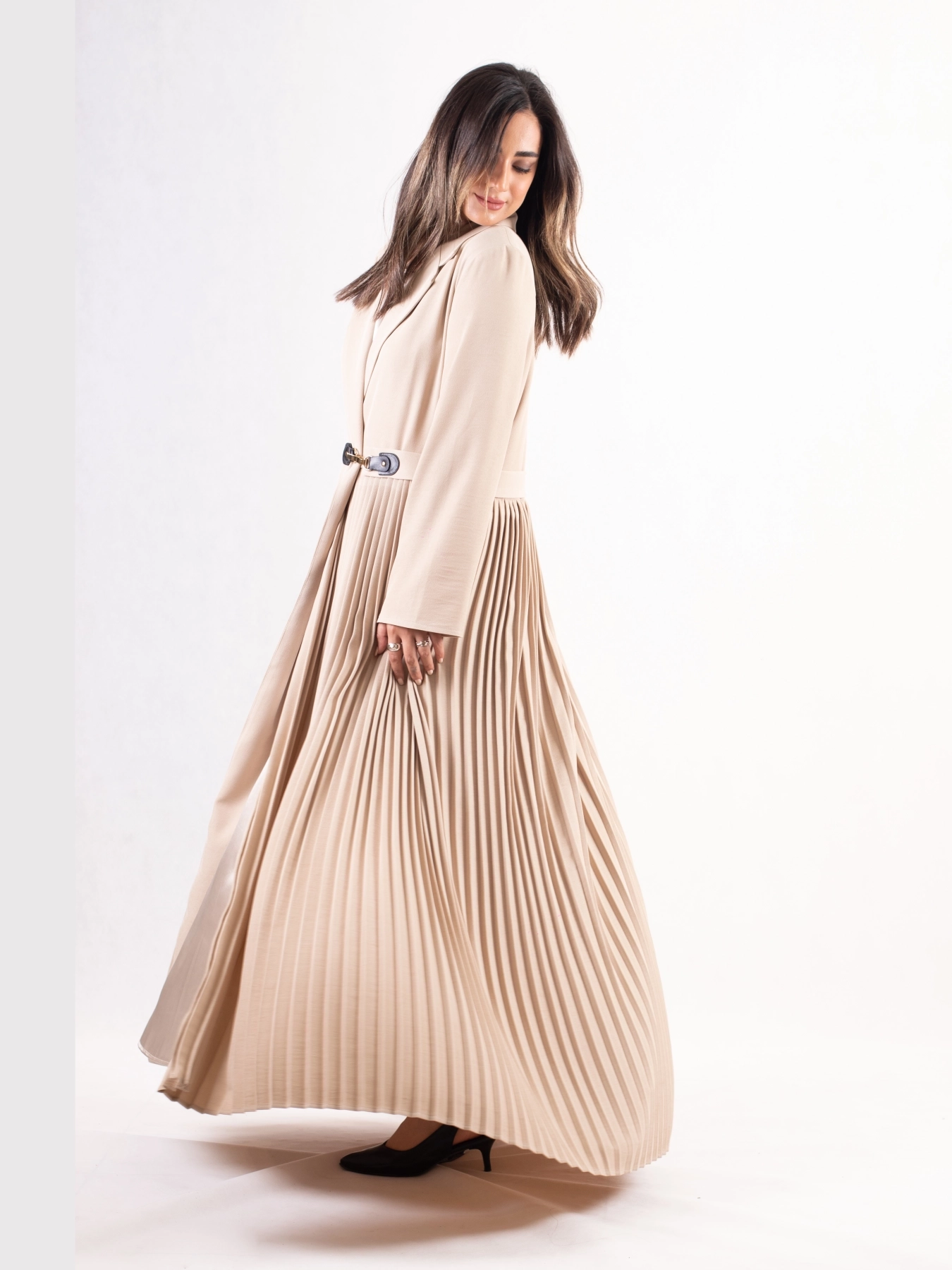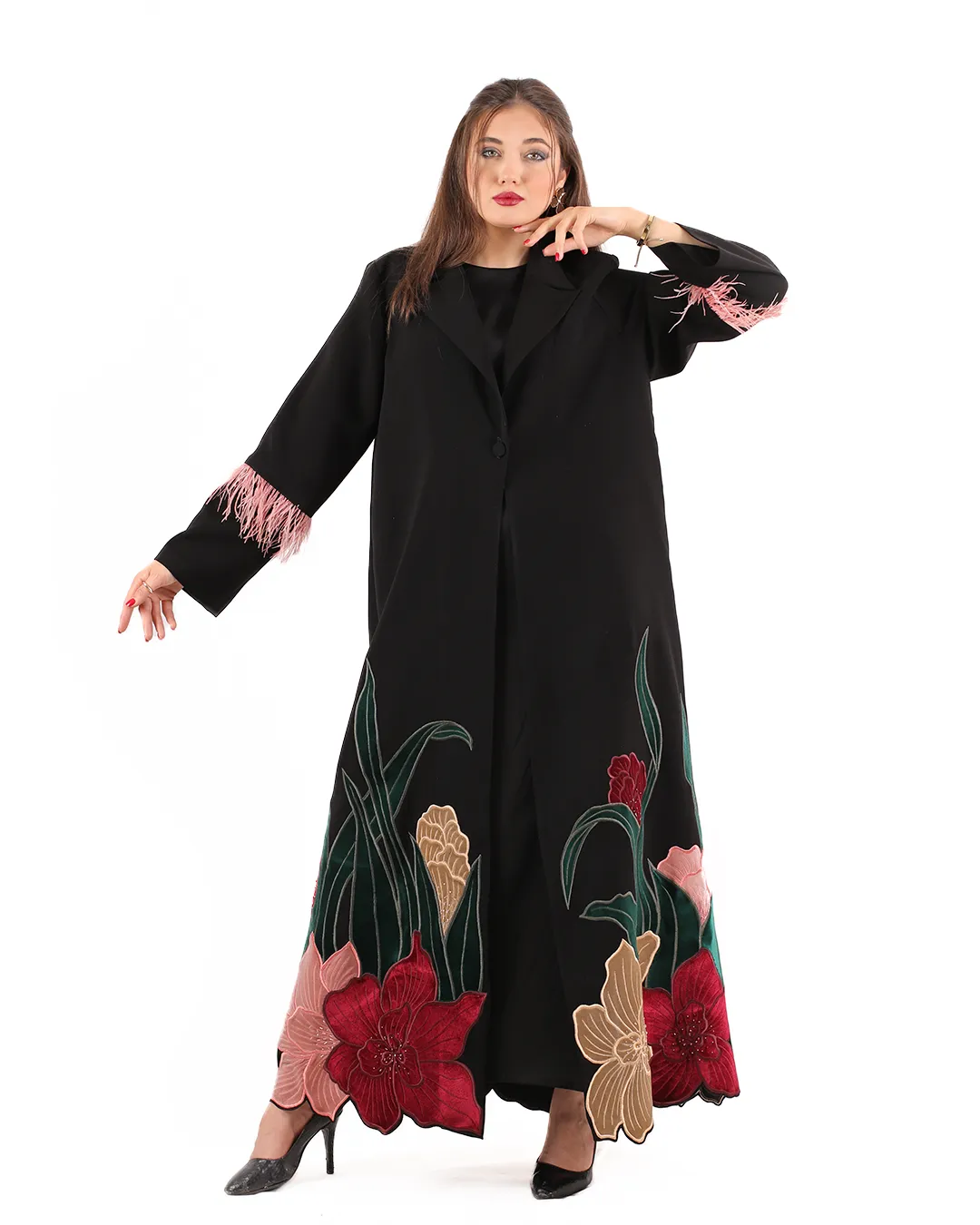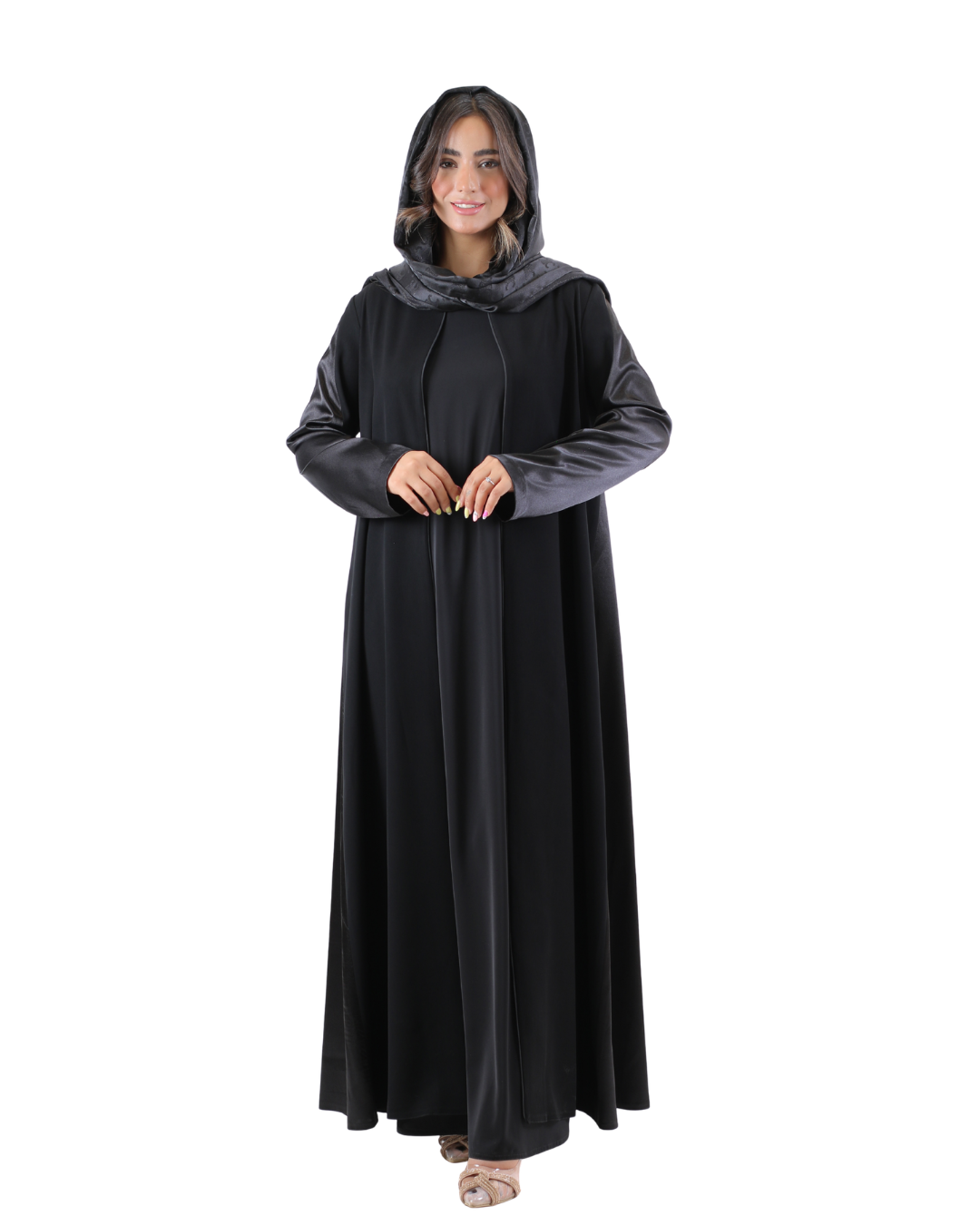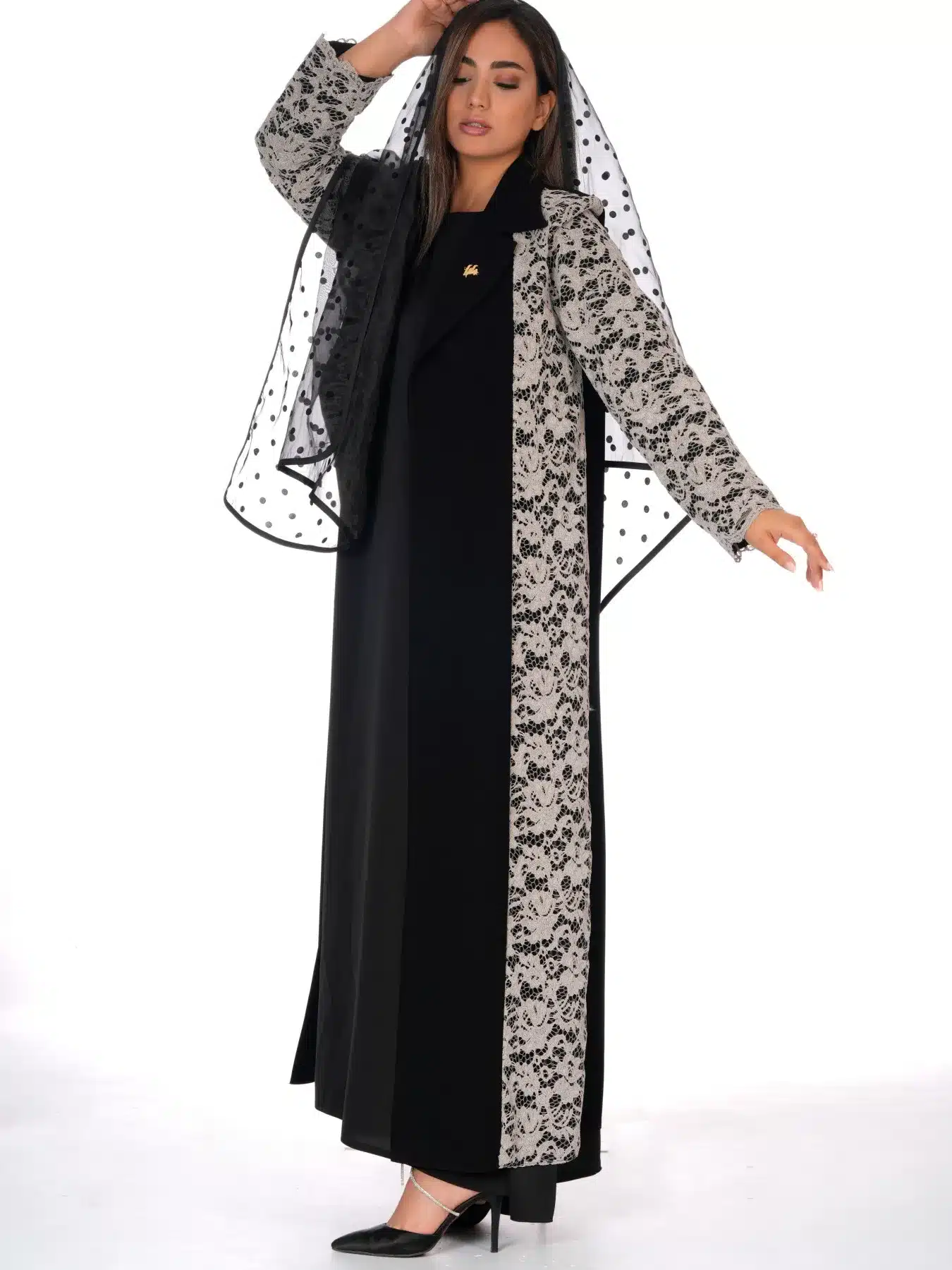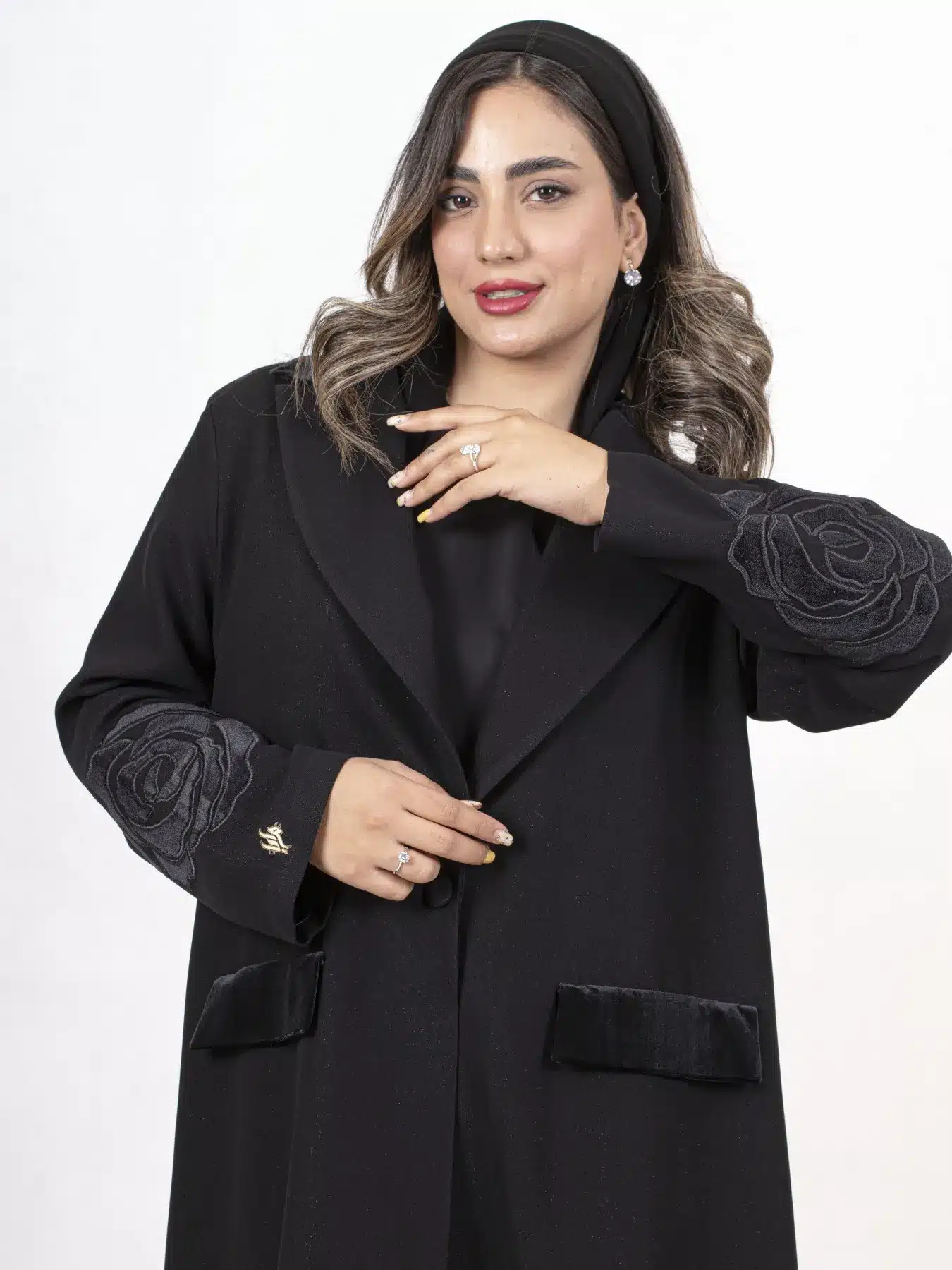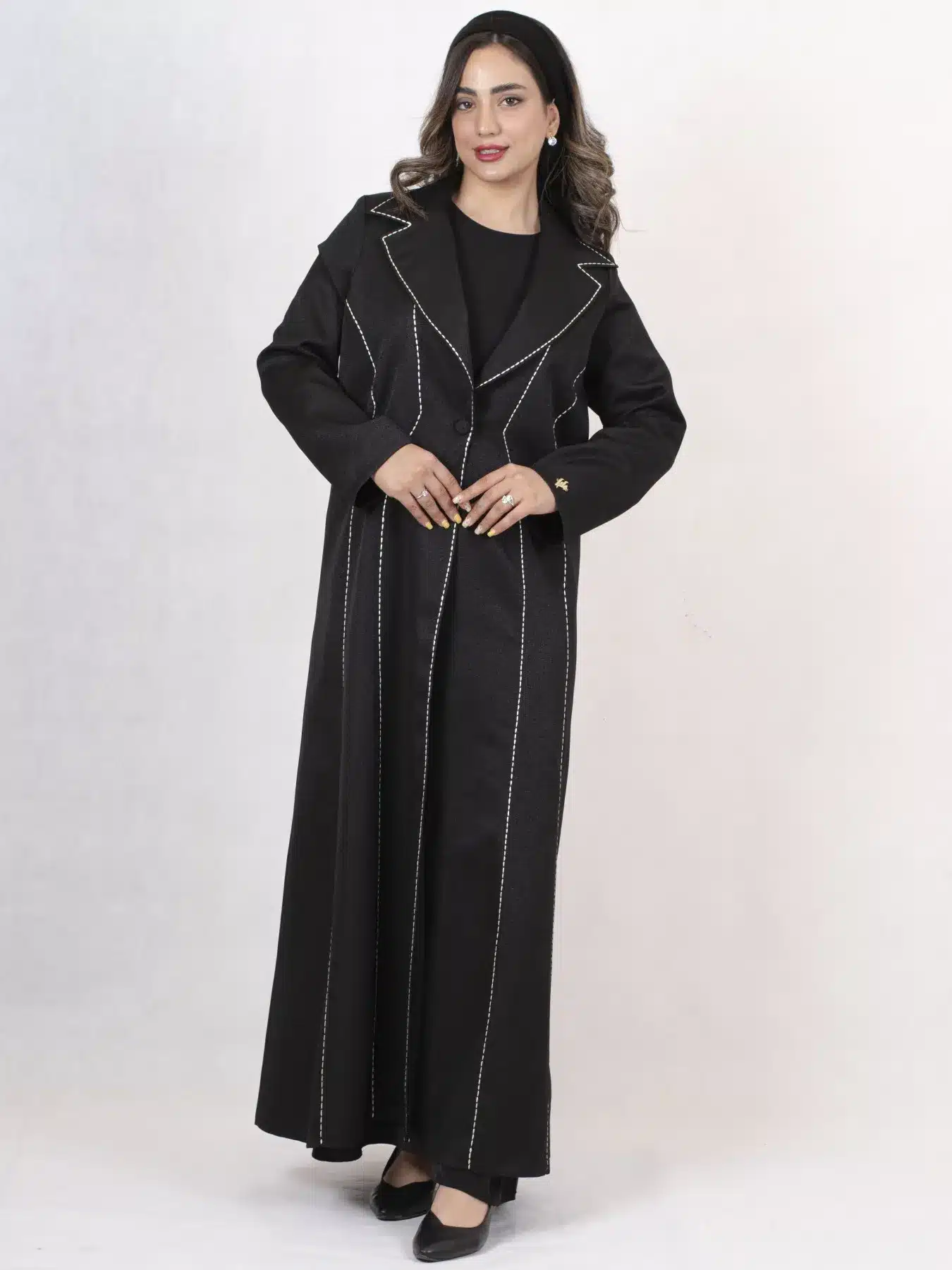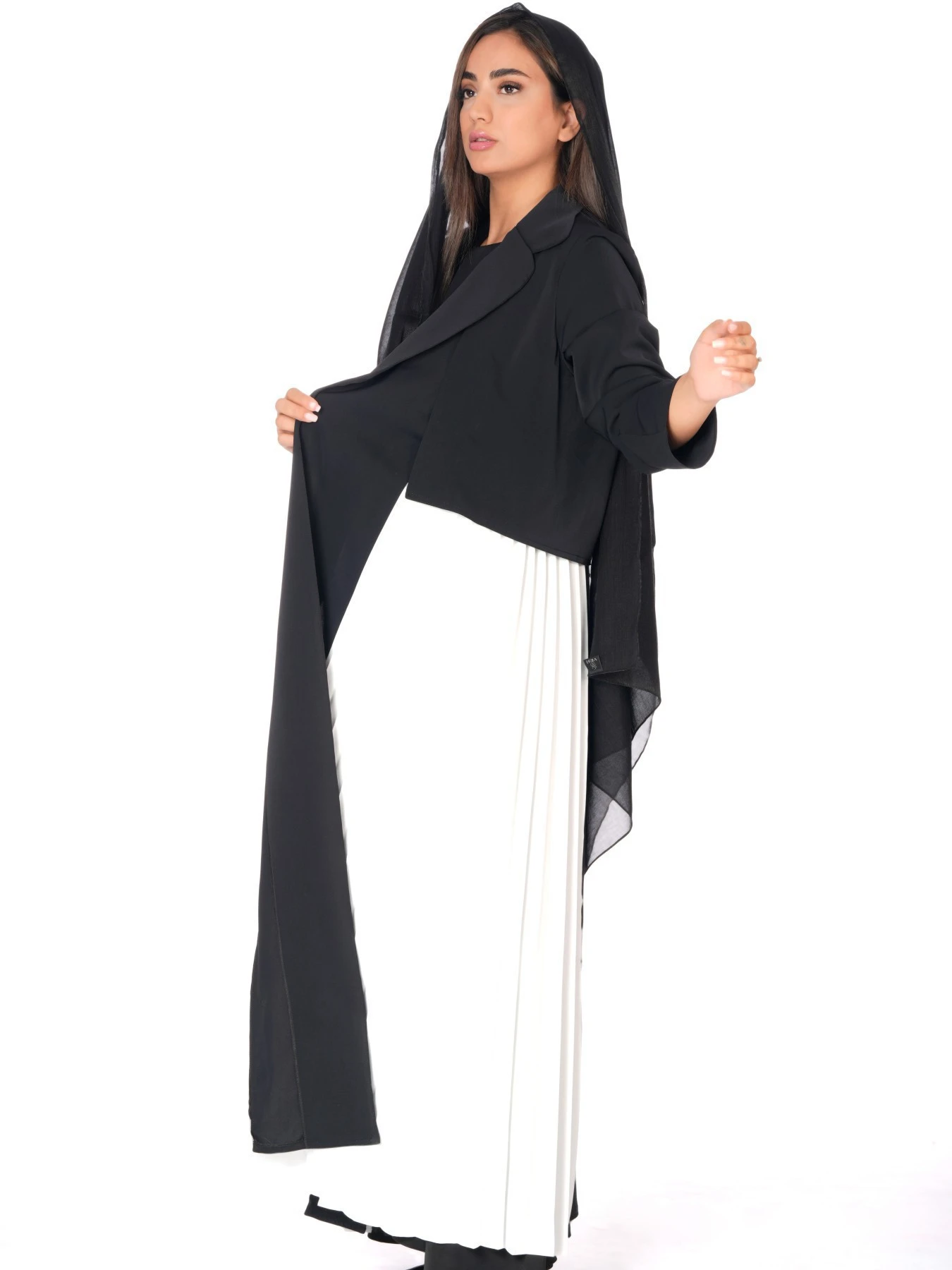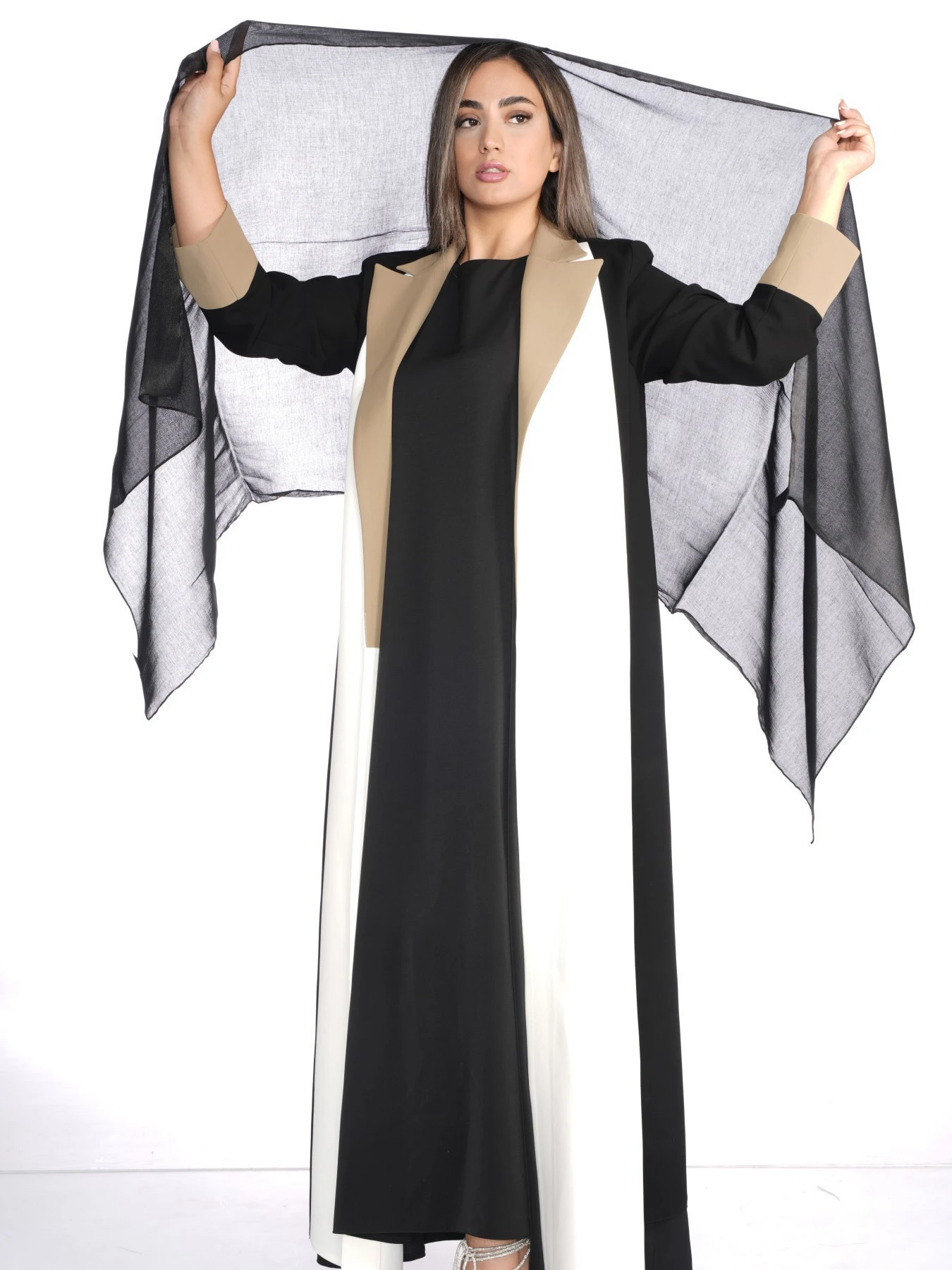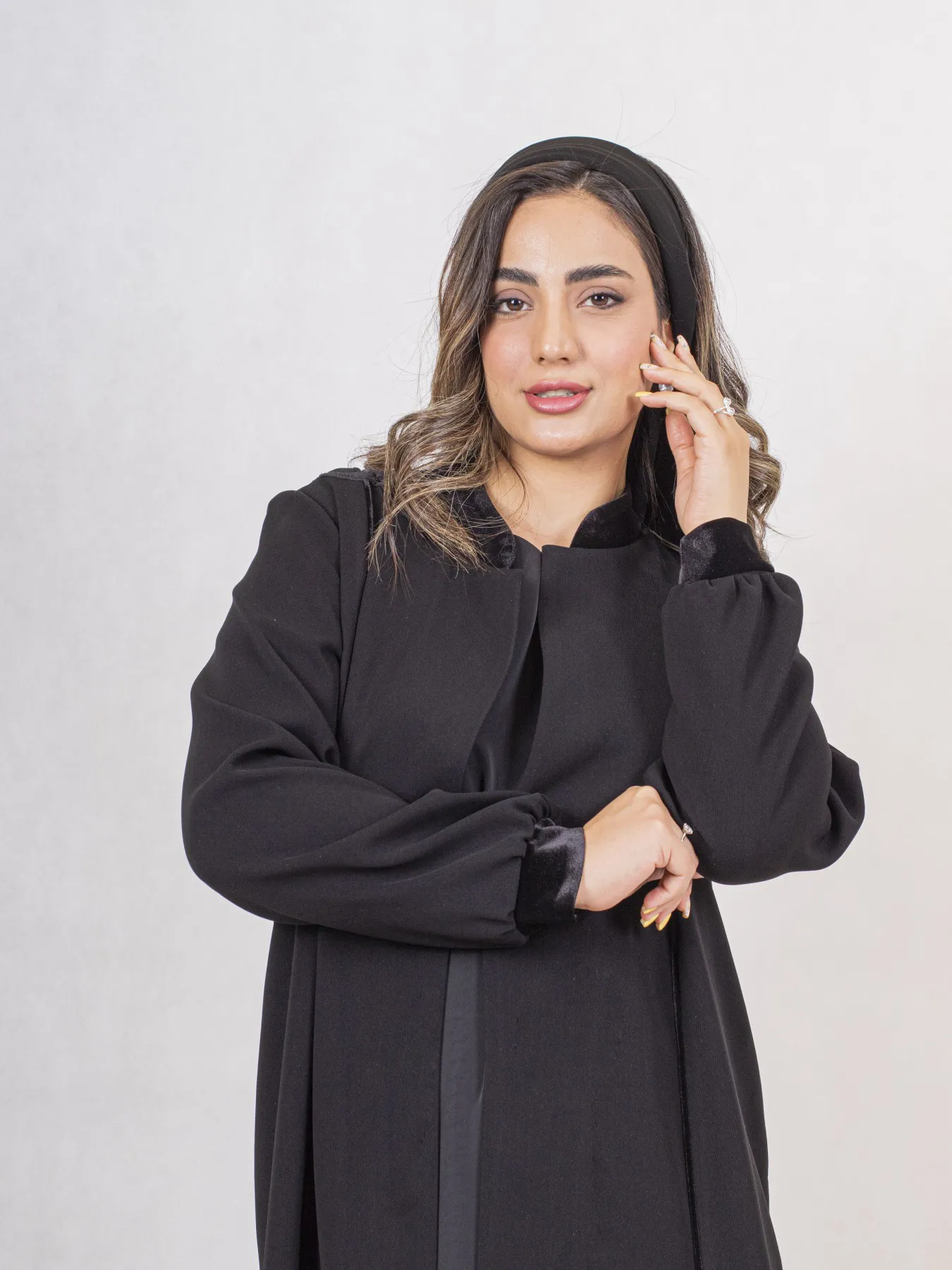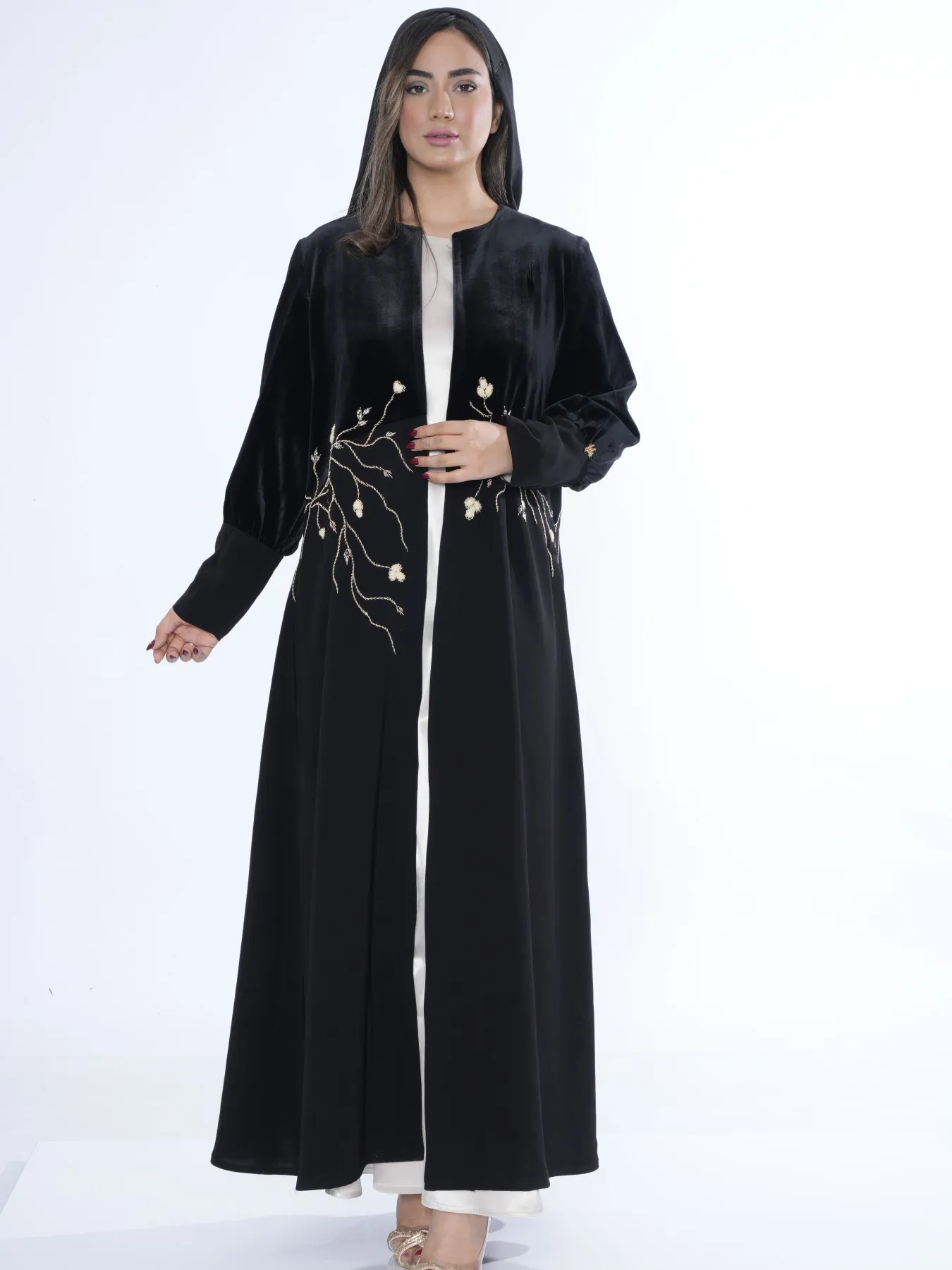
Choosing the right abaya fabric material can make a noticeable difference in how an abaya feels, moves, looks, and performs throughout the day. The best abaya fabric is not necessarily the most expensive or luxurious option. The right choice depends on several practical factors, including climate, occasion, desired drape, opacity, maintenance, and how frequently the garment will be worn.
For everyday use, breathable and relatively easy-care materials such as cotton, viscose, lightweight crepe, and selected Nida fabrics can be practical choices. For formal occasions, crepe, satin, silk, jacquard, velvet, and embellished fabrics can create a more sophisticated appearance. Understanding the differences between abaya fabric types makes it easier to choose a garment that feels comfortable while also supporting the look and level of coverage you want.
What Is the Best Fabric for an Abaya?
There is no single best abaya material for every woman, climate, or occasion. A fabric that feels comfortable during a hot summer day may not provide the structure or warmth needed during cooler months, while a luxurious formal fabric may look beautiful at an evening event but be less convenient for frequent travel or everyday wear.
A more useful approach is to choose the material according to the situation in which you will wear the abaya. Think about temperature, humidity, movement, time spent outdoors, maintenance requirements, and whether the garment is intended for work, travel, daily errands, Eid, weddings, or evening occasions. When these factors are considered together, choosing an abaya fabric becomes much more straightforward.
Best Abaya Fabric for Everyday Wear
For everyday wear, an abaya fabric should balance comfort, durability, movement, appearance, and maintenance. Crepe, Nida, viscose, cotton blends, and selected practical synthetic blends can all be suitable depending on their specific construction. The goal is to find a material that maintains a polished appearance without demanding the same level of care as delicate luxury fabrics.
An everyday abaya also benefits from controlled drape. A fabric that is too stiff can make the garment feel bulky, while an excessively lightweight material may cling to the body or require additional layering. For frequent wear, the most useful abaya cloth material is one that remains comfortable after several hours and allows natural movement during walking, sitting, commuting, and daily activities.
If you are looking for versatile styles for regular use, explore Maraya’s everyday abaya collection and compare the silhouettes, fabrics, and details that suit your wardrobe.
Best Abaya Material for Summer and Hot Weather
Hot weather changes the priorities when choosing an abaya. Breathability, airflow, fabric weight, and moisture management become more important than a heavy or highly structured appearance. Linen and cotton are naturally associated with warm-weather comfort, while lightweight viscose and carefully selected blends can also work well when their construction allows sufficient airflow.
However, fabric weight alone does not determine whether an abaya will feel comfortable in the heat. A lightweight synthetic material may still feel uncomfortable in high humidity if the weave and construction restrict airflow. Likewise, a loose-fitting abaya made from a breathable material can feel more comfortable than a tighter garment made from a technically lighter fabric.
For Gulf climates and long outdoor days, consider the complete garment rather than looking only at the fabric label. Fabric composition, weave, fit, lining, sleeve construction, and overall looseness can all influence how an abaya feels in warm conditions.
Best Abaya Fabric for Weddings and Formal Occasions
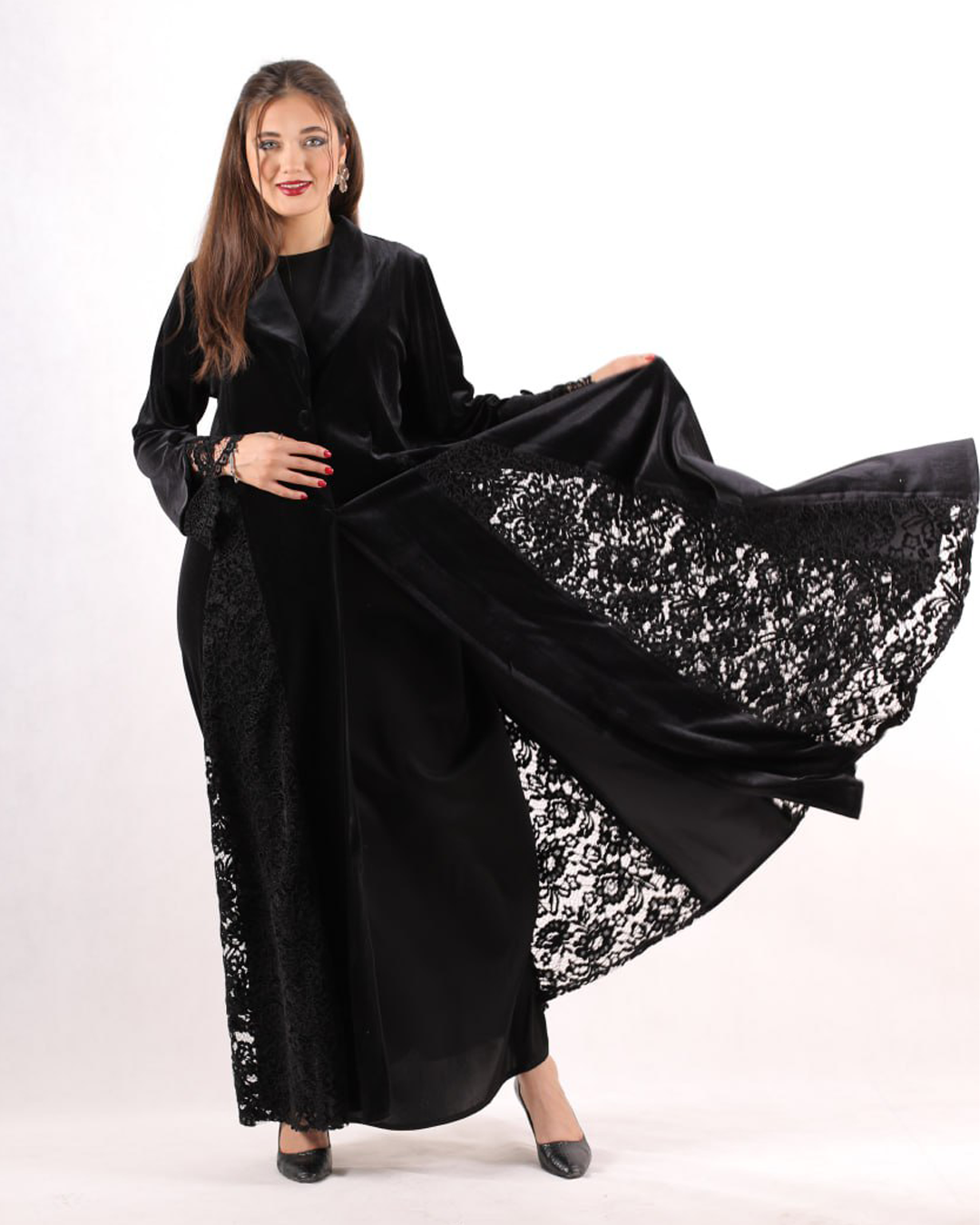
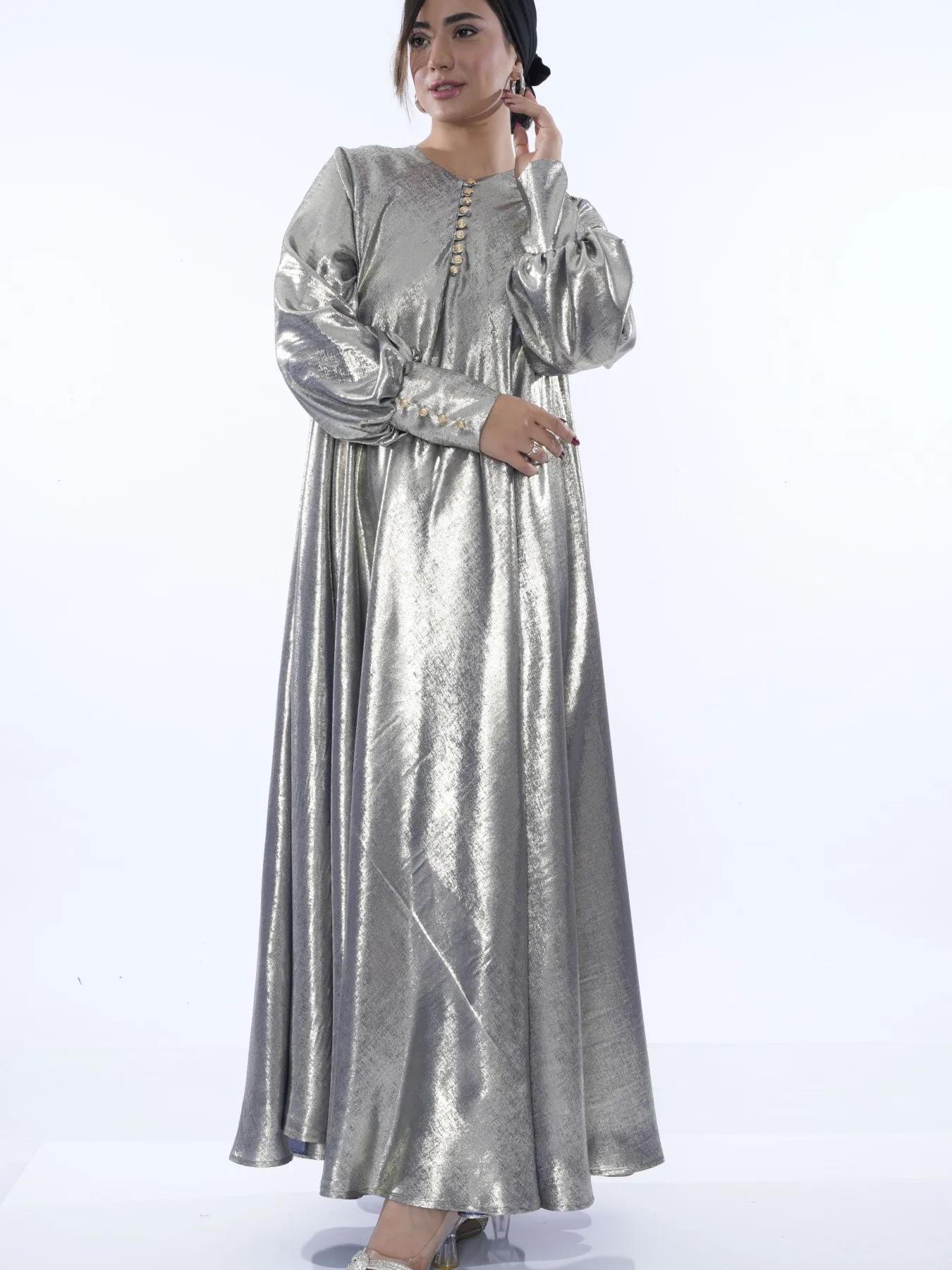
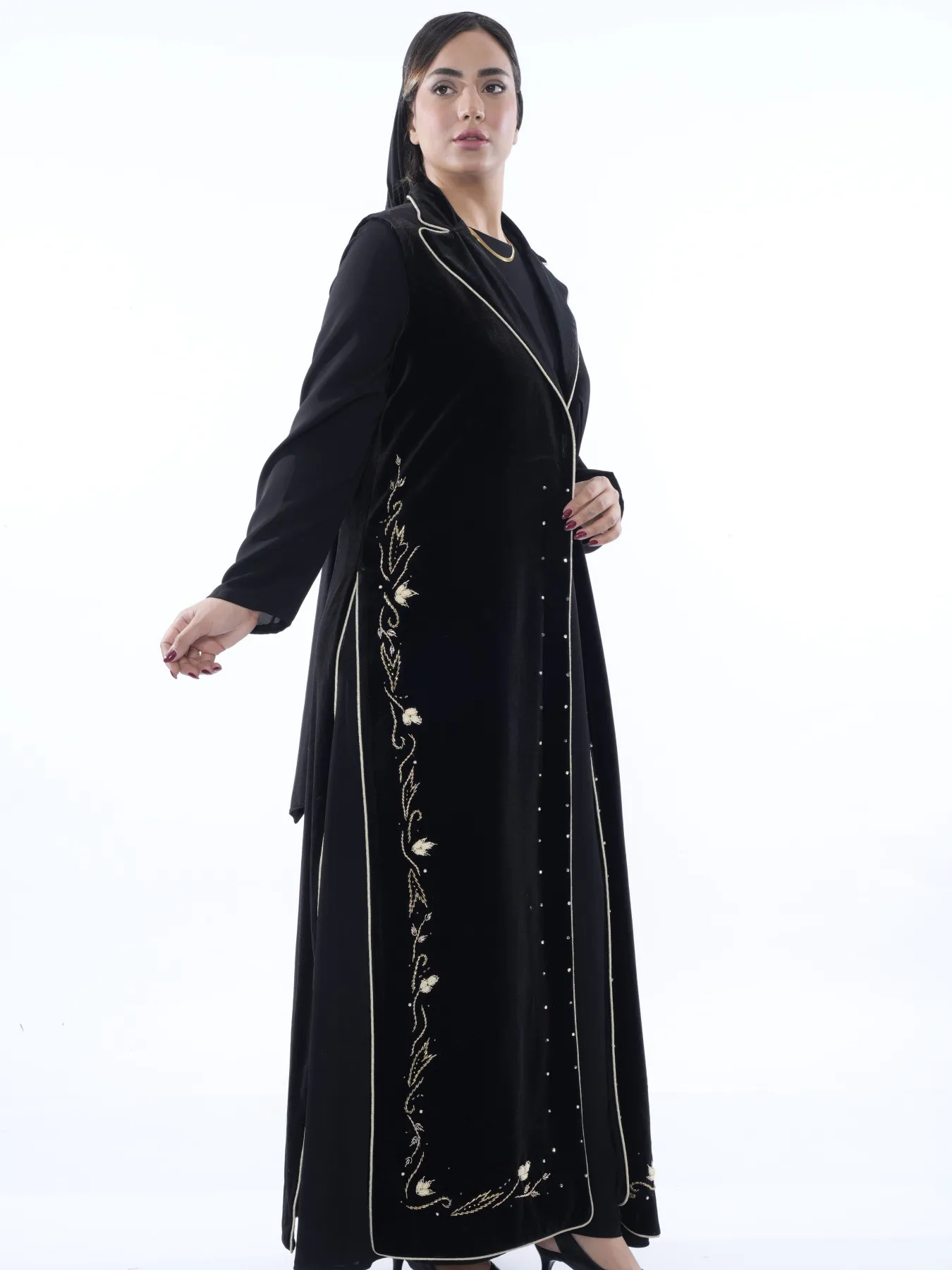
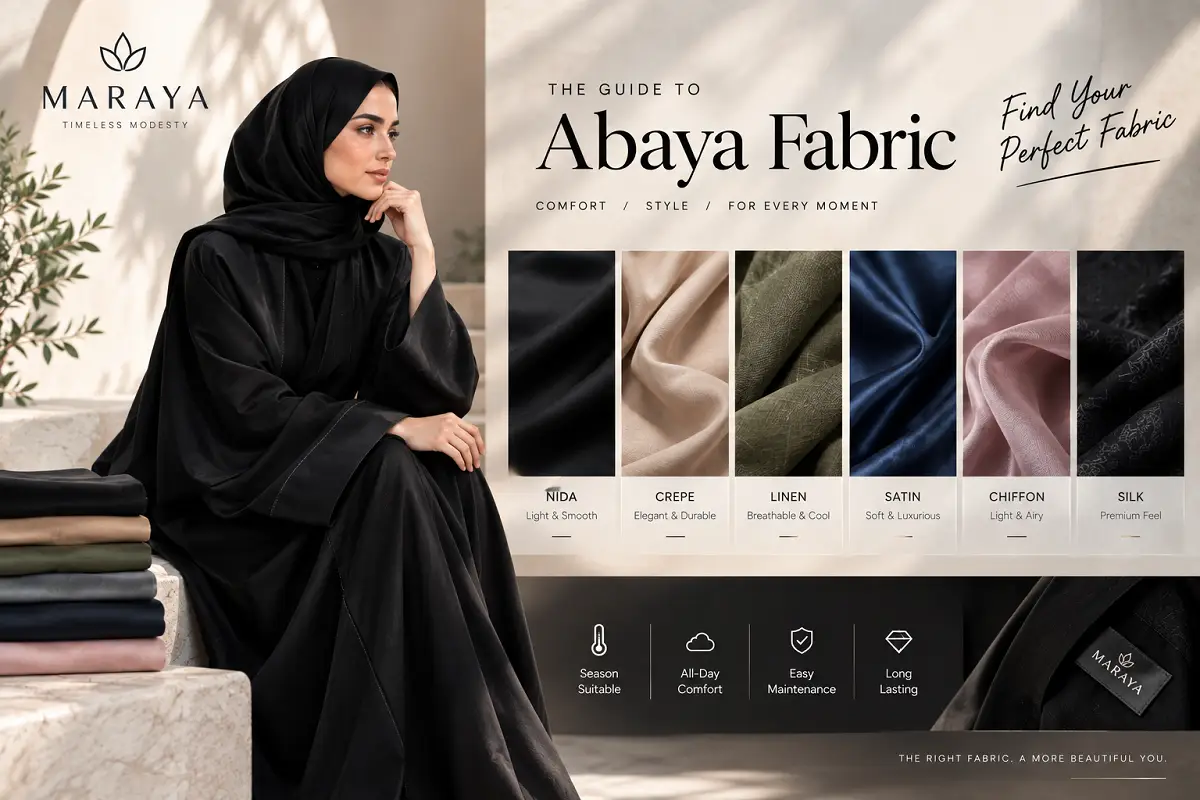
Formal abayas often place greater emphasis on drape, texture, surface appearance, and visual refinement. Satin and silk can create a luxurious sheen, while crepe offers a more understated matte finish with controlled movement. Jacquard, velvet, embroidery, and other decorative fabrics can introduce additional depth for weddings, Eid gatherings, evening events, and special occasions.
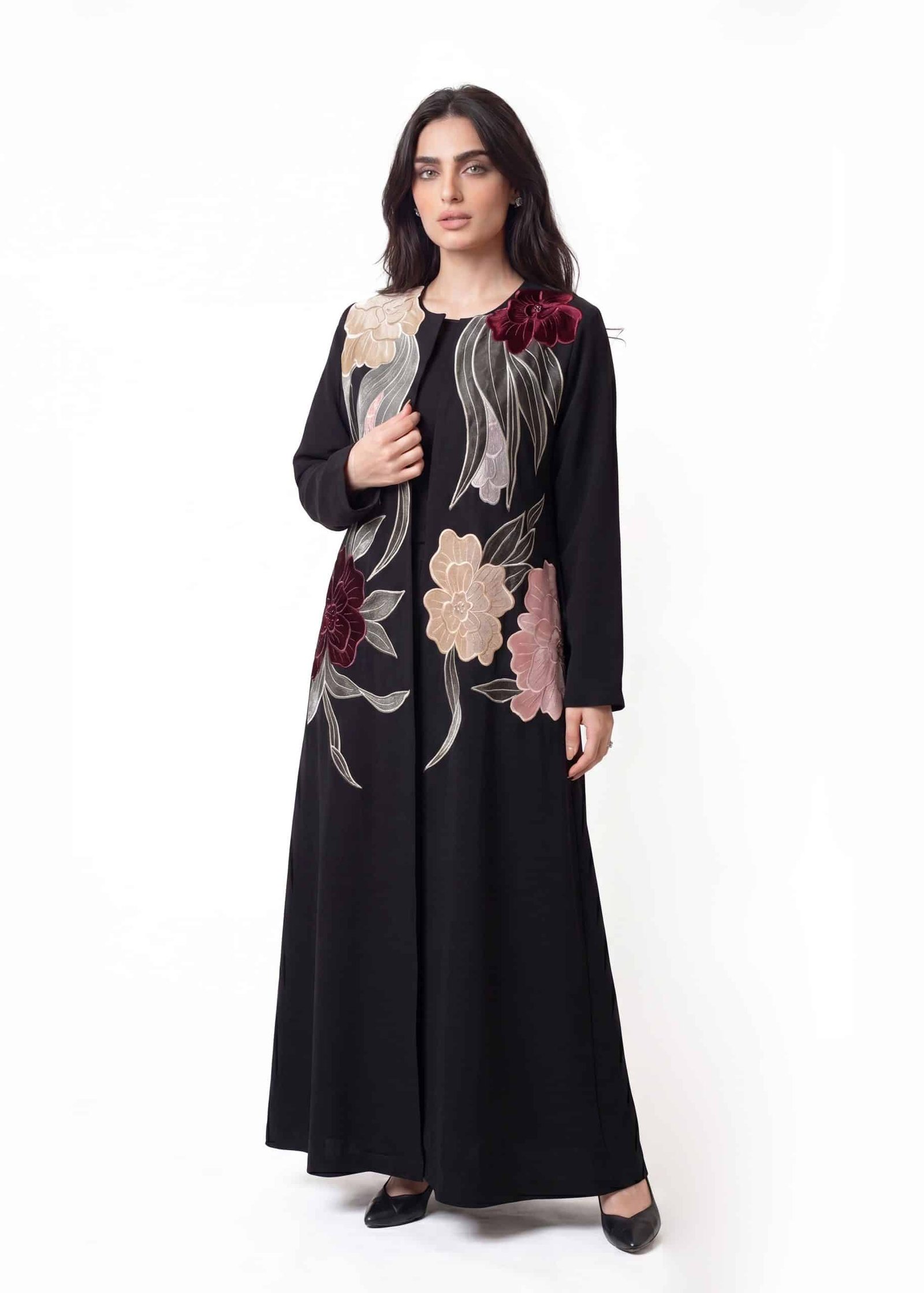
The right material depends on the look you want to achieve. A smooth reflective fabric creates a different visual effect from a textured matte fabric. If an abaya already features detailed embroidery or embellishment, a fabric with a controlled surface can allow those details to remain the main focus instead of competing with excessive shine or texture.
For special occasions, Maraya’s embroidered abaya collection can be a useful place to explore styles where fabric, decorative details, and occasion-focused design work together.
Best Abaya Fabric for Travel and Low Maintenance
Travel requires a different type of practicality. A beautiful fabric can become inconvenient if it develops heavy creases inside a suitcase or requires specialist care after every use. Crepe, Nida, viscose blends, and selected synthetic blends can be practical for travel because many versions can recover reasonably well after normal folding.
Before packing an abaya, always check the manufacturer’s care instructions instead of assuming that a particular fabric can tolerate high heat, ironing, or steam. Even fabrics belonging to the same category can behave differently depending on their fiber composition, finishing, and construction.
A good travel abaya should also have enough structure to look polished after sitting for several hours while remaining comfortable for walking and moving between different environments. This is why fabric should always be considered together with the garment’s cut, construction, and intended use.
Abaya Fabric Types Explained
Understanding common abaya fabric types makes online shopping much easier because fabric names do not always describe one identical material. Two abayas labeled with the same fabric name can still feel and perform differently because of differences in weave, weight, fiber composition, finish, and manufacturing quality.
Rather than choosing a material based only on its name, consider what you actually want from the garment. Do you need breathability, a flowing silhouette, wrinkle resistance, opacity, easy care, or a luxurious surface? These questions provide a much more useful framework for selecting an abaya.
Nida and Nidha Fabric
Nida, sometimes written as Nidha, is widely associated with abayas because of its smooth surface, fluid drape, and generally comfortable feel. Depending on its composition and finish, Nida can range from lightweight and flowing to more substantial varieties suitable for different climates and occasions.
A well-made Nida abaya can fall naturally around the body without appearing excessively stiff. It can be particularly suitable for women who prefer a clean, flowing silhouette without heavy surface texture. However, the exact hand feel and performance of Nida can vary, so the fabric name should not be treated as a complete description of the finished garment.
How Nida Feels, Drapes, and Wears
Nida typically works well when the desired result is an elegant silhouette with natural movement. Its smooth surface can also complement simple abaya designs where the drape of the material becomes an important part of the overall appearance.
For long days, however, comfort depends on more than softness. Temperature, garment looseness, lining, fabric weight, and the particular Nida construction all influence how an abaya performs. A lightweight version may be more suitable for warm conditions, while a heavier version can work better during cooler weather or in strongly air-conditioned environments.
Who Should Choose Nida?
Nida can be a suitable choice for someone who wants an abaya that looks polished without depending heavily on embroidery, embellishment, or elaborate surface texture. It works particularly well when flow, simplicity, and an elegant silhouette are important priorities.
It can also be useful for building a versatile wardrobe because a simple Nida abaya can often be styled differently through accessories, inner layers, shoes, handbags, and outer pieces.
Crepe Fabric
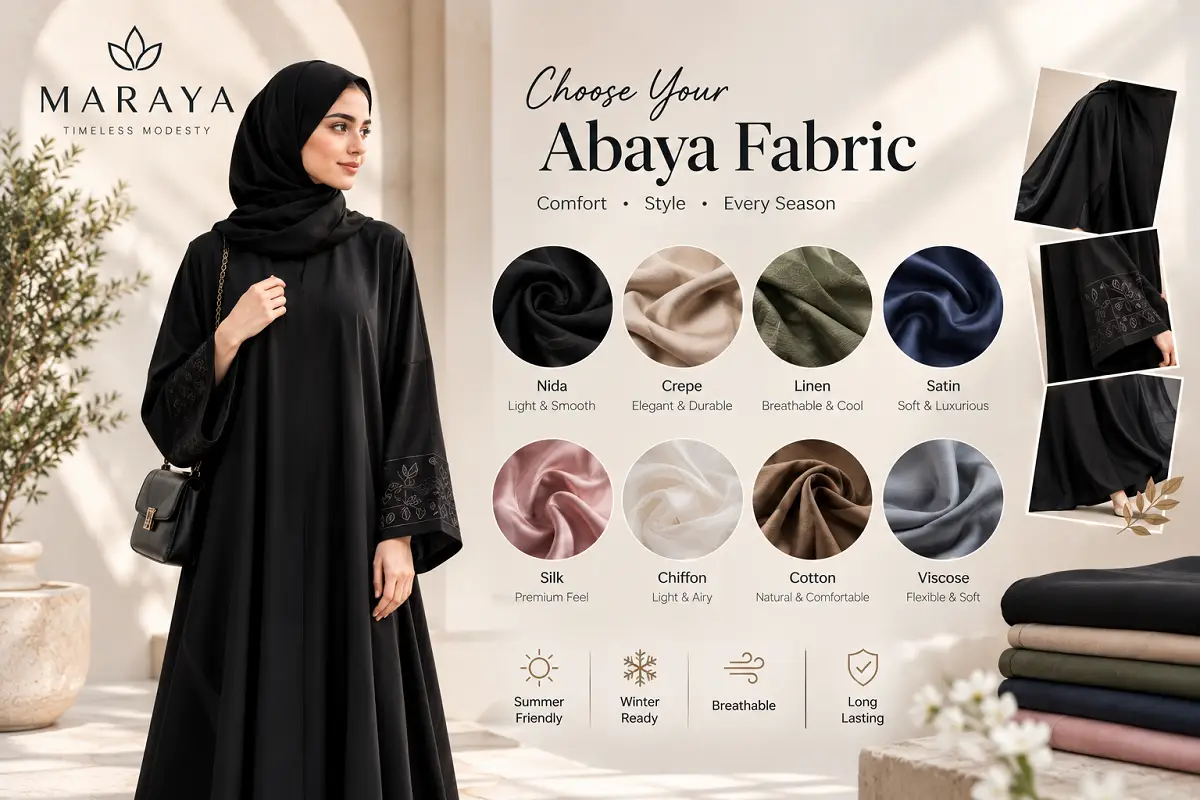
Crepe is one of the most versatile materials used for abayas. Its slightly textured surface and controlled drape can create a sophisticated appearance without the high shine associated with satin. Depending on the specific type, crepe can range from lightweight and fluid to heavier and more structured.
For workwear and daily use, crepe can be practical because many versions maintain a neat appearance and provide enough structure for a professional silhouette. However, not every crepe behaves in exactly the same way, so weight, fiber content, stretch, texture, and finish should all be considered.
Why Crepe Works for Workwear and Daily Wear
A good crepe fabric can sit comfortably between casual and formal styling. It can look understated with minimal accessories or become more occasion-focused through embroidery, belts, layering, or statement accessories.
This versatility makes crepe abayas useful for wardrobes where one garment needs to move between work, appointments, family gatherings, travel, and evening plans without appearing too casual or excessively formal.
Pros and Drawbacks of Crepe Abayas
The main advantages of crepe include versatility, controlled drape, refined appearance, and the availability of many different weights and finishes. Some versions can also be relatively easy to maintain, making them practical for frequent wear.
The main consideration is that not every crepe is equally breathable or lightweight. Some heavier versions can feel warm during hot weather, while very thin versions may require more attention to opacity and layering. The fabric should therefore be evaluated according to the specific climate and purpose.
Chiffon Fabric
Chiffon is lightweight, airy, and visually delicate. It is particularly useful for flowing outer layers, overlays, sleeves, and occasion-focused designs. Its lightness can create beautiful movement, but it also means that opacity must be considered carefully.
A chiffon abaya or chiffon panel may require an opaque underlayer, lining, or suitable inner garment. Opacity should always be evaluated as part of the complete outfit, especially under direct sunlight or strong indoor lighting.
Chiffon can be particularly effective in layered modest outfits. If you prefer this type of styling, explore Maraya’s open abaya collection for silhouettes designed around layering and versatile styling.
Linen Fabric
Linen’s breathable character and natural texture make it a seasonal essential. Its open, airy weave effortlessly creates a relaxed silhouette, epitomizing the essence of lightweight summer attire.
Its main drawback is wrinkling. Linen naturally develops creases, and this characteristic is part of the appearance of the fabric rather than automatically being a sign of poor quality. If you prefer an abaya that maintains a consistently smooth and formal appearance throughout the day, another material may be more convenient.
Cotton Fabric
Cotton is widely appreciated for its softness, breathability, and familiar natural feel. When used in an appropriately lightweight construction, it can be comfortable for warm conditions and everyday use.
Compared with linen, cotton may feel smoother and can sometimes be easier to style when a less textured appearance is preferred. However, cotton can also wrinkle and may shrink or change shape if washed or dried incorrectly. Proper care is therefore important when choosing cotton-based abayas.
Satin and Silk Fabrics
Satin and silk are both associated with luxury, but they are not the same thing. Silk is a natural fiber, while satin describes a weave that can be produced using different fibers. This distinction matters because two fabrics with a satin appearance may have very different care requirements and performance characteristics.
Both can create a refined and elegant surface, making them suitable for special occasions. However, they generally require more attention than many everyday materials. They are most appropriate when visual appearance, occasion, and luxurious texture are more important than low-maintenance practicality.
Viscose and Rayon Fabrics
Viscose and rayon are valued for their soft hand feel and fluid drape. They can create a graceful silhouette and may feel comfortable when used in lightweight garments.
Their behavior can vary considerably according to construction and care. Some versions can crease more easily or become vulnerable to distortion when wet. For this reason, the care label should always be followed instead of assuming that every viscose or rayon garment can be treated in the same way.
Jersey, Jacquard, Velvet, and Blends
Specialty fabrics have specific strengths. Jersey provides stretch and comfortable movement, jacquard introduces woven texture and visual interest, while velvet offers depth and a richer appearance that can work especially well for cooler seasons and formal occasions.
Blended fabrics can combine useful characteristics from several fibers. A blend may be designed to improve durability, reduce wrinkling, modify drape, or make a fabric easier to maintain. Instead of assuming that natural or synthetic automatically means better, evaluate the actual performance you need from the abaya.
How to Choose the Right Abaya Fabric for Your Needs
The simplest decision-making method is to match the material to climate, occasion, maintenance expectations, and budget. Fabric names are useful, but they become much more meaningful when connected to a real wearing situation.
A useful way to think about the decision is to ask four questions: Where will I wear the abaya? What will the weather be like? How much maintenance am I willing to provide? And what type of appearance do I want? These questions can quickly narrow down the most suitable materials.
Choose by Climate
For hot and humid weather, prioritize breathable construction, lighter weight, airflow, and a relaxed fit. Cotton, linen, lightweight viscose, and suitable lightweight blends can all be considered depending on the garment’s construction.
For cooler months or strongly air-conditioned environments, medium-weight crepe, Nida, velvet, jacquard, or layered fabrics can provide a more substantial feel. The goal is not simply to select a “winter fabric,” but to consider how much time you will spend outdoors and indoors and how the fabric behaves in those conditions.
Choose by Occasion
Daily abayas benefit from comfort, versatility, and durability. Workwear usually calls for controlled drape and a polished appearance. Travel requires reasonable crease recovery and simple care, while weddings, Eid gatherings, and evening occasions provide more opportunities to use satin, silk, jacquard, velvet, embroidery, and decorative finishes.
This distinction helps prevent a common shopping mistake: buying an impressive formal fabric and expecting it to perform like an everyday garment. The most beautiful material is not necessarily the most practical one for frequent use.
Choose by Maintenance Level
If you prefer low-maintenance clothing, look for materials with straightforward washing or steaming requirements. Crepe, Nida, and selected blends can be convenient, although exact care requirements depend on composition and finishing.
Delicate materials such as silk, certain satins, embellished textiles, and specialty fabrics may require more careful handling. Always read the care label before washing, ironing, steaming, or storing the garment for an extended period.
Choose by Budget
Budget-friendly does not necessarily mean low quality, and premium does not automatically mean more practical. Fabric price can reflect fiber content, finishing, manufacturing quality, embellishment, construction, and brand positioning.
The best value comes from selecting a fabric that performs well for how frequently and where you plan to wear the abaya. Spending more on a delicate fabric that rarely leaves the wardrobe may provide less practical value than choosing a durable material that becomes part of your regular rotation.
Abaya Fabric Comparison by Features
When comparing fabrics, it helps to focus on the specific characteristic that matters most to you rather than asking which fabric is universally “best.”
For breathability: Linen and cotton are strong options, while lightweight viscose and selected blends can also work well. Fabric construction and garment fit remain important.
For fluid drape: Nida, viscose, chiffon, and silk can create flowing silhouettes, although the exact result depends heavily on fabric weight.
For wrinkle resistance: Selected crepes, Nida fabrics, and synthetic blends can be more convenient for people who prefer lower-maintenance clothing.
For opacity: Medium-weight fabrics, lined constructions, and opaque versions of Nida or crepe can provide greater coverage. Lightweight chiffon requires particular attention to layering.
For luxury appearance: Silk, satin, velvet, jacquard, and embellished fabrics can create a more elevated visual effect, although some require additional care.
For everyday practicality: Crepe, Nida, viscose blends, and selected easy-care materials can provide a useful balance between appearance and maintenance.
No comparison can completely replace examining the finished garment. Fabric weight, weave, finishing, lining, color, and garment construction can significantly change how the same material performs.
Common Mistakes When Choosing Abaya Material
One of the most common mistakes is choosing style before climate. A beautiful heavy fabric may be uncomfortable in extreme heat, while an ultra-light material may not provide the desired structure, opacity, or coverage.
Another mistake is ignoring opacity. This is particularly important with chiffon and very lightweight fabrics. The garment should be considered under different lighting conditions and with the inner layer you actually intend to wear.
Maintenance is another factor that is easy to overlook. If you rarely have time for delicate washing or careful steaming, a high-maintenance fabric may become frustrating even if it looked perfect when you purchased it.
Finally, avoid choosing a formal fabric for daily wear simply because it looks luxurious. The best abaya is the one that performs well in the situation where you will actually wear it.
How to Care for Different Abaya Fabrics
Care should always begin with the garment label because fiber composition and finishing can change the recommended method. Some fabrics tolerate gentle machine washing, while others are better suited to hand washing or professional cleaning.
For steaming, use the lowest appropriate temperature and maintain a suitable distance when working with delicate materials. Silk, satin, chiffon, and embellished garments can be particularly sensitive to direct heat.
Storage also matters. Hang structured abayas on suitable hangers and avoid overcrowding delicate garments. For long-term storage, keep fabrics clean and completely dry before placing them in a protected, breathable environment.
If an abaya becomes wrinkled during travel, avoid immediately applying maximum heat. Allow the garment to hang naturally first, then use gentle steaming if the care instructions permit it. This simple approach can help protect the surface and shape of the material.
Frequently Asked Questions About Abaya Fabric
What Is the Best Fabric for an Abaya?
The best abaya fabric depends on how and where the garment will be worn. Lightweight breathable fabrics can be more suitable for hot weather, while crepe and Nida can offer versatility for everyday use. Luxury fabrics such as silk, satin, velvet, and jacquard may be more appropriate for formal occasions.
Which Abaya Fabric Is Best for Summer?
Linen, cotton, lightweight viscose, and other breathable lightweight fabrics can work well for summer. However, the garment’s fit, lining, color, weave, and overall construction also influence heat comfort.
Which Abaya Fabric Is Best for Travel?
Crepe, Nida, and selected blends can be practical for travel because many versions are relatively easy to refresh after folding. Before packing, check the specific garment’s care instructions and consider how easily the fabric recovers from creasing.
Which Fabric Is Best for a Formal Abaya?
Crepe, silk, satin, jacquard, velvet, and embellished materials can all work for formal abayas. The right choice depends on whether you prefer a matte, flowing, textured, or luminous finish and how much maintenance you are willing to provide.
Final Thoughts
Choosing an abaya fabric material becomes much easier when the decision starts with real-life needs rather than fabric names alone. Think about the climate, amount of movement, occasion, desired opacity, maintenance requirements, and how frequently the abaya will be worn.
While versatility and comfort form the foundation of an everyday wardrobe, the shifting demands of life require a more nuanced approach to style. In the height of summer, the focus pivots toward breathability and lightweight silhouettes designed for effortless airflow. For the modern traveler, practicality takes center stage, prioritizing easy care and seamless crease recovery. Yet, when the occasion calls for elegance, we embrace the sublime—inviting the indulgence of luxurious textures, exquisite finishes, and intricate decorative details to define the moment.
Ultimately, the best abaya material is the one that fits your lifestyle as well as your aesthetic preferences. A thoughtful fabric choice can make an abaya easier to wear, easier to maintain, and more useful across the occasions that matter to you. For more modest-fashion inspiration and guidance, you can also explore Maraya Mag alongside the different abaya collections.