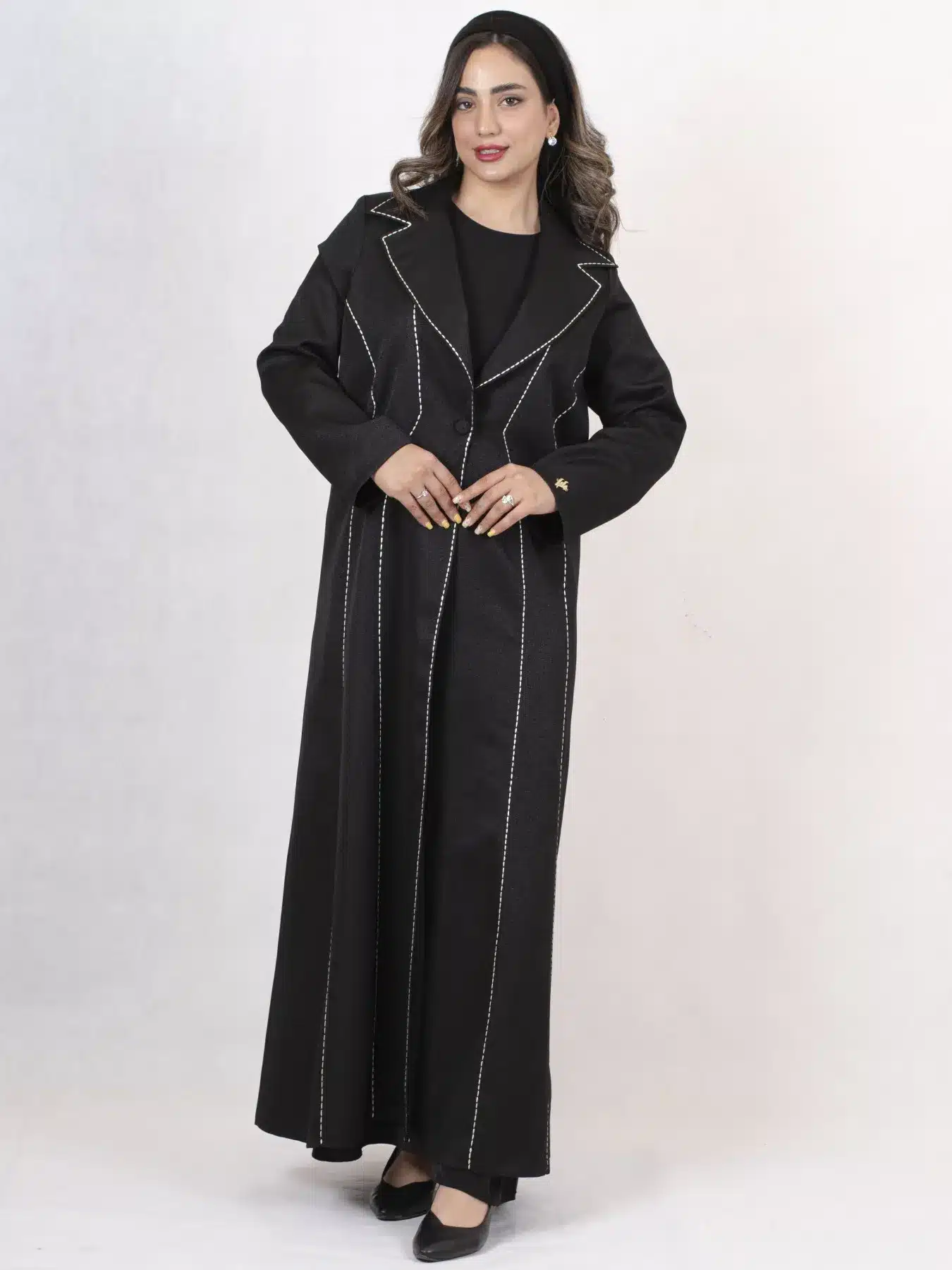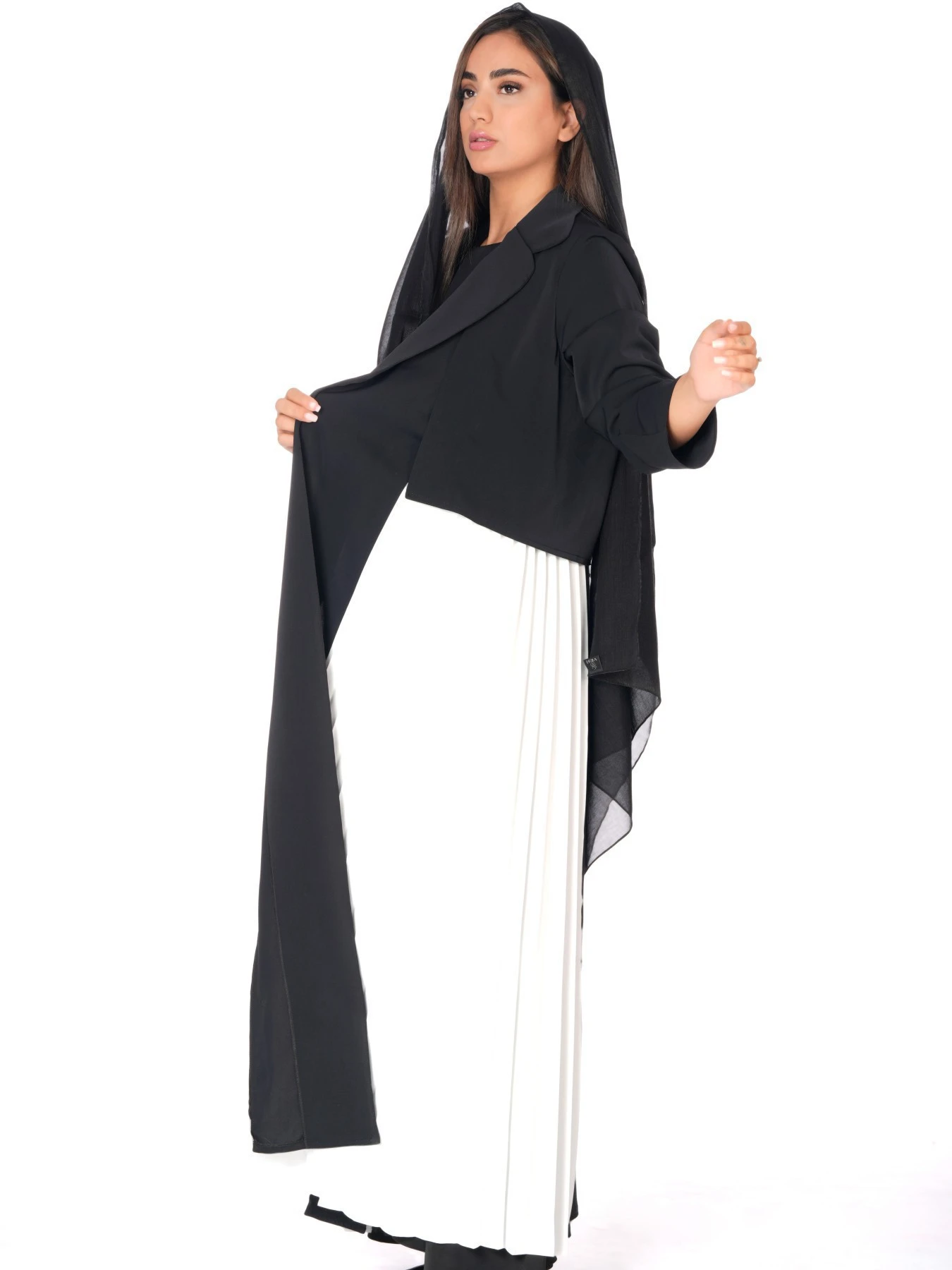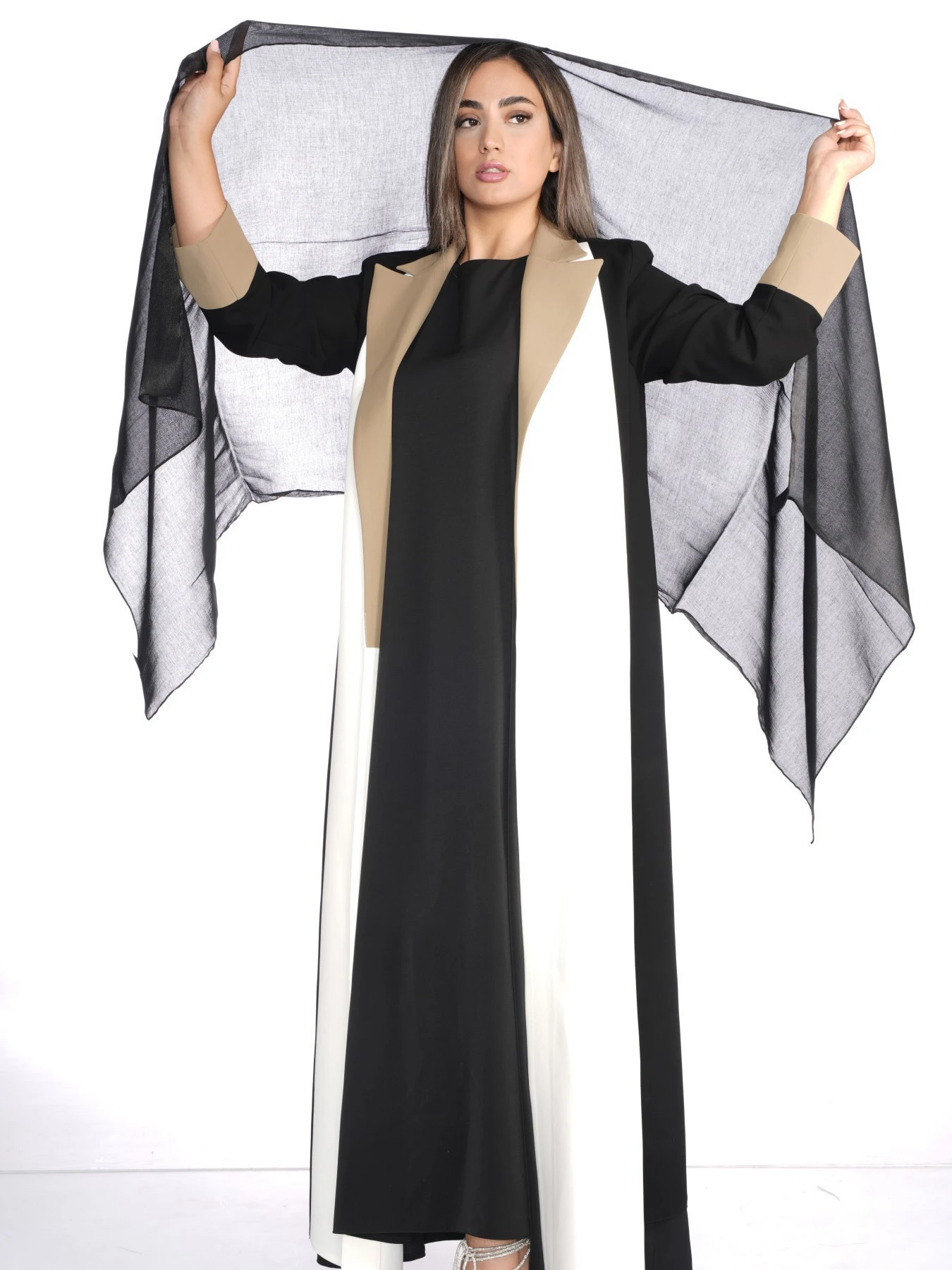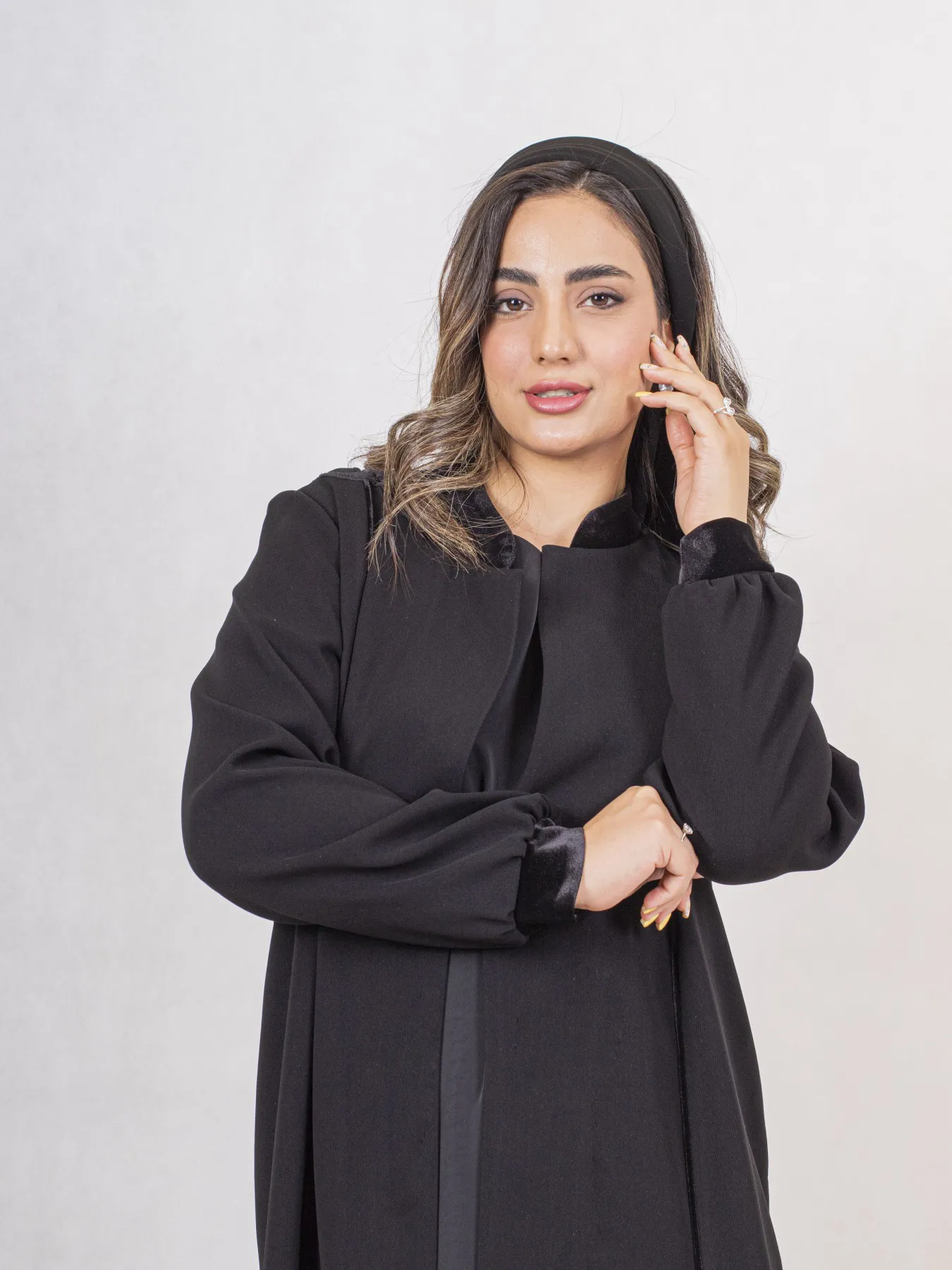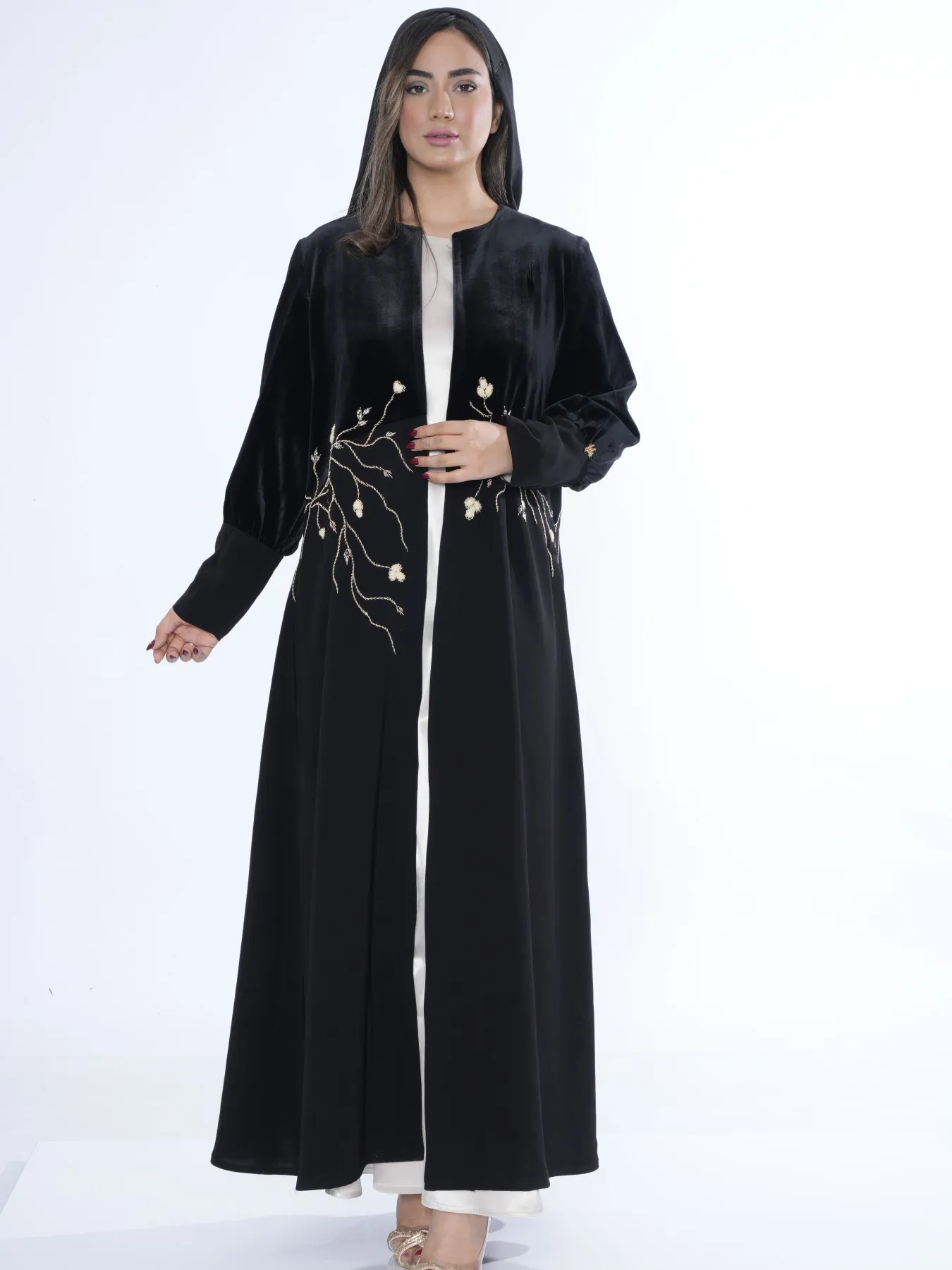
Choosing what to wear under an abaya is easier when you start with the abaya itself. An open abaya leaves much of the outfit underneath visible, so the inner dress or separates need to look complete on their own. A closed abaya gives you more freedom, allowing you to focus mainly on comfort, breathability and movement.
The fabric matters too. A lightweight chiffon abaya behaves differently from a structured crepe design, while a summer abaya has different requirements from one worn for a formal evening. The best underlayer is one that works comfortably with the abaya rather than simply looking good on its own.
What Do You Wear Under an Abaya?
There is no single outfit that works for every abaya. The right choice depends on the abaya’s construction, how much coverage it provides and how visible the clothing underneath will be.
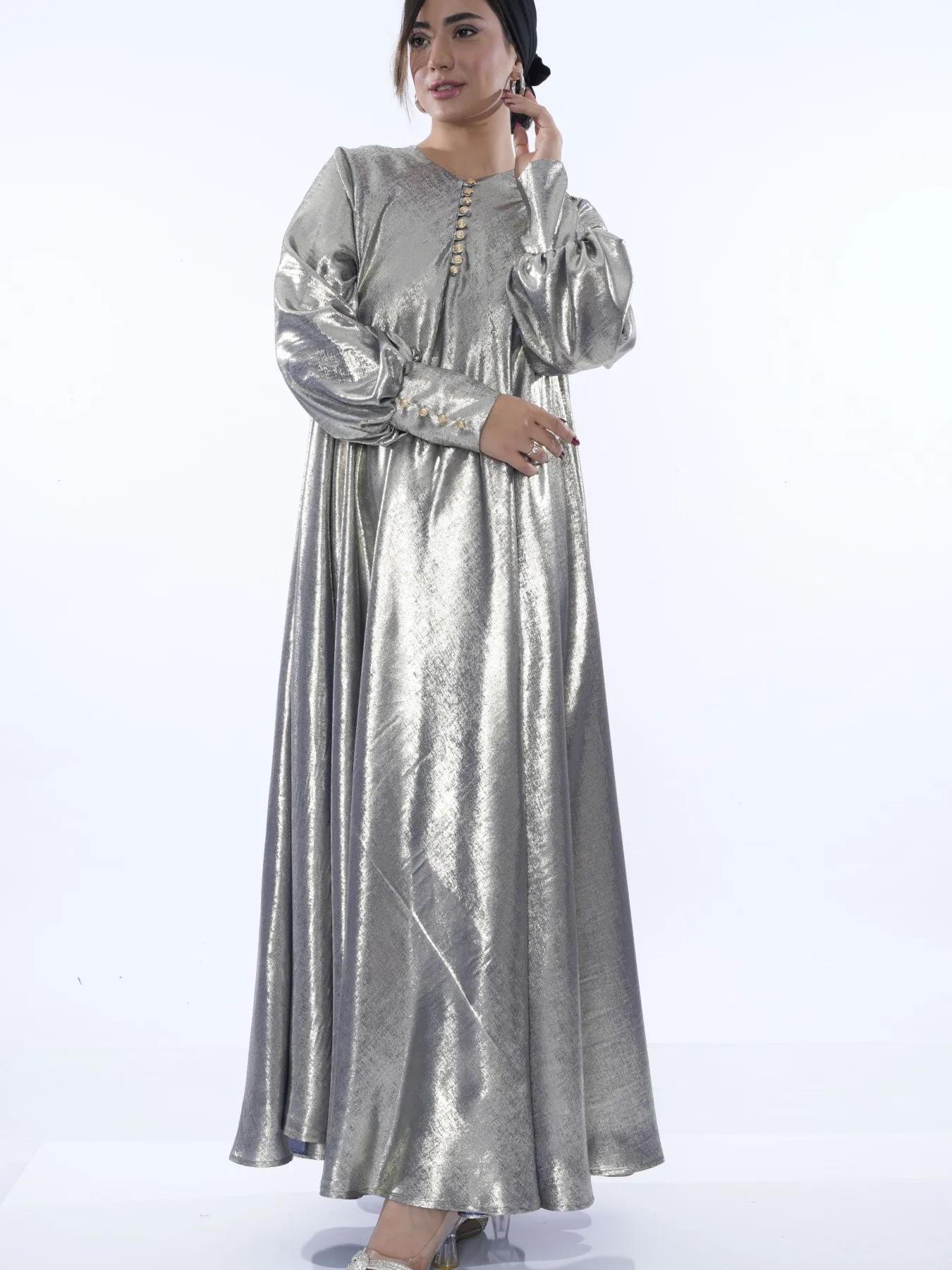
With a closed, opaque abaya, a lightweight dress, long tunic with relaxed trousers or other comfortable modest clothing may be enough. There is little reason to add extra layers if they will remain hidden and only make the outfit warmer.
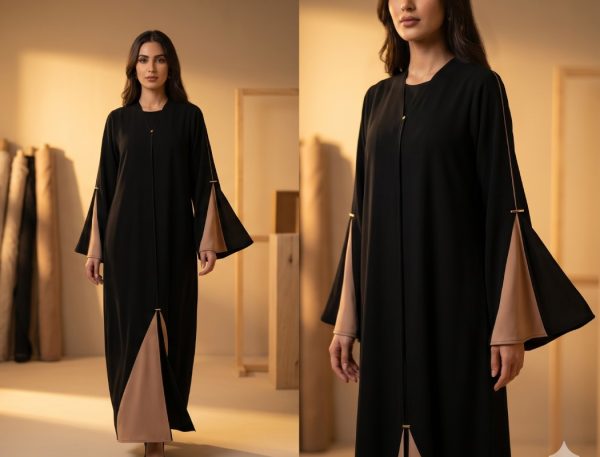
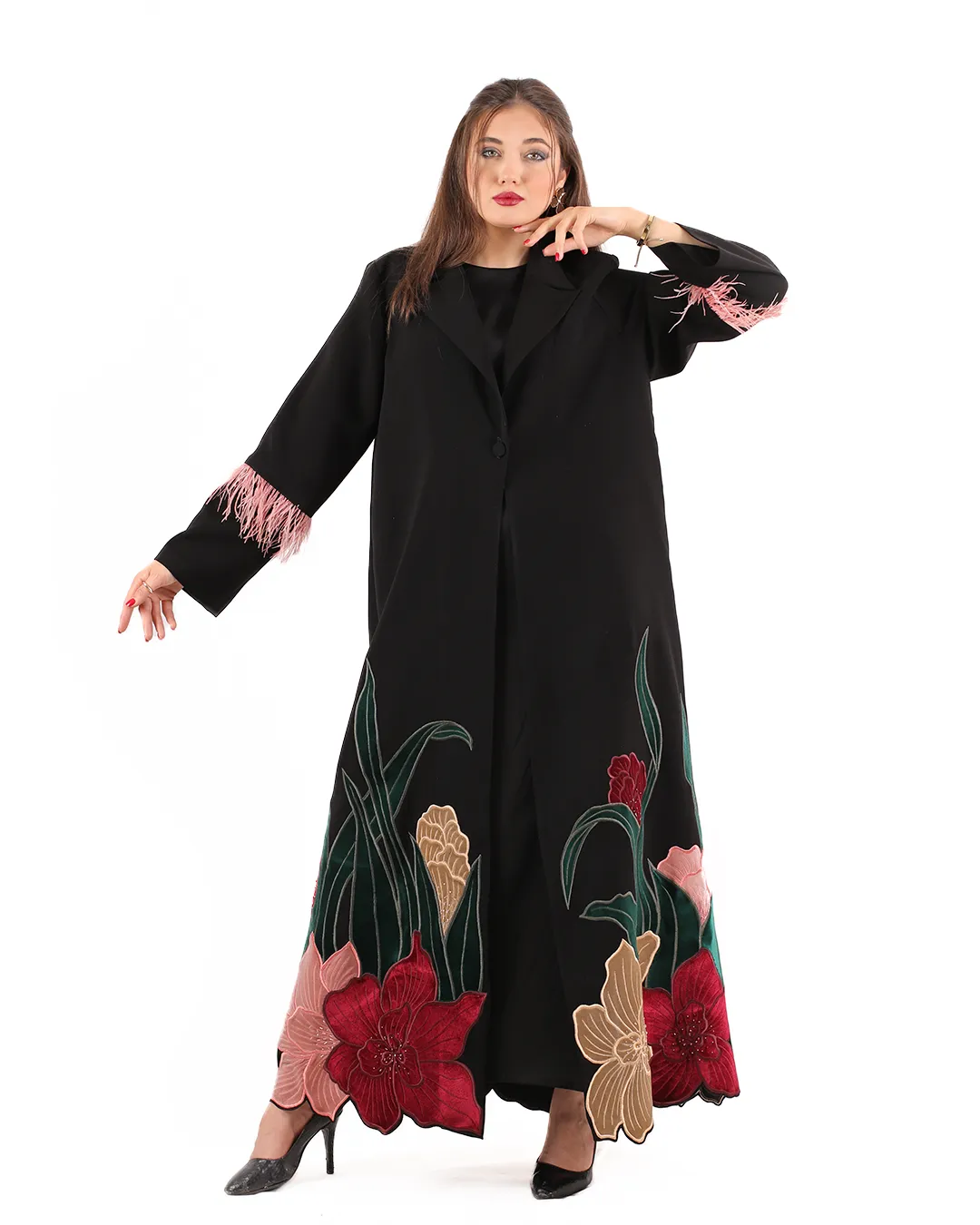
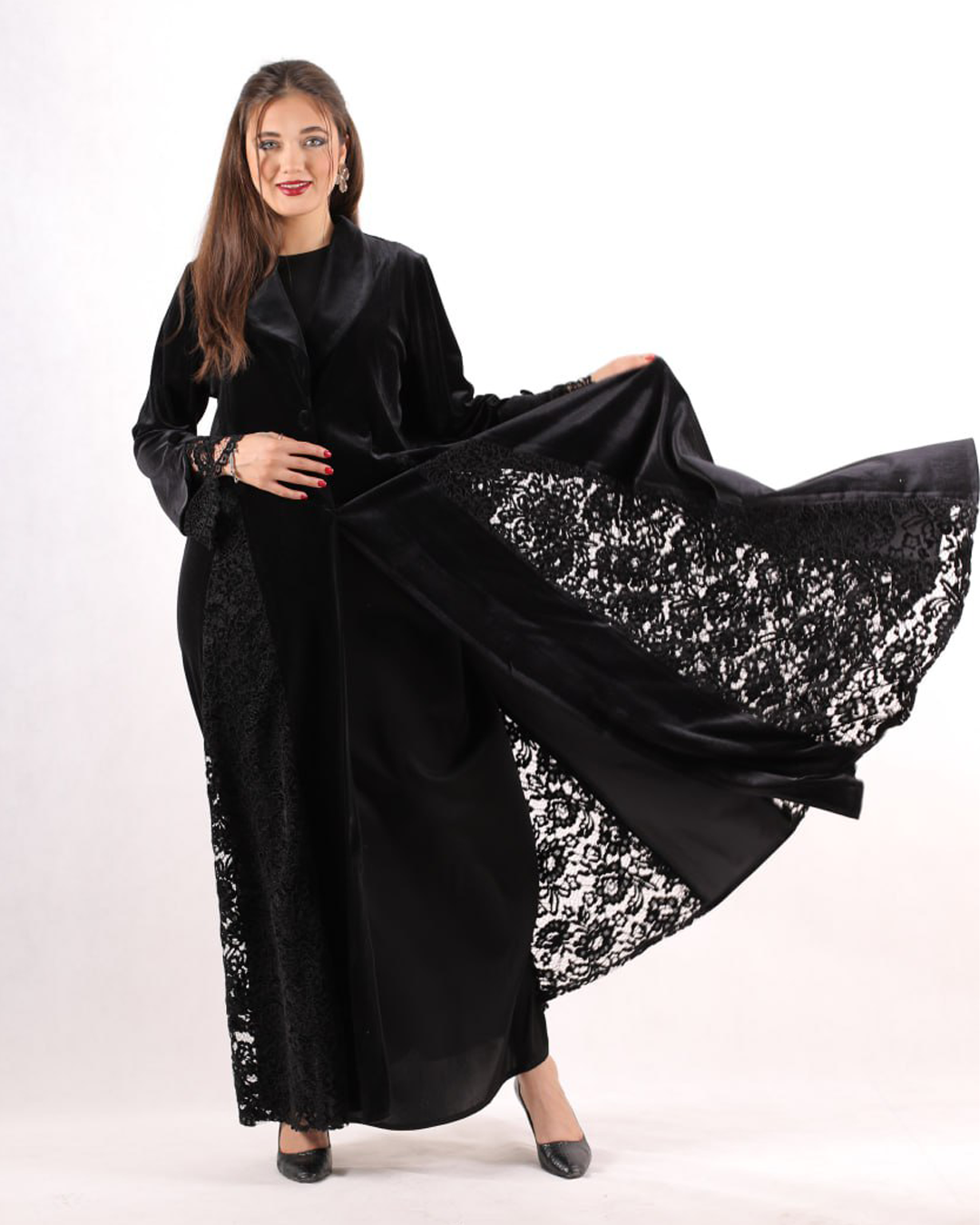
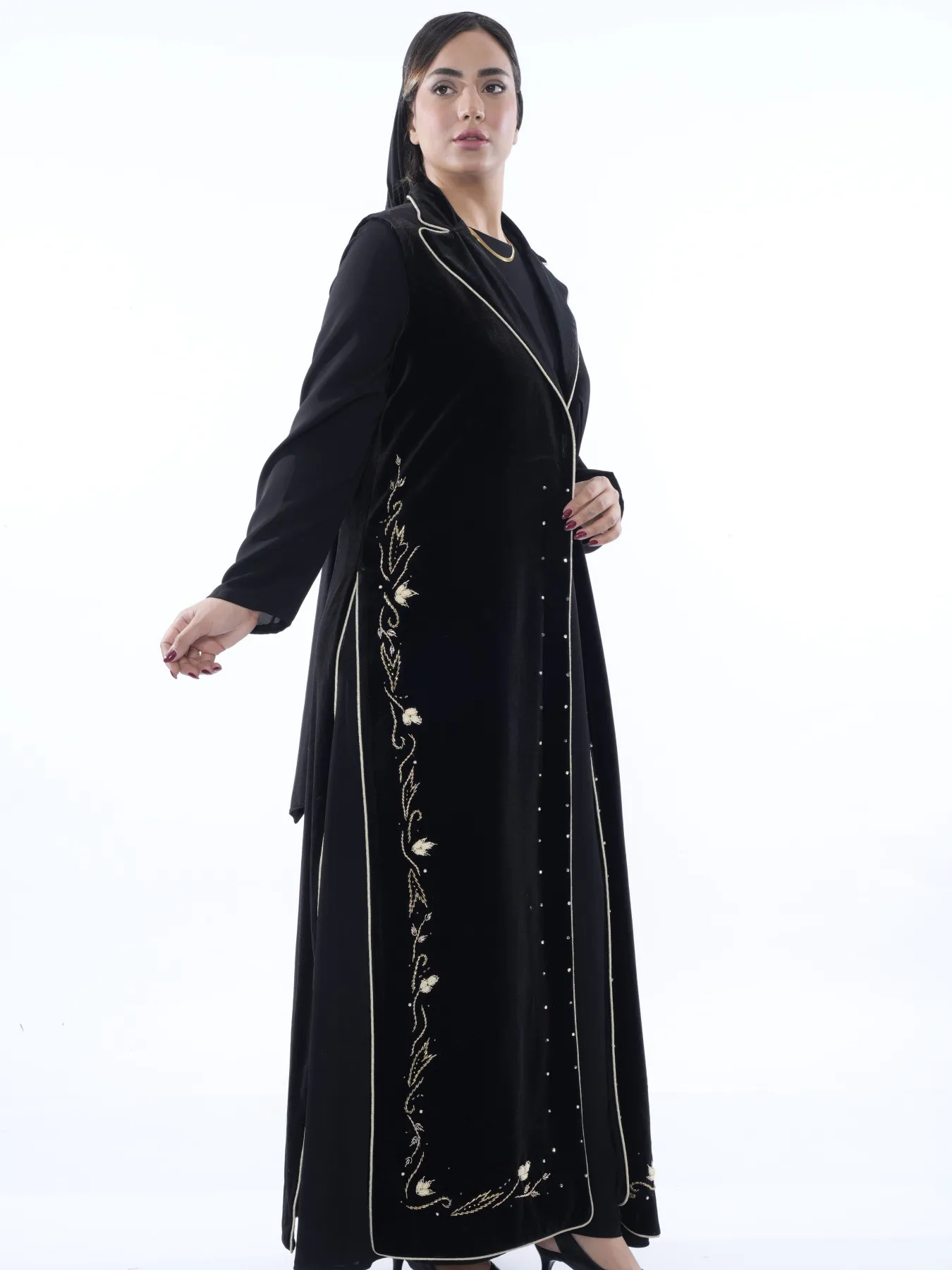
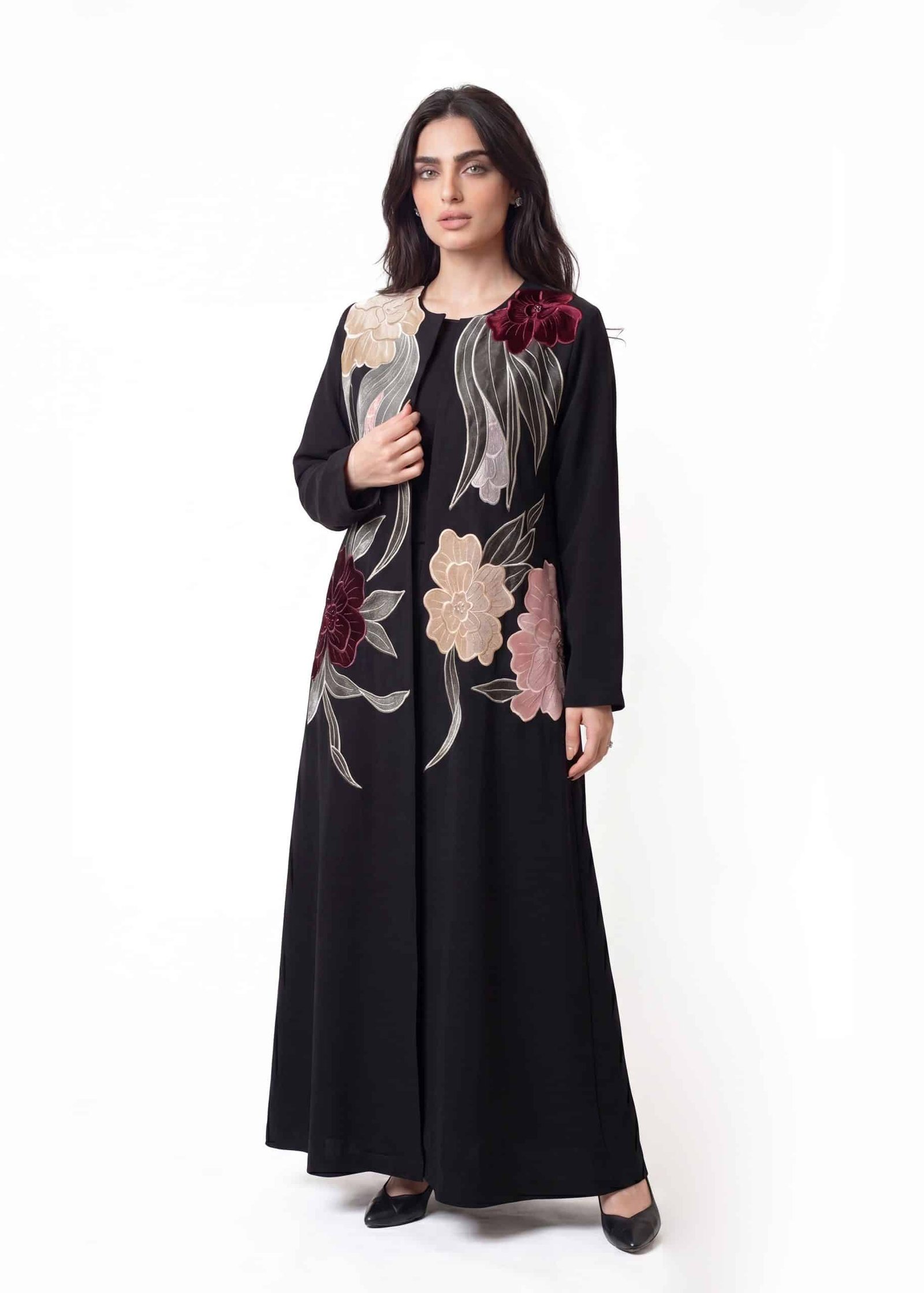
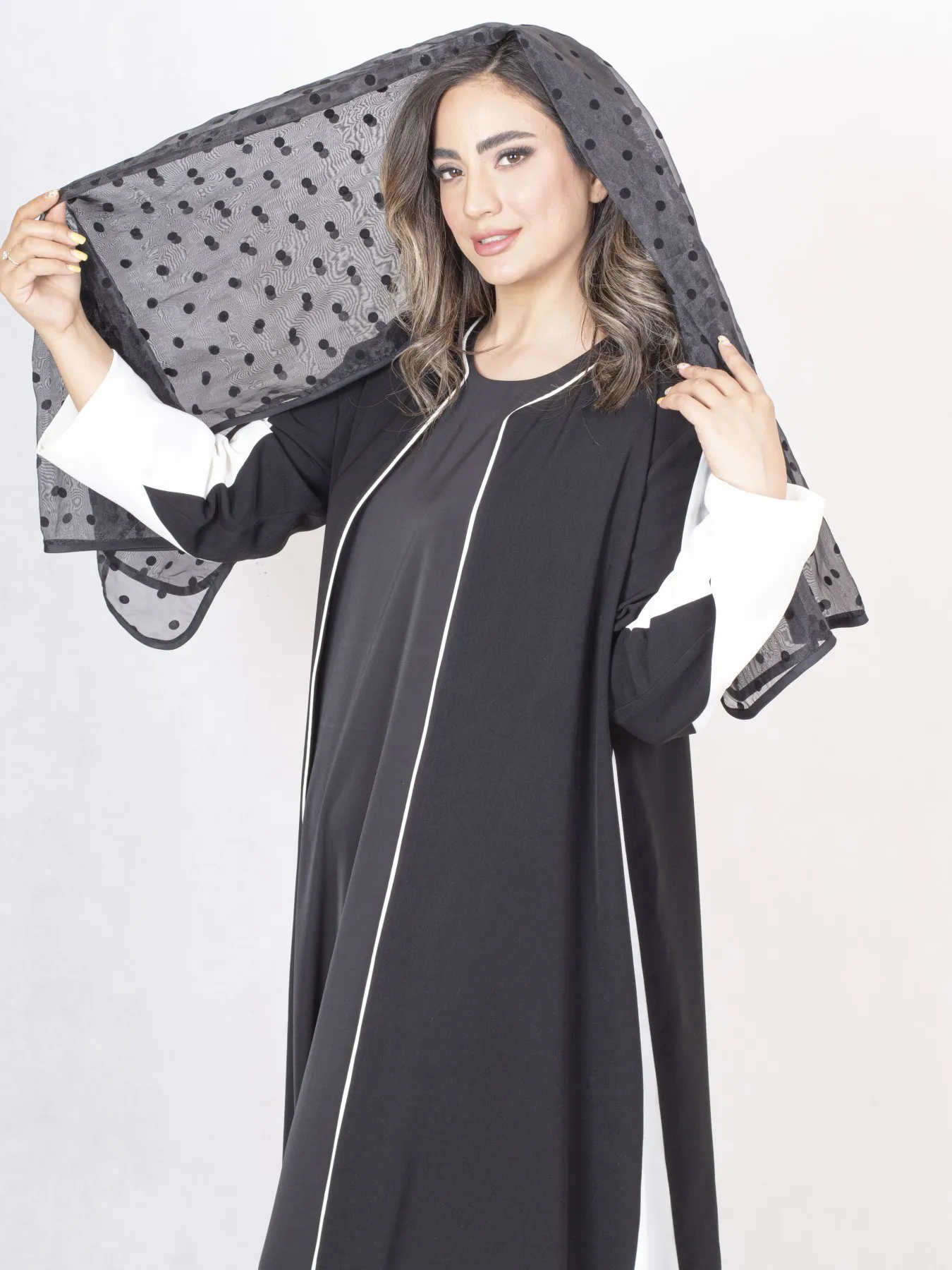
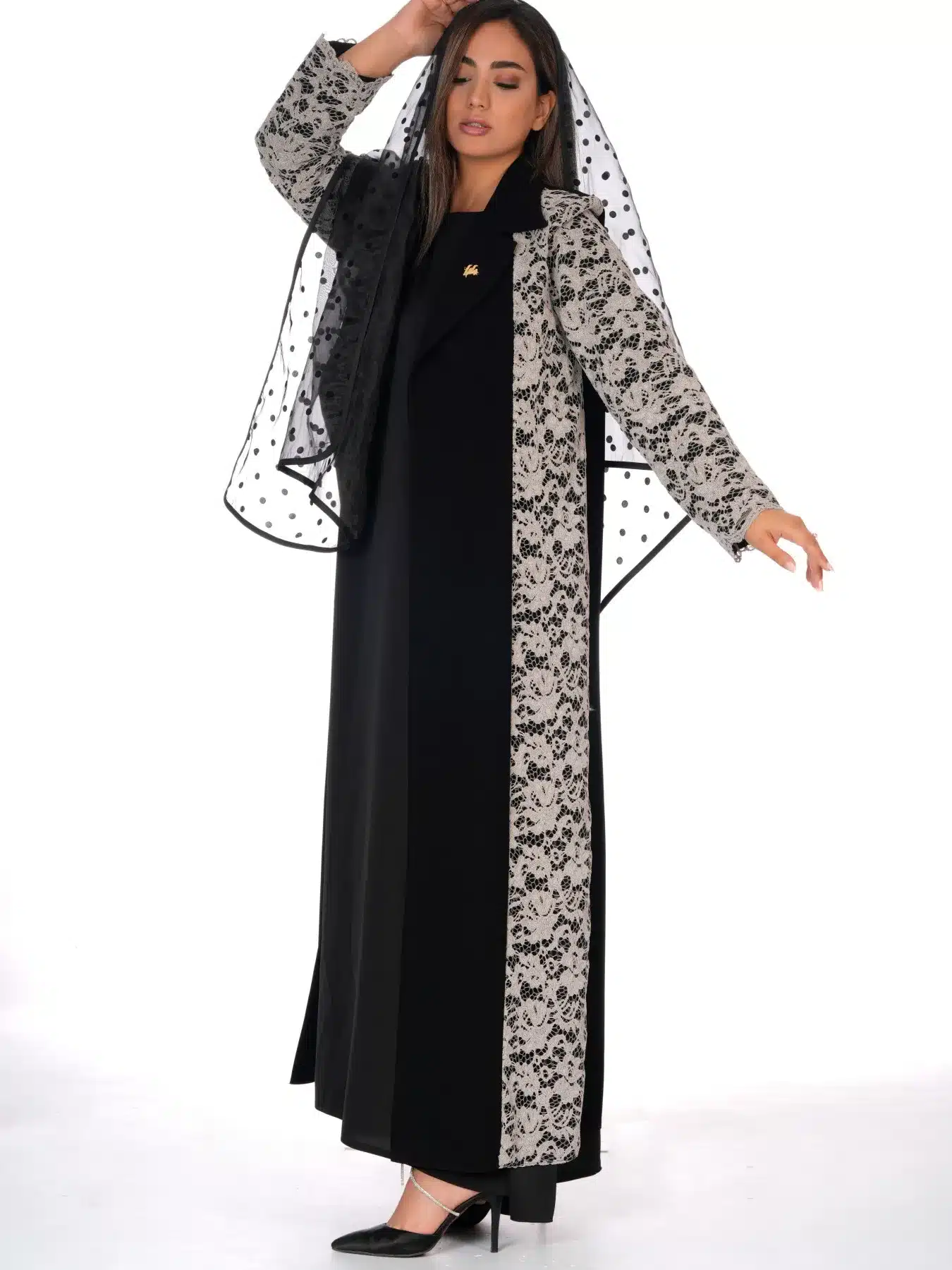
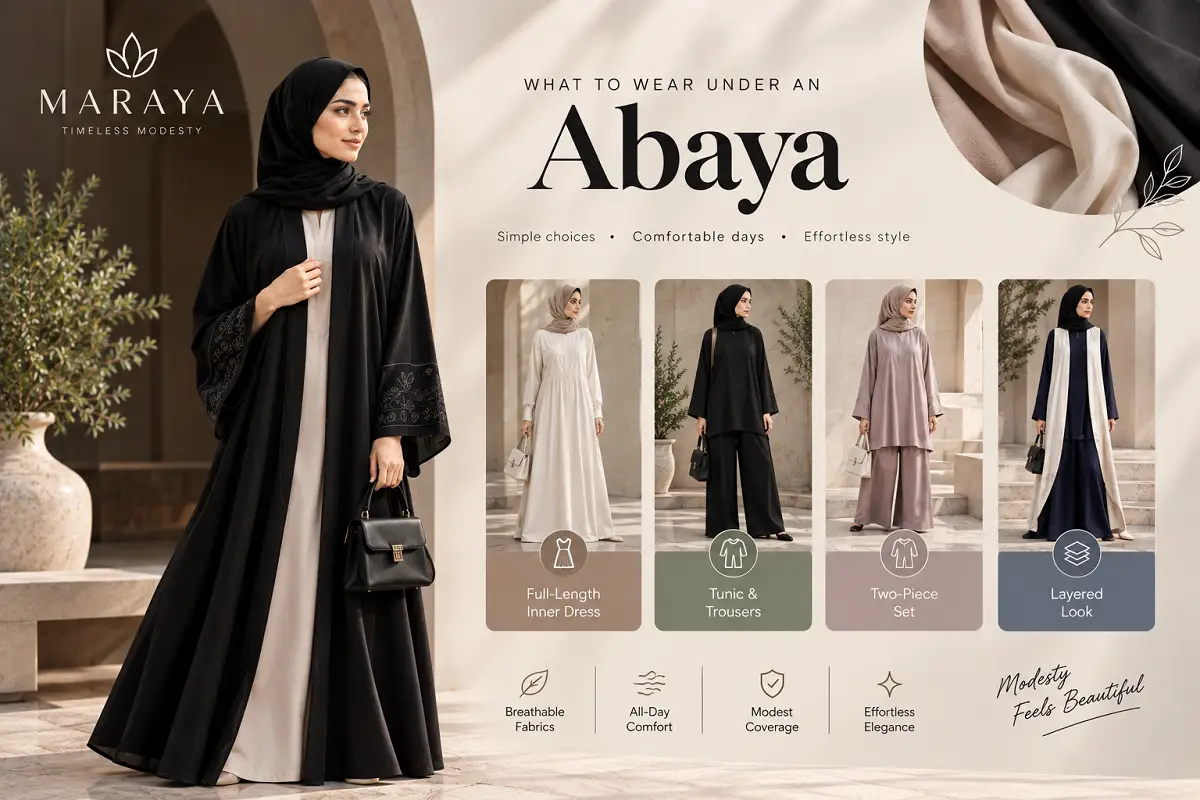
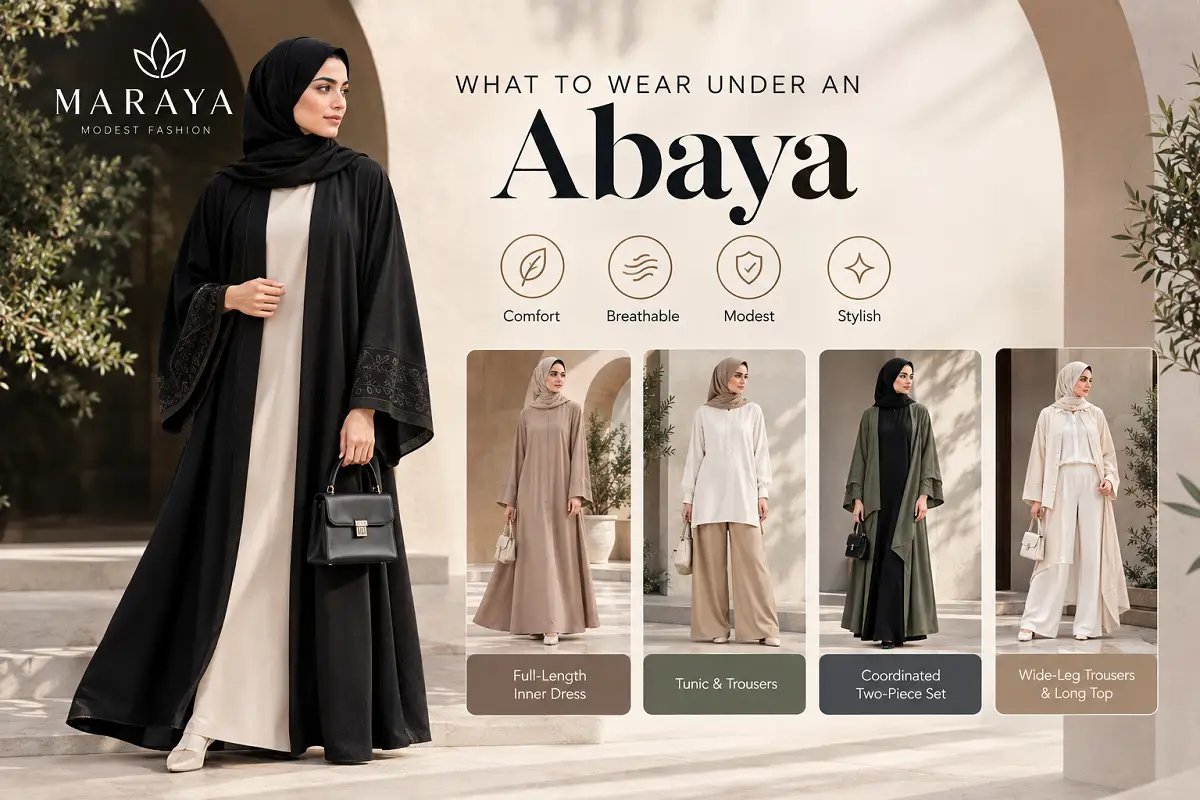
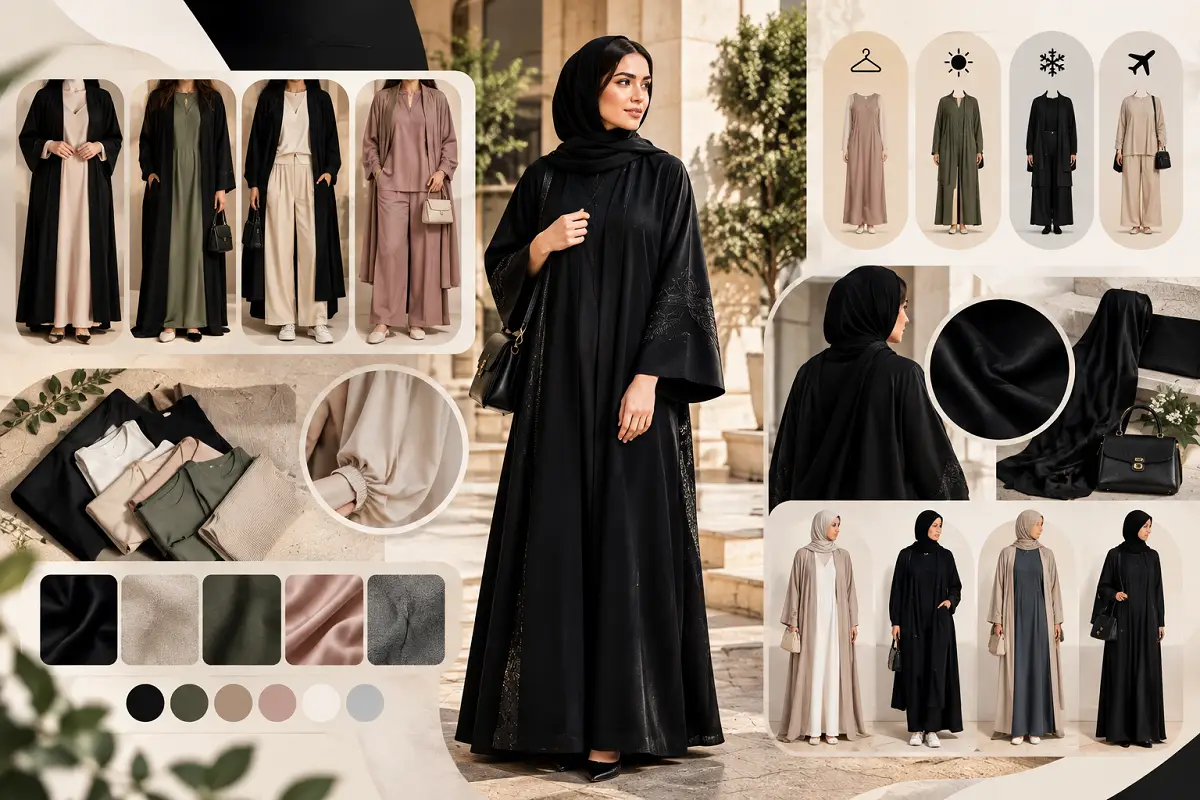
An open abaya needs a little more consideration because the inner clothing becomes part of the overall look. A full-length inner dress is often the simplest option, while a coordinated two-piece set or wide-leg trousers with a long top gives you more flexibility.
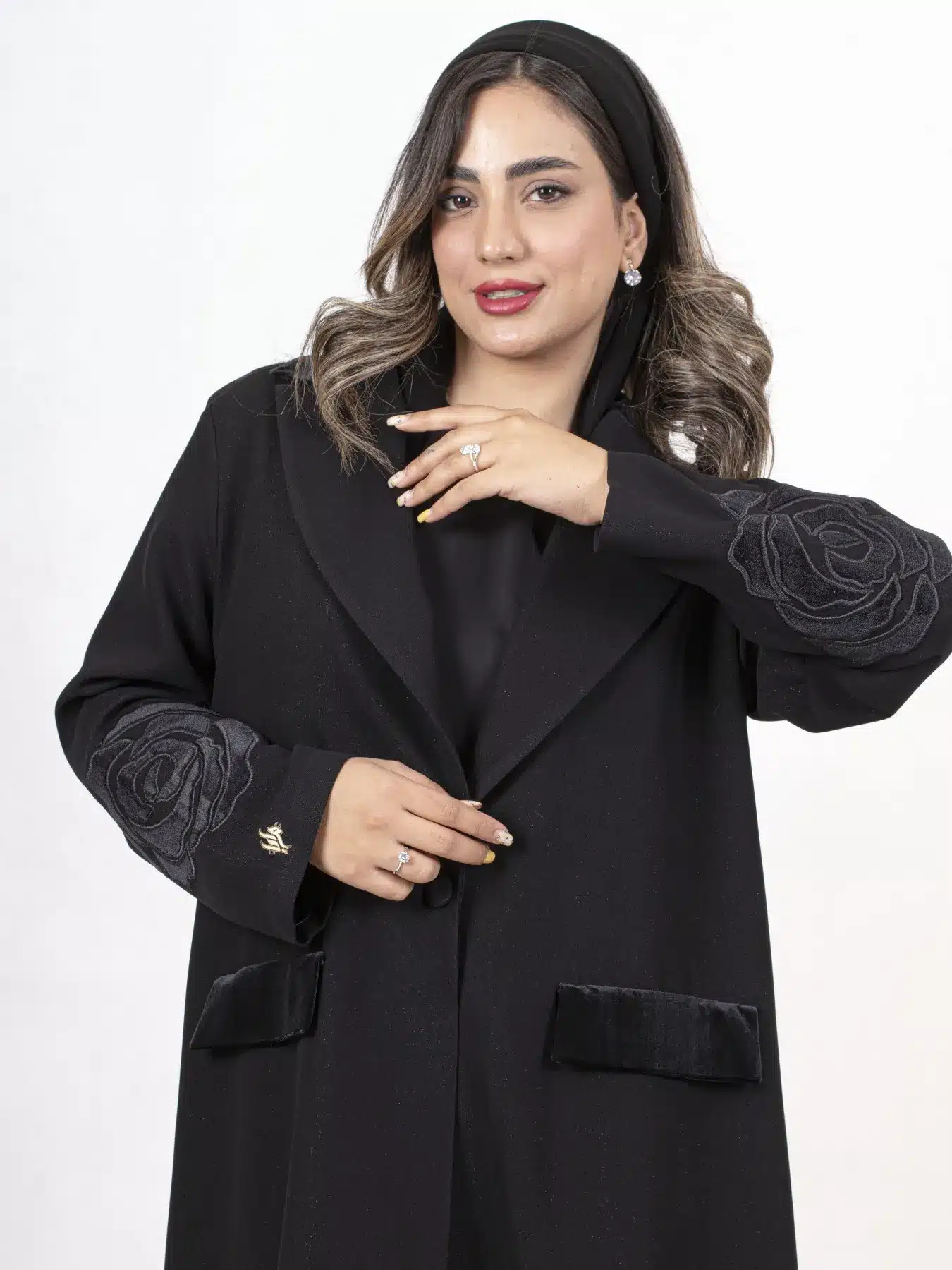
For everyday styling, you can also explore Maraya’s everyday abaya collection for ideas on how relaxed outer silhouettes can be paired with practical and comfortable inner layers.
A useful rule is simple: the more visible the inner layer, the more carefully it should be styled; the more covered it is, the more you can prioritize comfort.
What to Wear Under an Open Abaya
An open abaya works best when the inner outfit has its own balance. The neckline, sleeves, hem and color should work with the outer layer, especially when the abaya moves while walking or sitting.
For more inspiration, you can look at Maraya’s open abaya collection, where the outer layer is designed to remain an important part of the overall outfit. This type of abaya makes the choice of the inner garment particularly noticeable because more of the base outfit remains visible.
Full-Length Inner Dress
A full-length inner dress is one of the easiest choices because it creates a continuous line underneath the abaya. There are no separate waistbands or multiple hems to manage, and the outfit still looks finished when the abaya opens during movement.
It works particularly well for formal occasions and workwear. Choose a dress that provides appropriate opacity and enough length for comfortable movement. A thin slip can work beneath a flowing abaya, but additional layering may be needed if the neckline, sleeves or fabric do not provide enough coverage.
Wide-Leg Trousers and a Long Top
Trousers can be a practical choice when you spend much of the day walking or prefer separates. Wide-leg trousers create an elegant line beneath a loose abaya without restricting movement, provided the top is long enough.
Proportion matters here. If both the trousers and abaya are extremely wide, too much fabric can gather around the legs and make the outfit feel heavier. A more controlled trouser shape often works better beneath a particularly voluminous abaya.
Coordinated Two-Piece Set
A matching long top and trouser set offers the polished appearance of a coordinated outfit while giving you more flexibility than a dress. It can also be useful for travel because each piece can be worn separately.
With an open abaya, matching or closely related colors create a calm, uninterrupted look. If the abaya already has embroidery, embellishment or a distinctive silhouette, keeping the inner set simple usually creates a more balanced outfit.
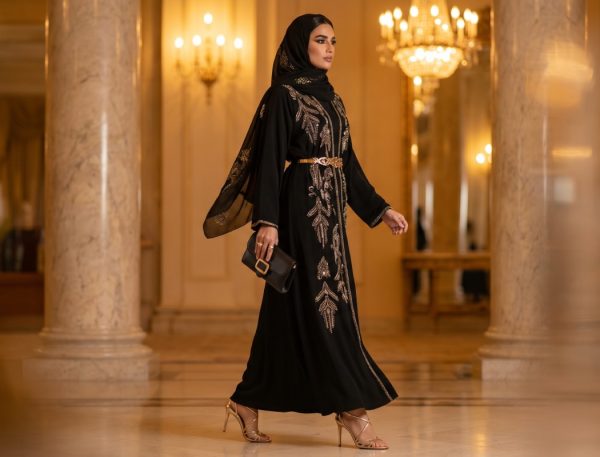
When the outer abaya includes detailed embroidery or decorative work, the inner outfit does not necessarily need additional embellishment. A simple base can allow the outer garment to remain the visual focus while still giving you enough coverage and comfort.
For examples of more detailed outerwear, you can browse Maraya’s embroidered abaya collection and consider how a simpler inner layer can complement embroidery without competing with it.
Choosing the Color
Color becomes particularly important with light-colored or lightweight abayas. Under a black or dark abaya, black, navy, mocha and other deep neutrals are easy choices. A lighter inner layer can also work when the outer fabric is sufficiently opaque.
White, cream and beige abayas need more attention. A strongly contrasting color may show through lightweight fabric, particularly in daylight. Check the complete outfit in natural light and move around in it before deciding that the combination works.
Natural daylight is especially useful when checking a lightweight abaya because indoor lighting can make fabrics appear more opaque than they actually are. Walking, sitting and moving your arms can also change how the outer fabric falls and reveal parts of the inner outfit that are not visible while standing still.
What to Wear Under a Closed Abaya
A closed abaya is generally easier to style because most of the outfit underneath remains hidden. This means you can dress primarily for the conditions of the day rather than building the inner outfit around appearance.
A lightweight inner dress is a straightforward option for everyday wear, particularly in warm weather. A long tunic with relaxed trousers also works well, while ordinary comfortable modest clothing may be perfectly suitable when the abaya already provides sufficient coverage.
Adding unnecessary layers is one of the easiest ways to make an abaya outfit uncomfortable. If the outer garment is already loose and opaque, extra clothing can create heat and bulk without providing much benefit.
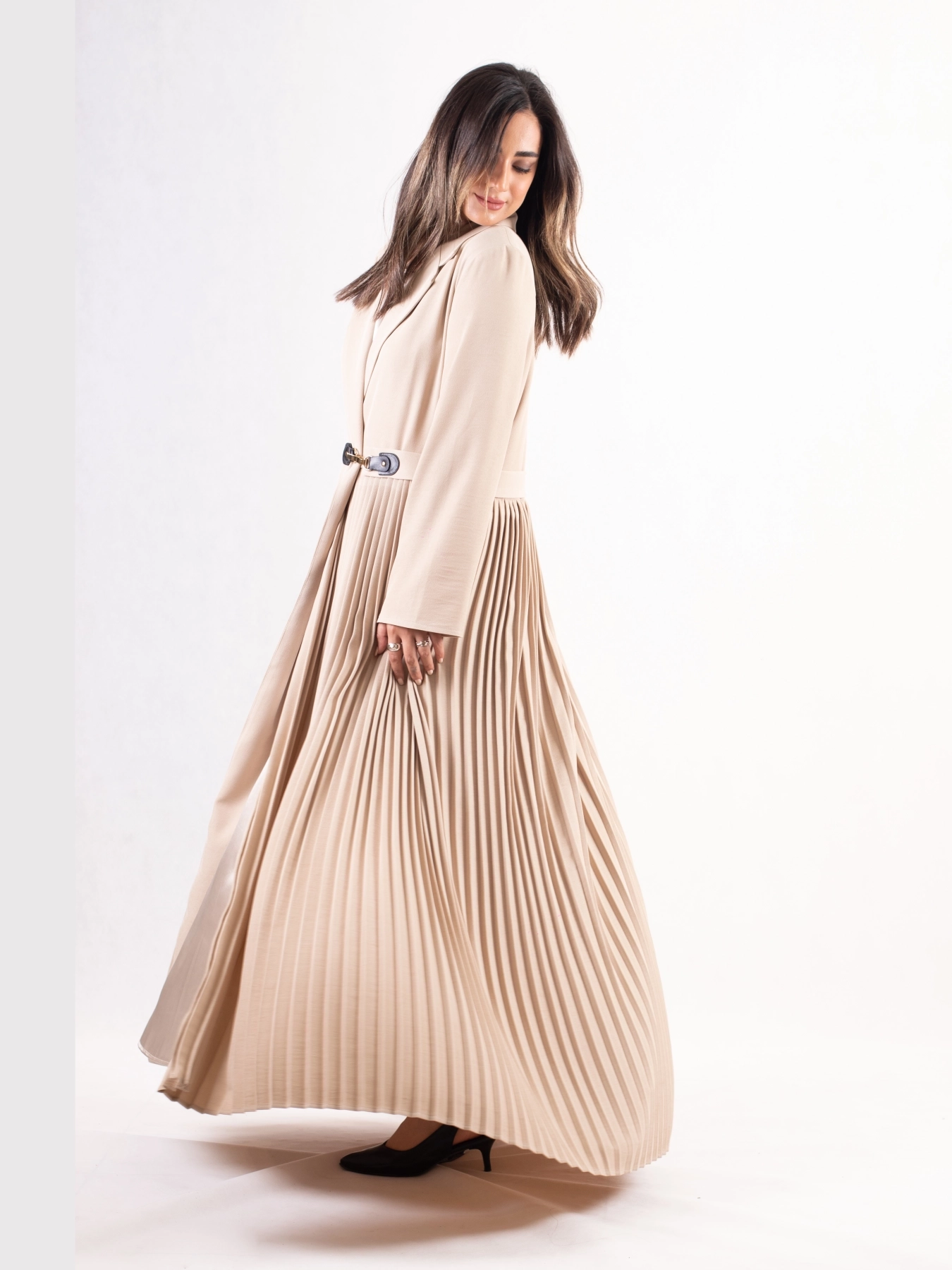
For classic silhouettes that can be styled for different occasions, Maraya’s classic abaya collection can also provide useful styling inspiration. Classic outer layers often work particularly well with simple inner dresses or coordinated neutral separates.
Can You Wear Leggings Under an Abaya?
Yes. Leggings can be useful for walking, travelling and casual activities, particularly when paired with a long tunic or top that provides the coverage you prefer.
They are not essential, though. If a long dress or relaxed trousers already provide enough comfort and coverage, another layer may simply make the outfit warmer.
When choosing leggings, consider the length and opacity of the top worn over them. A longer tunic or top can provide additional coverage while allowing the leggings to function mainly as a comfortable base layer rather than becoming a visible part of the outfit.
Can You Wear Jeans Under an Abaya?
Yes. Jeans can work well with a casual abaya, but comfort is usually the deciding factor.
Heavy denim can feel warm and restrict airflow, especially during long summer days. Lightweight trousers or relaxed cotton blends may be more comfortable when you will be outside for several hours.
The cut of the jeans also matters. Very rigid or tight denim can make movement more difficult under a loose outer layer, while relaxed or wide-leg options can provide greater freedom of movement. For long days, the weight and breathability of the fabric are often more important than the casual appearance of denim.
Do You Need Long Sleeves Under an Abaya?
Not necessarily. With a closed abaya that provides full coverage, short sleeves can be practical. The situation is different with an open abaya, where the sleeves of the inner layer may remain visible.
A lightweight long-sleeve top can create a cleaner transition between the two layers. Slim sleeves are often easier to manage beneath wide or flowing abayas because they reduce bunching around the arms.
If the outer abaya has wide sleeves, oversized inner sleeves can create unnecessary bulk. A smoother, closer-fitting sleeve underneath can help the outer layer fall naturally while still providing the desired coverage.
Choosing the Right Fabric for the Inner Layer
The garment style matters, but fabric often determines whether an outfit remains comfortable after several hours. Heat, static, cling and friction can turn an attractive combination into an impractical one.
For summer, lightweight cotton, linen, modal and breathable jersey can work well. The thinnest fabric is not always the coolest option, though. If it requires another layer for adequate coverage, the final outfit may actually become warmer.
For everyday wear, cotton and modal are practical choices because they are comfortable against the skin and easy to maintain. Lightweight jersey is useful when you expect a lot of movement, although very thin jersey may cling.
For formal occasions, crepe, satin and other smooth fabrics can provide a more refined base beneath an open abaya. Test the two fabrics together because some combinations can create static or cling.
For travel and long days, softness, easy care and resistance to wrinkling are often more useful than decorative details. A comfortable inner dress or relaxed two-piece set is usually easier to manage throughout the day.
The interaction between fabrics is worth considering before choosing an inner layer. Two individually comfortable fabrics may not always work well together if they create static, cling to one another or make the outer abaya difficult to move naturally. Testing the complete outfit before an important event can prevent these problems.
What Should You Avoid Wearing Under an Abaya?
Many problems come from the interaction between the inner layer and the abaya rather than from either garment individually.
Bulky sweaters, thick trousers and several heavy layers can stop a flowing abaya from falling naturally. They may also make the shoulders and sleeves feel restrictive.
Very clingy fabrics can cause another problem. Instead of allowing the abaya to move freely, the two fabrics may stick together and make folds underneath more visible. Static can make this worse.
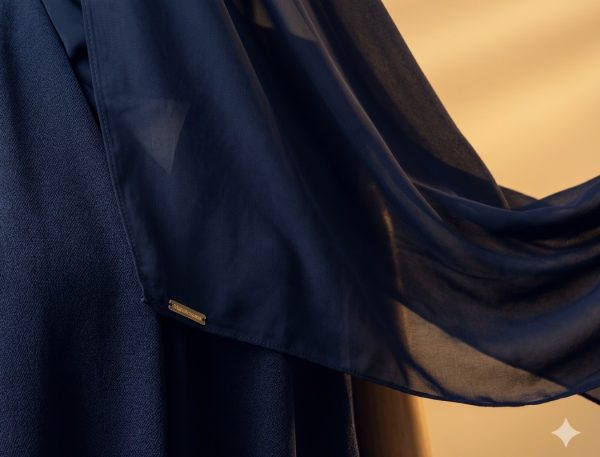
Light-colored abayas also require attention to color and pattern. A bright or strongly contrasting inner garment may show through white, cream or beige fabric, especially in sunlight. With chiffon, a smooth and sufficiently opaque foundation usually works best.
Another point to consider is the number of layers. More clothing does not automatically mean better coverage or a more polished appearance. When the outer abaya already provides sufficient coverage, keeping the inner outfit simple can make the entire combination lighter, cooler and easier to move in.
What to Wear Under an Abaya for Different Occasions
The best inner layer changes depending on what you will actually be doing.
For everyday wear, a breathable dress or long top with relaxed trousers is usually enough. Choose fabrics that are comfortable for sitting, walking and regular washing.
For work, a full-length inner dress or coordinated modest set creates a controlled silhouette. Neutral colors and smooth fabrics generally work well beneath structured abayas.
For formal events, the inner layer can become part of the styling. A refined crepe or satin dress can provide an elegant foundation without competing with embroidery, embellishment or statement sleeves.
For Ramadan and Eid, an elegant inner dress or coordinated set can balance a dressed-up appearance with the comfort needed for family visits and longer gatherings.
For travel, prioritize movement and easy care. A soft jersey or modal dress keeps the outfit simple, while a two-piece set can be more flexible.
For prayer and mosque visits, choose clothing that stays comfortable and secure during standing, sitting and movement. Constantly adjusting the inner layer can quickly become distracting.
The occasion should therefore influence not only the appearance of the inner outfit but also its practical construction. An outfit that works for a short formal event may not be equally suitable for travel, walking or spending several hours outdoors.
What to Wear Under an Abaya for Hajj and Umrah
Hajj and Umrah require more careful planning because clothing needs to work with long periods of walking, warm conditions and the rules associated with ihram.
For pilgrimage, loose and breathable clothing is generally more practical than several fitted or heavy layers. A lightweight long dress can simplify the outfit, while a loose tunic with relaxed trousers offers flexibility.
Official Saudi Ministry of Hajj and Umrah guidance states that women do not have one specific dedicated ihram garment and may wear permissible, modest clothing. Official guidance also describes women’s ihram clothing as loose and wide and notes that it should not restrict movement. Some official guidance specifies that women should not wear a niqab or gloves during ihram.
These points are not a complete statement of Islamic jurisprudence. Rules related to ihram can include details that vary according to the religious authority or school of thought being followed. For questions about a specific garment, face covering, gloves or another aspect of ihram, check current official guidance and consult a qualified scholar before travelling.
From a practical perspective, test your clothing before the pilgrimage. Walk in it for an extended period and pay attention to friction around the thighs, waist and underarms. Something that feels comfortable for twenty minutes may behave differently after several hours of walking.
It is also useful to consider how easily the inner clothing can be adjusted, washed or changed during a longer trip. Pilgrimage involves extended periods of activity, so simple outfits with breathable fabrics and minimal unnecessary layering can make daily dressing easier.
Inner Dress or Two-Piece Set: Which Should You Choose?
Neither option is automatically better. The choice depends on how you plan to wear the outfit.
| Option | Particularly useful for | Main consideration |
| Inner dress | Open abayas and formal occasions | Creates a continuous silhouette |
| Two-piece modest set | Travel and everyday wear | Offers more flexibility |
| Wide-leg trousers + long top | Walking and relaxed styling | Avoid excessive volume |
| Leggings + long tunic | Casual wear and travel | Top should provide sufficient length |
An inner dress is usually the easiest choice when the open abaya is the main visual feature. It creates a clean base and reduces the number of separate pieces that can bunch together.
A two-piece set is useful when versatility matters. It can be worn under an abaya one day and styled independently another day.
Wide-leg trousers and a long top are particularly useful when movement is important. They can feel more natural than a fitted dress during a busy day, provided the proportions are controlled.
Leggings and a long tunic can also provide a practical casual combination, especially for travel or days when freedom of movement is important. The main consideration is making sure the tunic provides the level of coverage you prefer and that the combination does not become unnecessarily warm.
Ultimately, fabric and fit matter more than the category. A lightweight cotton two-piece may be cooler than a heavy synthetic dress, while a breathable modal dress may be more comfortable than several separate layers.
Frequently Asked Questions About What to Wear Under an Abaya
What do you wear under an abaya every day?
A lightweight inner dress, long tunic with relaxed trousers or other comfortable modest clothing can all work. With a closed abaya, prioritize comfort and breathability; with an open abaya, make sure the inner outfit also looks complete when visible.
What should I wear under an open abaya?
A full-length inner dress is one of the simplest choices, while a coordinated two-piece set or wide-leg trousers with a long top offers more flexibility. Choose an outfit that remains comfortable and looks balanced when the abaya opens during movement.
What should I wear under a closed abaya?
A lightweight dress, long tunic with trousers or other comfortable modest clothing can work well. Since the inner layer is less visible, you can focus more on comfort, breathability and ease of movement.
Can I wear leggings or jeans under an abaya?
Yes. Both can work for casual abaya styling, although they are not always the most comfortable choices for hot weather. Leggings work well with a sufficiently long top or tunic, while lighter trousers may provide better airflow than heavy denim.
What is the coolest thing to wear under an abaya in summer?
A lightweight, breathable layer is usually more comfortable than several heavy pieces. Cotton, linen, modal and other breathable fabrics can work well as long as they provide adequate coverage and do not require unnecessary additional layers.
What should I wear under a white, beige or sheer abaya?
Choose a smooth, sufficiently opaque inner layer in a coordinated neutral tone. With lightweight or sheer fabrics, check the complete outfit in natural daylight because transparency can be much more noticeable outdoors.
What fabric is best to wear under an abaya?
There is no single fabric that works for every situation. Cotton, linen and lightweight modal are useful for warm weather, jersey can work well for movement, while crepe or satin can provide a more polished foundation for formal occasions.
What should you wear under an abaya for Hajj or Umrah?
Choose loose, breathable clothing that allows comfortable movement and suits the conditions of pilgrimage. For specific ihram requirements, including rules concerning particular garments, face coverings or gloves, consult current official guidance and a qualified religious authority.
A Practical Tip Before Wearing an Abaya
Before deciding that an abaya and its inner outfit work well together, try the complete combination the way you would actually wear it. Walk around, sit down, raise your arms and check the outfit in natural light. This can reveal problems that are easy to miss while standing in front of a mirror, such as fabric clinging, sleeves bunching up or the inner layer becoming visible when you move.
It is also worth checking the outfit from different angles, especially with an open or lightweight abaya. A combination may look balanced from the front but behave differently when you walk or sit. Taking a few minutes to test the layers beforehand can make the outfit noticeably more comfortable throughout the day.
For additional modest-fashion ideas, styling guidance and articles about abayas, you can explore the Maraya Mag. Looking at different outfit combinations before purchasing or styling an abaya can help you understand how fabrics, silhouettes and inner layers work together in real-life outfits.